In one of the heaviest and most intense attacks in recent weeks, Russia launched 574 drones and 40 missiles across multiple regions of Ukraine, causing widespread destruction, injuries, and at least one confirmed death, according to Ukrainian officials. The attacks mark a significant escalation in Russia’s ongoing military campaign, reaching areas of Ukraine that were previously less affected by the conflict.
The strikes targeted both eastern and western regions of the country, including the western city of Lviv, which has largely been away from the frontlines, and the south-western Transcarpathia region, near Ukraine’s borders with Hungary and Slovakia. Ukrainian authorities described the assault as one of the most severe aerial bombardments since the early days of the conflict.
Casualties and Widespread Damage
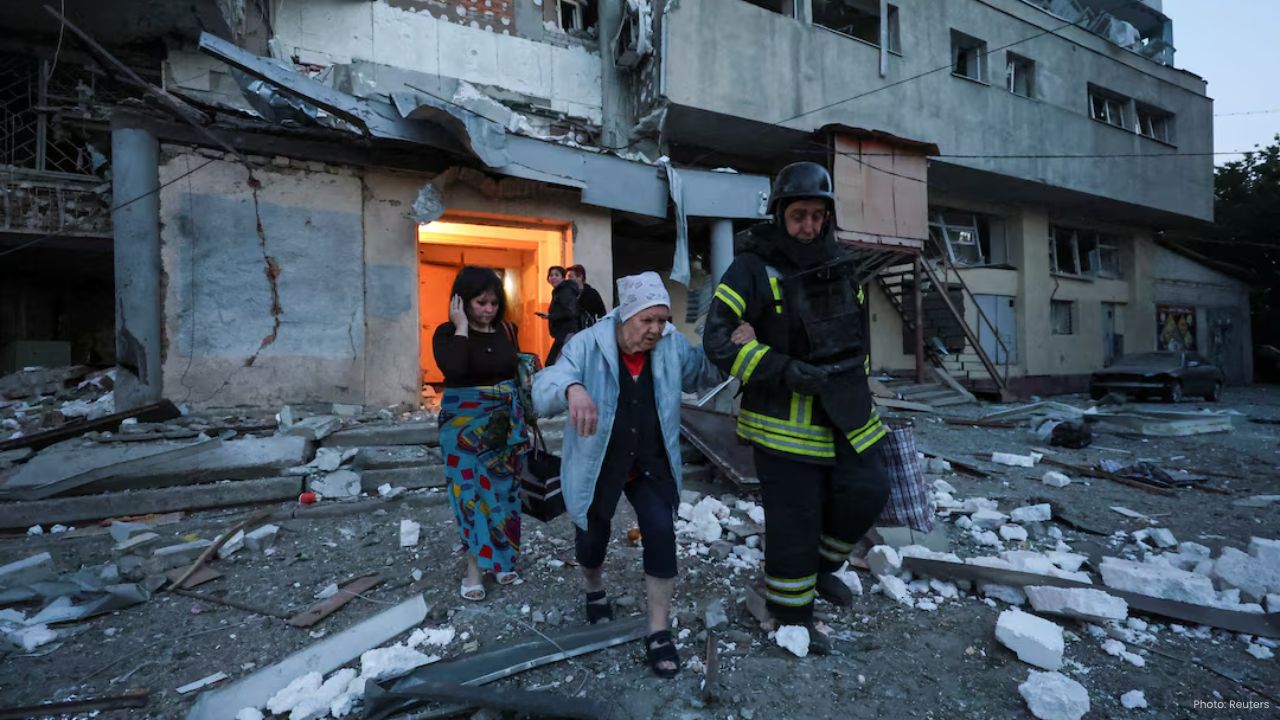
The city of Lviv, located in western Ukraine, was hit particularly hard by the missile strikes. Officials reported that one person was killed, and three others were injured. Over 20 buildings sustained significant damage, including residential homes and a nursery school, disrupting daily life for residents.
In the Transcarpathia region, cruise missiles struck a US electronics manufacturing facility in the town of Mukachevo, injuring 15 people. The plant produces household items, including coffee machines, and the attack caused major damage to the facility. Ukrainian Foreign Minister Andrii Sybiha described the incident as a reminder of the danger posed to civilian infrastructure and the importance of defensive measures to protect Ukraine’s citizens.
These attacks are a stark reminder that the war, while concentrated in the eastern frontlines, can now impact regions across the entire country.
Diplomatic Efforts and Peace Talks
The attacks come at a critical time as international diplomatic efforts are being made to bring the war to an end. US President Donald Trump has taken an active role in attempting to mediate between Ukraine and Russia. Ukrainian officials highlighted that the missile and drone strikes underscore the urgency of these peace efforts.
President Volodymyr Zelensky stated that Ukraine is prepared to meet Russian President Vladimir Putin "in neutral Europe," suggesting Switzerland or Austria as potential venues. He also expressed openness to Istanbul as a meeting location but explicitly ruled out Budapest, citing Hungary’s close political and economic ties with Moscow.
Earlier, President Trump had suggested the possibility of trilateral talks involving himself, Putin, and Zelensky. However, he later indicated that direct talks between the two leaders might be more effective, saying, “Now I think it would be better if they met without me… If necessary, I’ll go.”
Zelensky emphasized that while Ukraine remains ready for dialogue, there has been no concrete indication from Russia that Moscow is willing to engage in meaningful negotiations to end the conflict.
Scope and Nature of the Attack
The Ukrainian Air Force reported that Russia fired a total of 614 drones and missiles overnight, successfully intercepting 577 of them. The weapons used included hypersonic missiles, ballistic missiles, and cruise missiles, highlighting the sophisticated nature of the assault.
The attacks originated from multiple locations, including western Russia, the Black Sea, and Russian-occupied Crimea. This represents one of the largest aerial bombardments since July, when Ukraine suffered an unprecedented assault involving 728 drones and 13 missiles in multiple waves across the country.
Unlike previous strikes, which mostly targeted eastern regions close to the frontlines, this attack spread to western and south-western areas of Ukraine, demonstrating Russia’s increased capability to strike further from occupied zones. Currently, Russia occupies most of the eastern Donbas region, including Luhansk and Donetsk, as well as around a fifth of Ukrainian territory, including the annexed Crimean peninsula.
Military Movements and Counterattacks
President Zelensky also warned that Russian forces are massing on the southern front line in the Zaporizhzhia region. Troops are reportedly being moved from Kursk to reinforce positions along the southern border.
Meanwhile, Ukrainian forces carried out counterattacks targeting Russian military infrastructure. Ukrainian officials reported strikes on a Russian oil refinery in Rostov, located near the Donbas region, and a drone depot in the occupied city of Donetsk. Additional military and infrastructure facilities were also targeted to limit Russia’s operational capabilities.
Despite these counterattacks, the frontlines of the war have remained largely stagnant in recent months, with only minor territorial changes. Analysts suggest that the war is increasingly characterized by intense aerial bombardments combined with slow, incremental territorial gains on the ground.
Human Impact and Civilian Threats
The recent attacks have brought the war closer to civilian populations far from the frontlines. In Lviv, residents reported shattered windows, damaged homes, and widespread fear as missile alarms sounded throughout the night. Schools and nurseries have been disrupted, and emergency services have been stretched responding to casualties and structural damage.
In Transcarpathia, workers at the US electronics plant in Mukachevo were caught in the attack, illustrating the growing threat to industrial and civilian infrastructure in regions that were previously considered safe. These attacks reinforce the message from Ukrainian officials calling for additional air defense systems from international allies.
International Response and Urgency
The attacks coincide with intensified diplomatic activity aimed at ending the conflict. The United States has played a central role in trying to mediate talks between Ukraine and Russia, while Ukraine continues to stress the importance of international support, particularly for air defense systems.
Zelensky has stated that the attacks highlight the critical need for peace and the dangers posed if the conflict continues unchecked. The escalation of missile and drone strikes across Ukraine shows that while diplomatic discussions are ongoing, military actions remain intense and devastating.
The massive aerial bombardment by Russia demonstrates the continued intensity and unpredictability of the war in Ukraine. While diplomatic efforts are underway, civilian populations and infrastructure remain under severe threat, highlighting the ongoing struggle between military operations and attempts at peace.