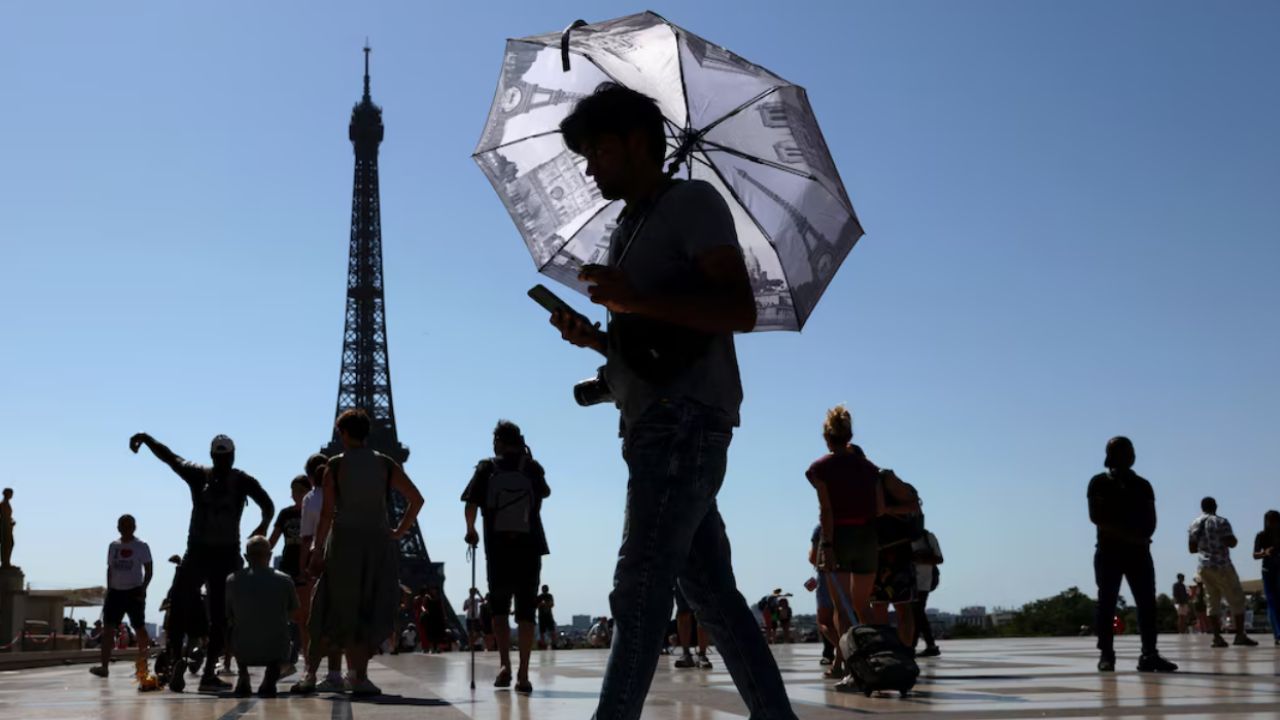
Photo:Reuters
Europe has been facing one of its most extreme weather events in recent history — record-breaking heatwaves that have shattered temperature records, ignited wildfires, claimed lives, and pressured energy systems across the continent. The summer of 2025 will long be remembered as a time when temperatures soared to unprecedented highs, revealing the harsh realities of climate change and its immediate impacts on our environment, health, and society.
Setting the Scene: Unprecedented Heat Across Europe
The first signs of an unusually hot summer appeared as early as April 2025, with parts of central and eastern Europe experiencing unseasonably warm days. But the heat intensified dramatically in June and July. Western and Southern Europe, including countries like Spain, Portugal, France, Italy, Germany, and Greece, experienced scorching temperatures, many surpassing 40°C (104°F).
Portugal and Spain broke national records for June temperatures, with some locations reaching up to 46.6°C (115.9°F) — unprecedented heat for this time of year. Many other countries set new regional or local records. For example, France saw an average temperature of 22.2°C in June, its second-highest ever recorded, surpassed only by the heatwave of 2003.
The extreme heat triggered a sequence of four major heatwaves between June and August. The first wave occurred between June 17 and 22, followed by others in late June to early July, mid-July, and again in August—each more intense and prolonged than the last.
The Human Toll: Lives Lost and Health Impacted
This heat was not just uncomfortable — it was deadly. An analysis by Imperial College London estimated that about 2,300 people died from heat-related causes during just the 10-day period around the end of June and start of July in 12 affected European cities. Without the influence of human-made climate change, it is estimated that around 800 deaths would have occurred — meaning roughly 65% of these fatalities were directly linked to global warming.
Elderly populations and those with existing health conditions were most vulnerable. Hospitals saw a sharp increase in emergency admissions due to heat stroke, dehydration, and respiratory problems. Several deaths were recorded across countries, including a young American tourist in France and workers in construction sites overwhelmed by excessive heat.
Many cities took emergency actions such as closing schools—France alone closed over 2,200 schools during the hottest days—to protect children. Iconic landmarks like the Eiffel Tower were temporarily closed to safeguard visitors.
Wildfires Rage Across the Continent
Heatwaves were accompanied by drought-like conditions, creating the perfect environment for wildfires. In Spain, Portugal, southern France, Italy, and Greece, wildfires swept through forests and rural areas, burning hundreds of thousands of hectares.
These fires destroyed homes, disrupted communities, and caused evacuations. The EU’s Joint Research Centre reported over 409,000 hectares burned in the European Union by mid-August 2025—more than double the burned area by the same time in 2024.
Thousands of firefighters battled these blazes amid the extreme heat. Air quality declined sharply in many regions, with smoke and particulate matter worsening health risks, especially for vulnerable groups.
Impact on Energy and Daily Life
The extreme heat also put enormous stress on energy systems. As temperatures soared, electricity demand increased by up to 14% in countries like Spain, with many people relying heavily on air conditioning for relief. This surge in demand coincided with outages and reduced efficiency at thermal power plants, leading to sharp spikes in electricity prices — sometimes reaching over 400 euros per megawatt-hour.
To cope, there was record solar power generation, which helped supply the grid during daytime, but the evening demand peaks still posed challenges. These conditions highlighted the urgent need for flexible energy systems, better storage solutions, and proactive planning to handle future heat-driven demand surges.
The Climate Change Link: Heatwaves Increasing in Frequency and Intensity
Scientists overwhelmingly agree that climate change is driving these more frequent and intense heatwaves. Europe is warming at roughly twice the pace of the global average. These events will not only continue but worsen without urgent global action to reduce greenhouse gas emissions.
Extreme heatwaves threaten public health, biodiversity, agriculture, and economies. They expose the vulnerabilities in infrastructure, healthcare, and emergency response systems that must be fortified to deal with a hotter world.