Photo: AP
In June 2025, Poland's political landscape underwent significant changes. Prime Minister Donald Tusk's government faced a crucial test when the parliament held a vote of confidence. This vote was particularly important following the defeat of Tusk's ally, Warsaw Mayor Rafał Trzaskowski, in the presidential election.
The election of nationalist candidate Karol Nawrocki, who received 50.89% of the vote, raised questions about the future direction of Poland's policies. Nawrocki's victory, supported by former U.S. President Donald Trump, signaled a shift towards nationalism, posing challenges for Tusk's pro-European Union government.
Background
Donald Tusk, a centrist leader, had previously served as Poland's prime minister and later as president of the European Council. In December 2023, he returned to Polish politics, leading a coalition government that aimed to reverse many policies of the previous nationalist administration. His government's agenda included reforms in areas such as the judiciary, media freedom, and civil rights.
However, the political climate changed dramatically with the presidential election. Karol Nawrocki's narrow victory over Trzaskowski introduced uncertainty into the political environment. Nawrocki's alignment with conservative values and his support from nationalist factions indicated a potential clash with Tusk's vision for Poland's future.
The Confidence Vote
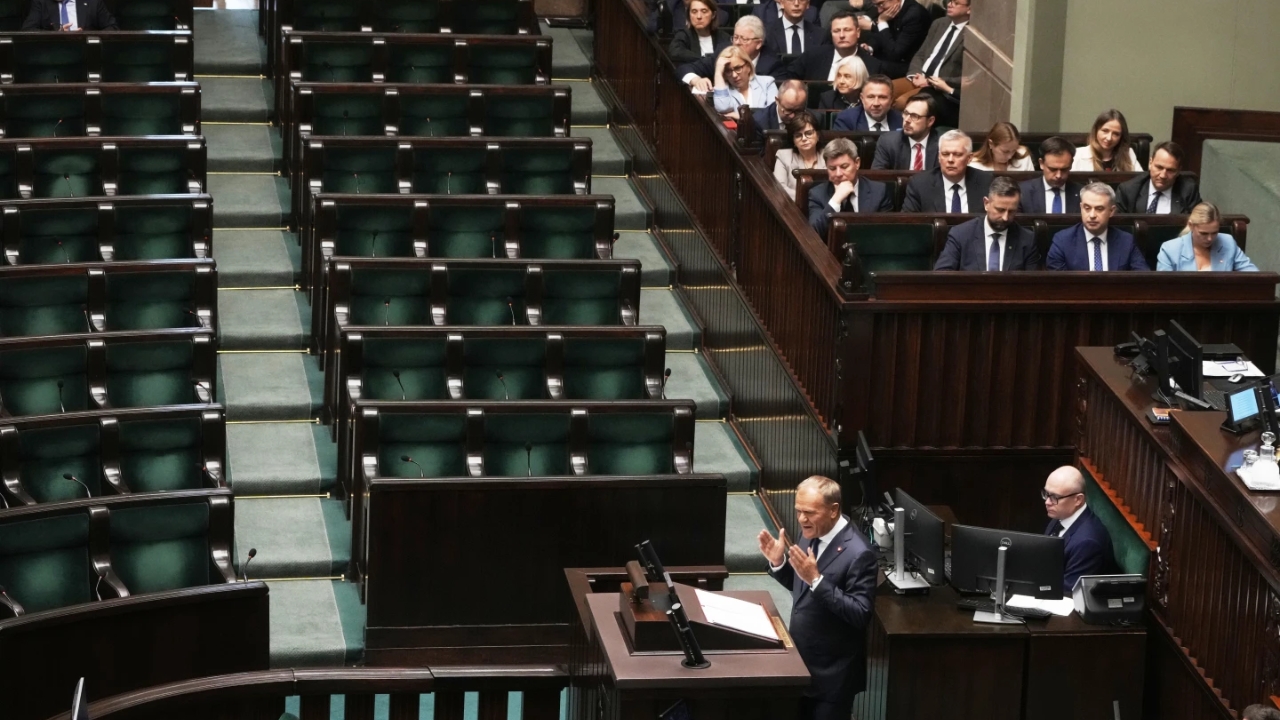
Despite the challenges posed by the presidential election, Prime Minister Tusk's government secured a victory in the parliamentary vote of confidence. The vote passed with 243 in favor and 210 against, out of 460 seats in the Sejm, Poland's lower house of parliament. This outcome demonstrated that Tusk still commanded significant support within the legislative body. Following the vote, lawmakers rose to applaud Tusk and chanted his name, signaling their endorsement of his leadership.
Tusk's Response
Before the vote, Prime Minister Tusk addressed the parliament, expressing confidence in his government's mandate. He stated, "I am asking for a vote of confidence with full conviction that we have a mandate to govern, to take full responsibility for what is happening in Poland."
Tusk emphasized the importance of stability and continuity, highlighting his administration's achievements, including increased defense spending and efforts to reverse judicial reforms enacted by the previous government. He also pledged accountability for any wrongdoing during the previous administration's tenure.
Challenges Ahead
While the confidence vote was a significant win for Tusk, his government faces ongoing challenges. President-elect Nawrocki, who is set to take office in August, has the authority to veto legislation, which could hinder Tusk's reform efforts. Nawrocki has signaled a willingness to cooperate conditionally, suggesting he may advance tax reforms if the government fails to act. This potential conflict underscores the delicate balance Tusk must maintain between his coalition and the newly elected president.
Public Discontent
Public dissatisfaction continues to pose a challenge for Tusk's government. Citizens have expressed frustration over unmet promises, particularly regarding abortion laws, judicial reforms, and tax policy.
The government's inability to deliver on these issues has led to protests and increased scrutiny from opposition parties. Tusk acknowledged these concerns and announced plans for a government overhaul in July, including the appointment of a government spokesperson to improve communication with the public.
Opposition Dynamics
The political opposition remains a formidable force. The right-wing Law and Justice (PiS) party, which previously governed Poland for eight years, continues to challenge Tusk's administration. Many PiS lawmakers boycotted Tusk's speech during the confidence vote, and far-right lawmaker Grzegorz Braun vandalized an LGBTQ+ exhibit in parliament. These actions reflect the deep divisions within Polish politics and the ongoing resistance to Tusk's reforms.
International Implications
Tusk's pro-European Union stance has implications beyond Poland's borders. His government's policies aim to strengthen Poland's ties with the EU and promote democratic values. However, Nawrocki's presidency may shift Poland's foreign policy orientation.
Nawrocki's alignment with conservative leaders like former President Trump and Hungarian Prime Minister Viktor Orbán suggests a move towards nationalism and a potential reevaluation of Poland's relationship with the EU. This shift could have broader implications for EU unity and cooperation.
Prime Minister Donald Tusk's government has navigated a turbulent political landscape, securing a confidence vote in parliament despite significant challenges. The upcoming months will be critical as Tusk's administration seeks to implement its reform agenda while managing relations with the newly elected president and addressing public concerns. The outcome of this political test will shape the future direction of Poland and its role within the European Union.