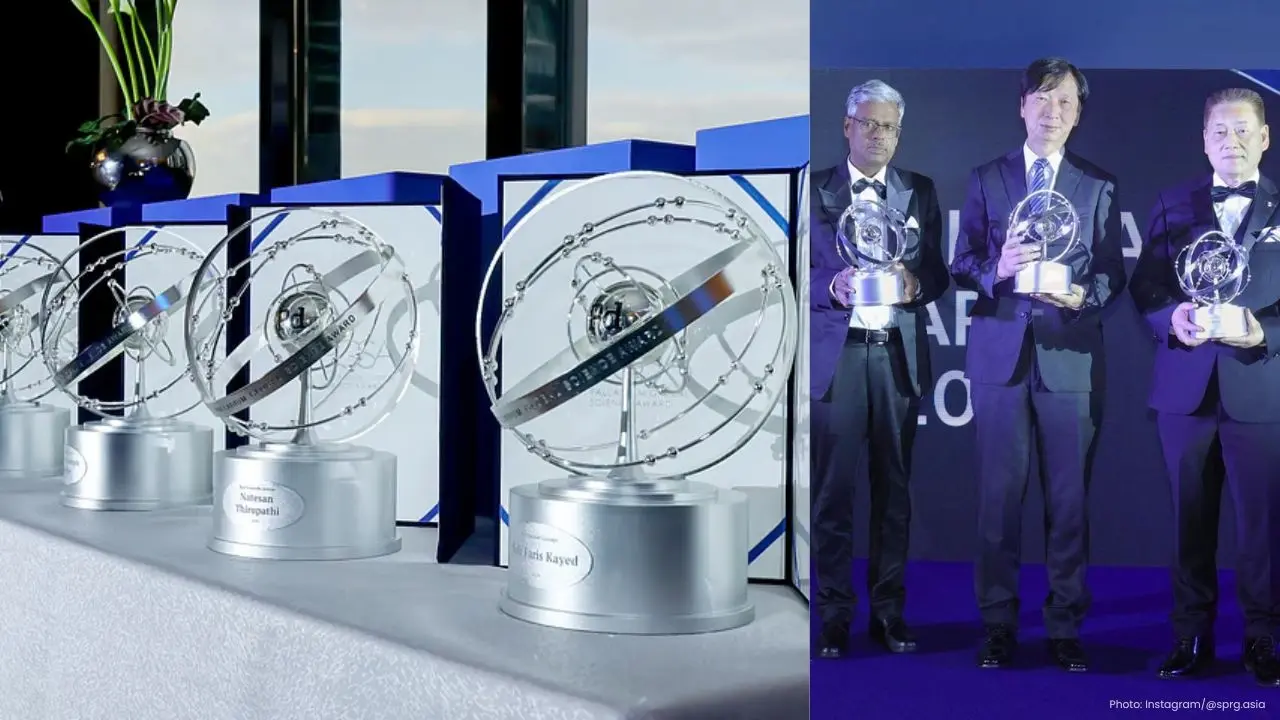
In a landmark celebration for global innovation, Hong Kong recently hosted the first-ever Palladium Global Science Award, an international initiative aimed at promoting advancements utilizing palladium. This inaugural event recognized five outstanding scientists from Canada, Japan, India, the United States, and Saudi Arabia, with a total prize pool of $350,000 awarded across various categories.
Funded by the China Precious Metals Industry Committee (CPMIC) and backed by institutions from South Africa, Japan, and China, the award seeks to expand the applications of palladium beyond its traditional industrial roles. This year's focus was on pioneering innovations in catalysis, electronics, clean energy, environmental solutions, and next-generation materials.
Receiving nearly 100 submissions from over 30 nations highlighted the growing global enthusiasm for envisioning the future potential of this precious metal. The award-winning initiatives underscored palladium’s capability to bolster sustainability objectives, enhance green manufacturing, and pave new pathways in medical and chemical science.
The award ceremony showcased innovations poised to revolutionize various industries.
In the category for Best Scientific Developments in New Palladium Applications, the top honor went to Prof. Chao-Jun Li from McGill University, Canada, for his innovative method of activating methane and CO₂ using a palladium-doped semiconductor under light. This breakthrough presents a novel way to convert harmful emissions into valuable chemicals like methanol, representing a significant leap towards cleaner industrial practices. His technology has been licensed by a McGill-affiliated startup for initial scaling.
The second prize in this category was awarded to Prof. Makoto Fujita from the University of Tokyo, recognized for his pioneering research in palladium-based self-assembly, which led to the innovative crystalline sponge method — a transformative tool for molecular analysis in pharmaceuticals and advanced materials.
From India, Prof. Natesan Thirupathi of Delhi University earned the Best Scientific Article (First Place) for his studies on cyclopalladation processes that promise to accelerate drug development, making it cleaner and more precise.
Second place in this category was given to Prof. Michael Joseph Krische at the University of Texas at Austin, honored for creating safer and more eco-friendly pathways to synthesize crucial medical compounds with palladium-based cross-coupling techniques.
For the Best Applied Concept (First Place), Associate Professor Safa Faris Kayed from Prince Sattam Bin Abdulaziz University, Saudi Arabia, secured recognition for PalladClear — an innovative solution addressing the significant environmental challenge of eliminating hazardous dyes and pharmaceutical residues from wastewater. Future efforts will target moving this promising lab-scale innovation toward pilot-phase application.
Concluding the event, the organizers announced plans for the award to return in spring 2026, indicating a long-term vision to cultivate a global innovation network centered around palladium. As new applications arise in clean energy, environmental initiatives, chemistry, and advanced materials, palladium is increasingly viewed not merely as a commodity but as a catalyst for the next chapter of industrial advancement.