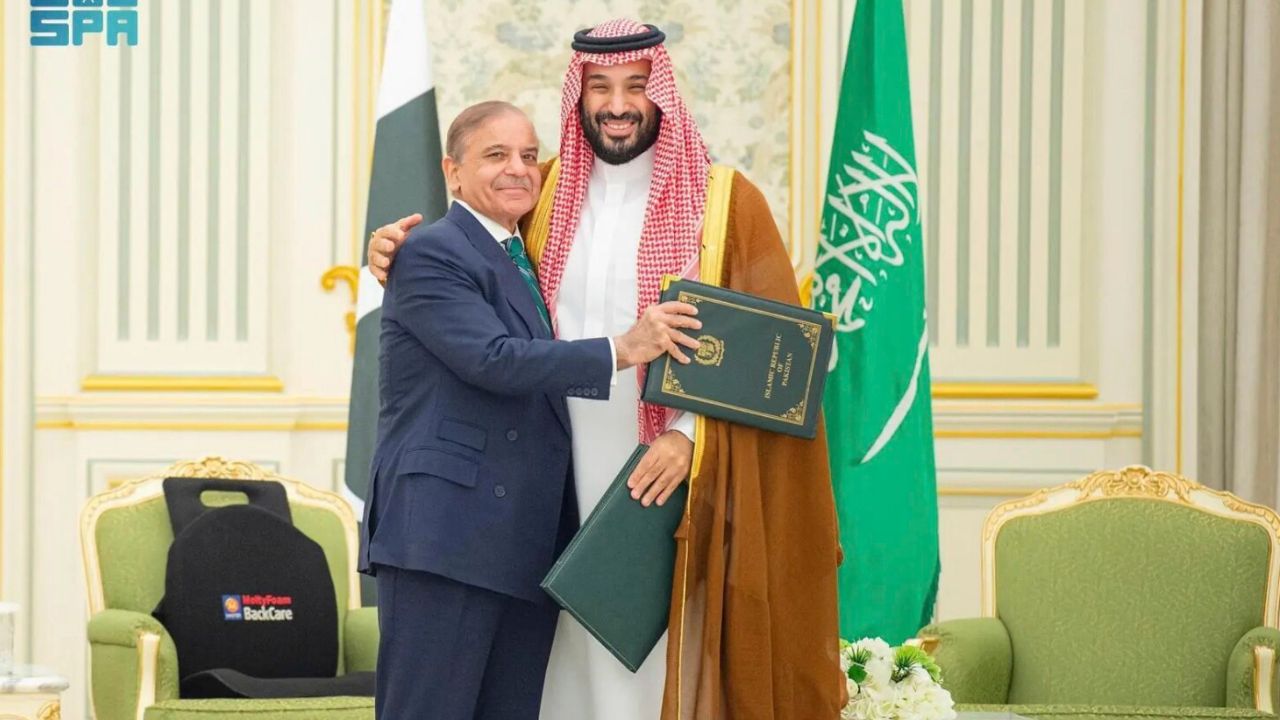
Photo: AP
On September 17, 2025, Pakistan and Saudi Arabia signed a new Strategic Mutual Defence Agreement in Riyadh. Pakistan’s Prime Minister Shehbaz Sharif was invited by Saudi Crown Prince Mohammed bin Salman for the signing.
The agreement says that if either country is attacked, the other will consider it an attack on itself. It also promises stronger defence ties, training, and military support between the two countries. On paper, the deal looks like a big step in regional security. But experts believe it may once again push Pakistan into the role of a “hired army” for Saudi Arabia, instead of an equal partner.
Pakistan’s Long History as Saudi Arabia’s Military Arm
This is not the first time Pakistan has provided military help to the Kingdom. For decades, Pakistan has acted as Saudi Arabia’s outsourced muscle.
1979 Grand Mosque Crisis in Mecca: When militants captured the holy site, Pakistan sent its elite commandos to help Saudi forces crush the uprising. In return, Riyadh gave Pakistan financial aid and oil.
Yemen War (2015 onwards): When Saudi Arabia launched airstrikes against Iran-backed Houthi rebels in Yemen, it needed soldiers on the ground. Pakistan sent thousands of troops, despite resistance inside its own parliament. In 2018, another 1,000 Pakistani soldiers were sent for Saudi defence.
Gulf Military Support (1970s–1990s): During the oil boom years, many Gulf monarchies, including Saudi Arabia, Oman, and the UAE, hired Pakistani soldiers. In Oman, Pakistani troops even fought in the Dhofar war to protect the Sultan.
Each time, Pakistan received loans, oil at lower prices, or direct financial aid in exchange for its soldiers’ service. This pattern makes analysts call Pakistan a mercenary state, where its army works for foreign paymasters instead of focusing only on its own people.
Why Saudi Arabia Needs Pakistan
Saudi Arabia is one of the richest countries in the world because of oil. But despite its wealth, it lacks a strong standing army with large numbers of trained soldiers.
Pakistan, on the other hand, has a huge military force, many of them battle-hardened. For Saudi rulers, Pakistan offers three things:
Cheap manpower – Soldiers ready to deploy when needed.
Nuclear experience – Pakistan is the only Muslim country with nuclear weapons, which Saudi Arabia is said to be interested in.
Loyalty built on aid – Since Pakistan’s economy is weak and often close to bankruptcy, it is willing to exchange military help for Saudi money.
This makes Pakistan an attractive partner for Riyadh.
What Pakistan Gains
For Pakistan’s ruling elite and army generals, this deal brings financial security. The Saudi government often provides aid, oil loans, and investments when Pakistan faces economic collapse. With this new defence pact, Islamabad hopes to secure more dollar inflows at a time when it is struggling with heavy debts, high inflation, and poverty.
But ordinary Pakistanis may not benefit much. Critics argue that while the military profits from Gulf deployments, common citizens get little more than debt traps, radicalisation, and more foreign dependency.
Regional Implications
The timing of this agreement is sensitive. It comes just days after Israel carried out an airstrike in Qatar, killing Hamas leaders. Arab states are worried about growing instability and also about how much they can still rely on the United States for protection.
For Saudi Arabia: The deal helps reduce its overdependence on the US, giving it an alternative military partner.
For Pakistan: It strengthens ties with its main Gulf patron but risks angering Iran, a close neighbour and Saudi Arabia’s regional rival.
For India: New Delhi is watching carefully. India has strong trade ties with Saudi Arabia, including major energy deals. Indian officials have said they will “study the implications” of this defence pact. Experts believe Riyadh will not risk its relations with India to defend Pakistan in future conflicts.
A Risk of Mercenary Status
The problem is not the agreement itself but the pattern it reflects. Each time Pakistan faces an economic crisis, it turns to powerful allies like Saudi Arabia, the US, or China for aid, often offering its soldiers in return.
This damages Pakistan’s sovereignty and international image. Instead of being respected as a strong, independent nuclear nation, it is seen as a client state, trading military services for survival.
Some observers fear that this pact will once again entangle Pakistan in Gulf conflicts, such as the war in Yemen or possible future clashes with Iran.
Disclaimer
This article is based on publicly available reports and official statements. The analysis reflects geopolitical perspectives and does not represent personal opinions of the writer or cninews. Readers are encouraged to follow updates from official government sources for real-time developments.