A year has passed since the tragic Jeju Air plane crash that claimed 179 lives, leaving the victims' families grappling with unresolved grief. Instead of seeking solace in timely findings, they encounter silence and ambiguity, resulting in escalating frustration over the credibility of the ongoing investigation.
On December 29, 2024, a Jeju Air Boeing 737-800 was compelled to execute an emergency belly landing at Muan International Airport due to bird strikes damaging both engines. After touchdown, the aircraft overshot the runway and crashed into a concrete embankment, igniting a fire that ultimately led to the deaths of 179 passengers; only two survived, marking South Korea's deadliest aviation disaster to date.
Following the crash, the Aviation and Railway Accident Investigation Board published a preliminary report focusing heavily on the bird strikes and pilot decisions, including shutting down one engine. This report has been met with skepticism, as families believe it unfairly blames the pilots while sidelining critical examination of other contributing factors, particularly the airport’s infrastructure and safety protocols.
International regulations dictate that a conclusive accident report should be released within a year. In the absence of that, officials are obliged to provide an interim update at the anniversary, outlining progress and safety concerns. As this significant date approached, families were left waiting, but no update arrived.
Authorities later explained that readiness to publish the report was impeded by legislative changes aimed at safeguarding the investigation's independence. While this independence is essential, families feel that continued delays and lack of communication erode public confidence, leaving them feeling overlooked.
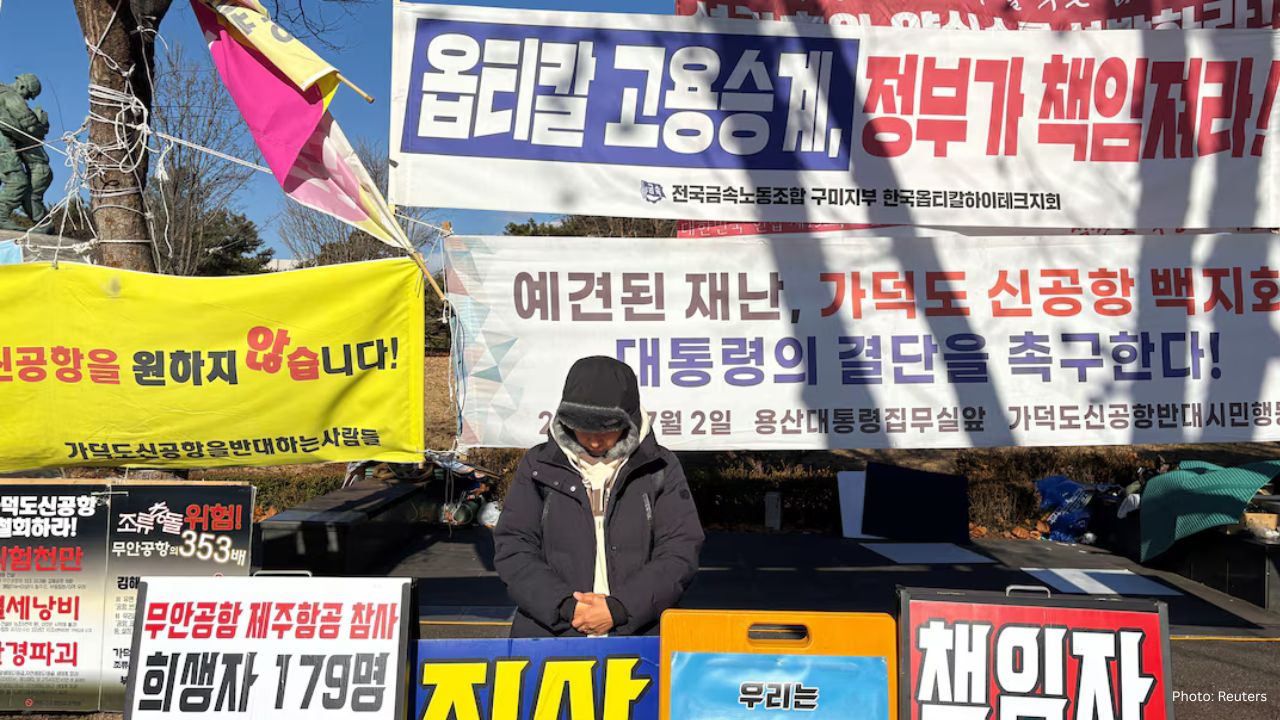
Ryu Kum-ji, who lost her parents in the disaster, has emerged as a figurehead for the families' struggle. On Christmas, she held a solitary protest close to the presidential office in Seoul. Many other family members joined her in shaving their heads to express their demands for an independent and transparent inquiry. Their call for the truth, however uncomfortable, is unmistakable.
A key concern for families revolves around the concrete embankment at the runway's edge. Global aviation safety standards necessitate that such structures be engineered to break upon impact, thereby minimizing damage and increasing survival chances. A recent report from South Korea's anti-corruption agency confirmed that the embankment at Muan airport did not adhere to these safety standards, likely exacerbating the devastation during the crash and contributing to the unfortunate fatalities.
This revelation has amplified calls for accountability from the government. The transport ministry, which oversees airport safety and the investigation board, remains under scrutiny due to fears of conflicts of interest—families worry that oversight might overshadow official errors and safety concerns.
In response to rising demands, South Korea's parliament has announced plans for an independent inquiry into the incident, with potential changes to shift accident investigation oversight from the transport ministry to the prime minister’s office. A senior transport official acknowledged inadequacies in the government response and pledged to take family concerns more seriously moving forward.
Despite these assurances, trust remains tenuous. Public hearings initially scheduled for this month have been deferred at the request of family members and lawmakers, who emphasized the need for transparency and fairness in the process. Meanwhile, police investigations into the incident continue.
The Jeju Air tragedy transcends a mere aviation incident; it serves as a gauge of accountability, integrity, and respect for life. The public's trust in air travel hinges on governmental transparency, candid acknowledgment of failures, and commitment to safety over reputation.
Family members seek not retribution without evidence but honesty and accountability—a heartfelt apology if due. One year on, their queries linger unresolved. How the authorities now respond will dictate if this tragedy fosters substantive change or simply becomes another narrative of unresolved justice.