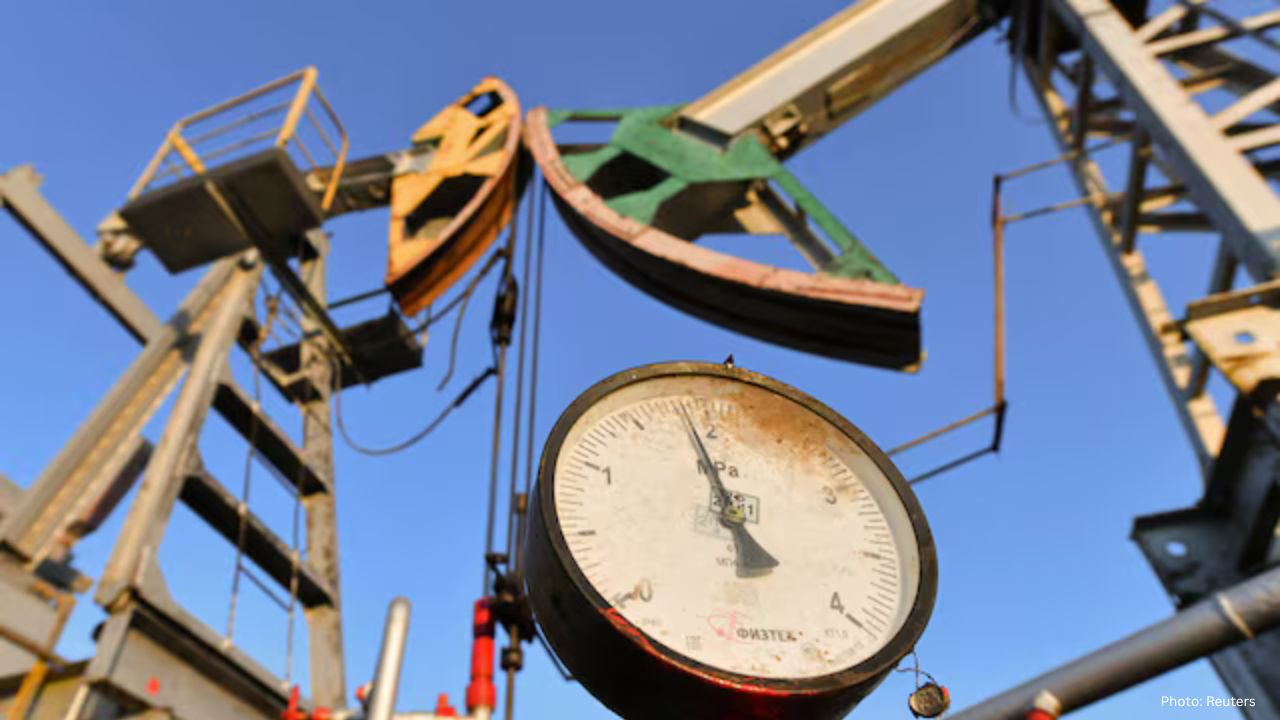
On Friday, global oil prices showed little change as investors navigated the complexities of escalating geopolitical tensions while considering a robust supply environment amid a slow holiday trading schedule. With trading volumes decreased post-Christmas, market participants exercised caution, resulting in prices being maintained in a limited range as they monitor events that could impact oil supply moving forward.
Brent crude, an international benchmark, saw slight gains at just above $62 per barrel, while U.S. West Texas Intermediate remained around $58. These minor fluctuations mirror uncertainty rather than confidence among traders. Political developments in various regions are of close interest, particularly with oil poised for its steepest annual decline since 2020.
Heightening attention was on recent U.S. airstrikes against Islamic State militants in northwest Nigeria. Although Nigeria is a significant oil producer, analysts pointed out that the strikes didn’t affect oil fields, pipelines, or export facilities. Most of Nigeria's oil infrastructure is located far from conflict areas, so the strikes did not incite immediate worries regarding supply disruptions, leading traders to remain predominantly passive.
Venezuela poses another concern. The U.S. has escalated economic pressure on the Venezuelan oil sector with tighter sanctions rather than military measures. This strategy indicates Washington's intention to curtail Venezuela's reach in global oil markets, potentially impacting supply in the upcoming months, although the present influence on prices is minimal due to already high global production levels.
A critical influence on the stagnant price levels is supply. OPEC+ and other non-OPEC nations have consistently ramped up oil production, raising concerns of an oversupplied market as we approach the new year. Typically, increased supply without corresponding demand leads to lower prices, a reality investors are acutely aware of.
Focus is also shifting toward Eastern Europe, where any movements toward peace between Russia and Ukraine might significantly alter oil market dynamics. Should sanctions on Russian oil be relaxed as part of a peace agreement, it would enable more oil to re-enter the global marketplace, further increasing supply. Recent dialogues from leaders on both sides hint at continued discussions, though a conclusive outcome remains elusive.
In summary, oil markets are in a state of cautious observation. A combination of lighter trading due to year-end festivities, heightened production levels, and unpredictable political landscapes has initiated a waiting period. Prices are stable for now, but their future trajectory in early 2026 will heavily rely on geopolitical considerations, demand recovery, and the strategies employed by primary oil producers to manage supply.