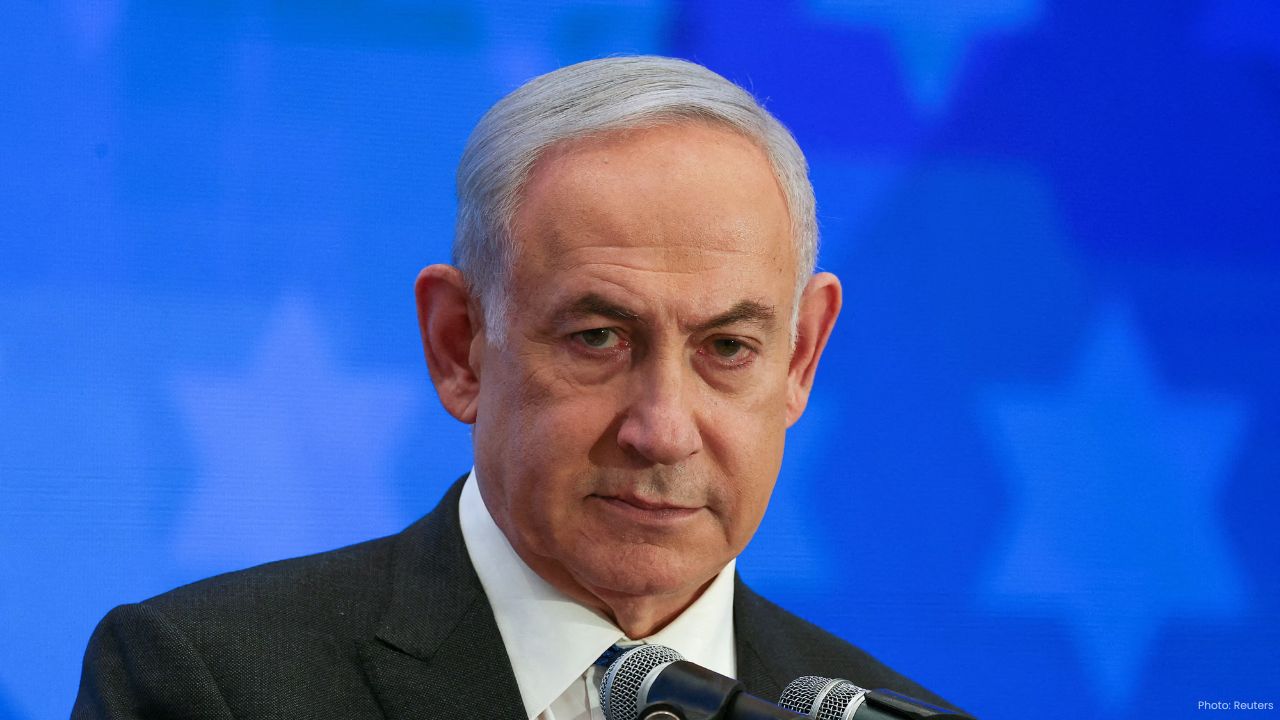
Israeli Prime Minister Benjamin Netanyahu delivered a fiery address at the United Nations on Friday, emphasizing Israel’s refusal to accept a Palestinian state. He accused European nations of promoting what he called “national suicide” and of rewarding Hamas, the militant group that launched a deadly attack on Israel earlier this year.
Netanyahu declared that Israel would not allow a “terrorist state” to be imposed and warned that his country would not bow to pressure from international powers. He claimed that European support for a Palestinian state sent a message that “murdering Jews pays off,” highlighting his longstanding opposition to Palestinian sovereignty.
October 7 Hamas Attack and Gaza Conflict
The speech comes in the wake of the October 7, 2023, Hamas attacks, which were described as the deadliest in Israeli history. According to official Israeli figures, 1,219 people were killed, mostly civilians. Israel responded with a major offensive in Gaza, which the United Nations and health authorities report has led to over 65,549 Palestinian deaths, predominantly civilians.
During his speech, Netanyahu emphasized that his country had urged Gaza residents to evacuate combat zones, countering international claims that Israel was committing genocide. Humanitarian organizations, including Doctors Without Borders, have reported severe disruption to aid efforts, with the charity temporarily suspending operations in Gaza City due to ongoing attacks.
Netanyahu Criticizes Western Support for Palestinian Leaders
Netanyahu mocked Western backing of Palestinian Authority President Mahmoud Abbas, whom he labeled as “corrupt to the core.” Abbas had addressed the UN virtually, after being denied a US visa, condemning both the Hamas attacks and antisemitism. Netanyahu’s criticism reflected his long-standing view that a Palestinian state under the current leadership would threaten Israel’s security.
Despite the tensions, Netanyahu praised former US President Donald Trump, noting their upcoming meeting in Washington. Trump expressed optimism about a potential ceasefire in Gaza, stating, “I think we have a deal.” Some media reports have suggested former British Prime Minister Tony Blair could play a role in a transitional authority for Gaza under US-led proposals.
Ongoing International Tensions and Responses
Netanyahu’s address did not directly touch on the contentious issue of annexing the West Bank, a policy some of his cabinet members have considered as a way to prevent the creation of a Palestinian state. Trump has previously warned against annexation, suggesting that it could complicate peace efforts in Gaza, where he has proposed the disarmament of Hamas.
Iranian President Masoud Pezeshkian, whose government supports Hamas, indicated support for a ceasefire in Gaza, showing that international dynamics remain complex.
Protests and International Criticism
Netanyahu traveled to New York via an unusual route over the Strait of Gibraltar amid an International Criminal Court arrest warrant for alleged war crimes, including accusations of using starvation as a weapon. Outside his hotel, demonstrators protested overnight, with one activist declaring that “war criminals don’t deserve peace of mind.”
Palestinian officials described Netanyahu’s speech as one of a “defeated man,” while human rights groups continue to monitor the humanitarian crisis in Gaza. Forced displacement of the civilian population is considered a war crime under international law, with nearly the entire Gaza population affected by ongoing hostilities.
Hostage Situation and Israel’s Messaging
Netanyahu emphasized that his address was partially broadcast over loudspeakers in Gaza, aiming to reach both Hamas leaders and hostages still held since the October 7 attack. He assured families, “We have not forgotten you – not even for a second,” reiterating his commitment to recovering Israelis held by Hamas.
However, some families of hostages have voiced concerns that the renewed military campaign could endanger those being held, calling for a ceasefire to secure their release safely.
Broader Military Campaigns and Middle East Tensions
The UN speech also came months after Netanyahu ordered major bombings of Iranian nuclear sites, reflecting Israel’s ongoing security concerns in the region. During his address, he displayed a map of the Middle East, marking out countries where Israel had targeted adversaries. Iran, which boycotted the UN session, did not respond directly to the speech but has previously supported Hamas militarily and politically.
Humanitarian Crisis and Ongoing Violence
The humanitarian situation in Gaza remains dire. On the day of Netanyahu’s speech alone, Gaza’s civil defense reported twenty deaths due to ongoing airstrikes. Hospitals are overwhelmed, and medical aid organizations struggle to operate safely.
Israel maintains that its military actions are aimed at Hamas, which launched the deadly attacks, while international observers continue to raise concerns about civilian casualties and potential violations of international law.
A Pivotal Moment for the Region
Netanyahu’s UN address highlighted the deep divisions over Palestinian statehood, Gaza’s humanitarian crisis, and Israel’s security concerns. While he received praise from Trump and support from some allies, his statements drew criticism from international observers, Palestinian officials, and human rights advocates.
As the conflict continues, the possibility of a negotiated ceasefire or peace plan remains uncertain, with multiple stakeholders, including the United States, European nations, and regional powers like Iran, influencing the complex and volatile situation.
The world now watches as Israel continues its military operations, negotiates potential ceasefire agreements, and navigates the ongoing political and humanitarian challenges in Gaza and the broader Middle East.