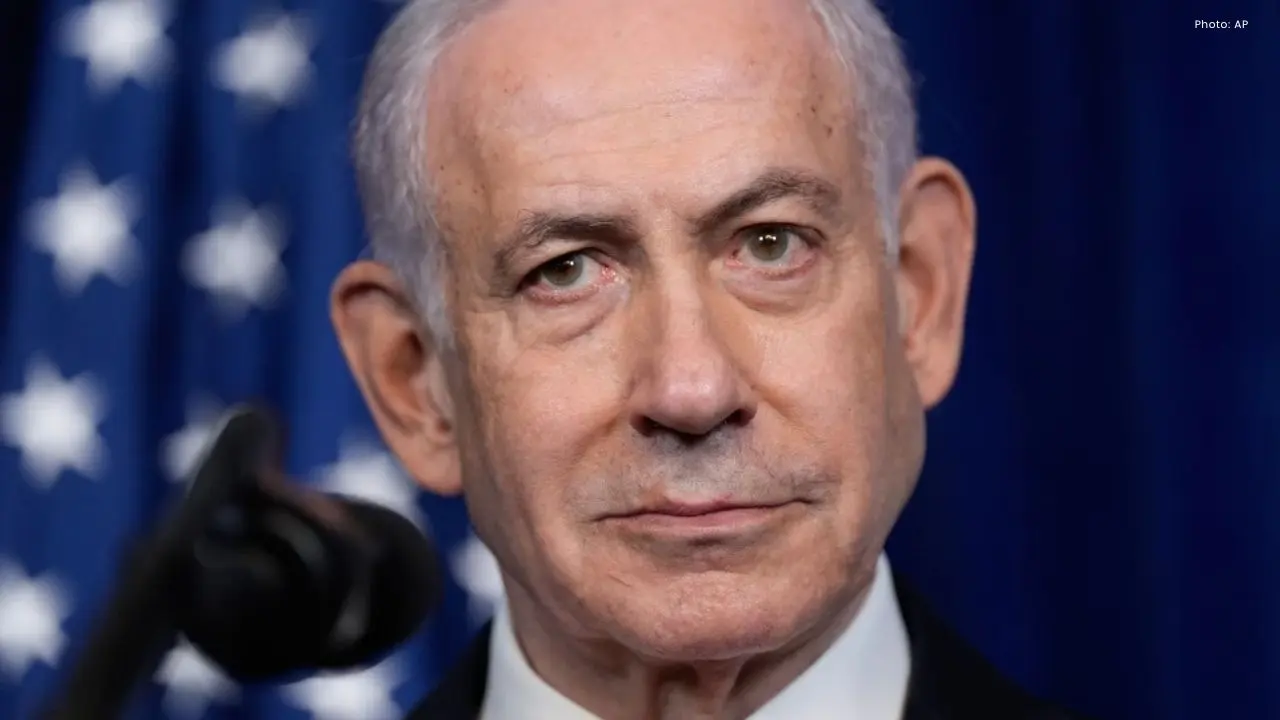
Prime Minister Benjamin Netanyahu of Israel has agreed to participate in U.S. President Donald Trump’s newly established Board of Peace for Gaza, marking a significant shift in his public stance. This decision follows prior criticisms from Netanyahu’s office regarding the board's structure, particularly the committee dedicated to Gaza.
The Board of Peace was initially proposed as a select group of world leaders tasked with overseeing a ceasefire initiative for Gaza. However, its scope has since broadened. President Trump extended invitations to various nations, suggesting that the board could assist in resolving conflicts beyond Gaza. This expanded scope has piqued interest but also concern among global leaders.
Previously, Netanyahu’s office raised objections to the Gaza committee's inclusion of Turkey, a nation considered a regional rival by Israel. They claimed the committee's formation lacked adequate coordination and did not align with Israel’s policies. In spite of these concerns, Netanyahu has opted to participate, indicating he views involvement as more advantageous than remaining outside the board.
This choice may lead to internal tensions within Israel's own government. Some of Netanyahu’s far-right supporters, including Finance Minister Bezalel Smotrich, have voiced strong opposition to the board, arguing that Israel should independently handle Gaza’s future without international assistance. Thus, Netanyahu’s decision could challenge the cohesion of his coalition.
Several countries, including the United Arab Emirates, Morocco, Vietnam, Belarus, Hungary, Kazakhstan, and Argentina, have already committed to joining the board. Other nations, such as the United Kingdom, Canada, Egypt, Russia, Turkey, and the European Union, have received invitations but have not yet provided definitive responses.
The announcement coincided with President Trump attending the World Economic Forum in Davos, where he is expected to elaborate on the board's operational framework. Significant questions persist regarding the board's authority and which leaders will participate.
Trump has ignited debate by suggesting that the board may even supplant the United Nations in certain functions. While he criticized the U.N. for falling short of its potential, he also emphasized the necessity for its continued existence. This mixed stance has raised concerns among several nations. For instance, France has expressed support for Trump’s peace efforts but opposes the formation of a new entity that would replace the U.N.
The Gaza ceasefire plan entails that the board’s Gaza committee would oversee challenging second-phase tasks. These include deploying an international security force, disarming Hamas, rebuilding Gaza, and overseeing a cadre of Palestinian technocrats managing day-to-day affairs in the territory.
The White House has noted that the board comprises a diverse array of figures, from senior U.S. officials to international diplomats and business leaders. A separate executive group will be responsible for broader decisions, while a designated representative will manage daily operations in Gaza.
Netanyahu’s choice to join the board underscores the complex dilemmas facing Israel as it navigates security concerns, international pressure, and regional dynamics. Whether this newly constituted board can effectively facilitate peace in Gaza remains to be seen, but its establishment has already altered the global discourse.