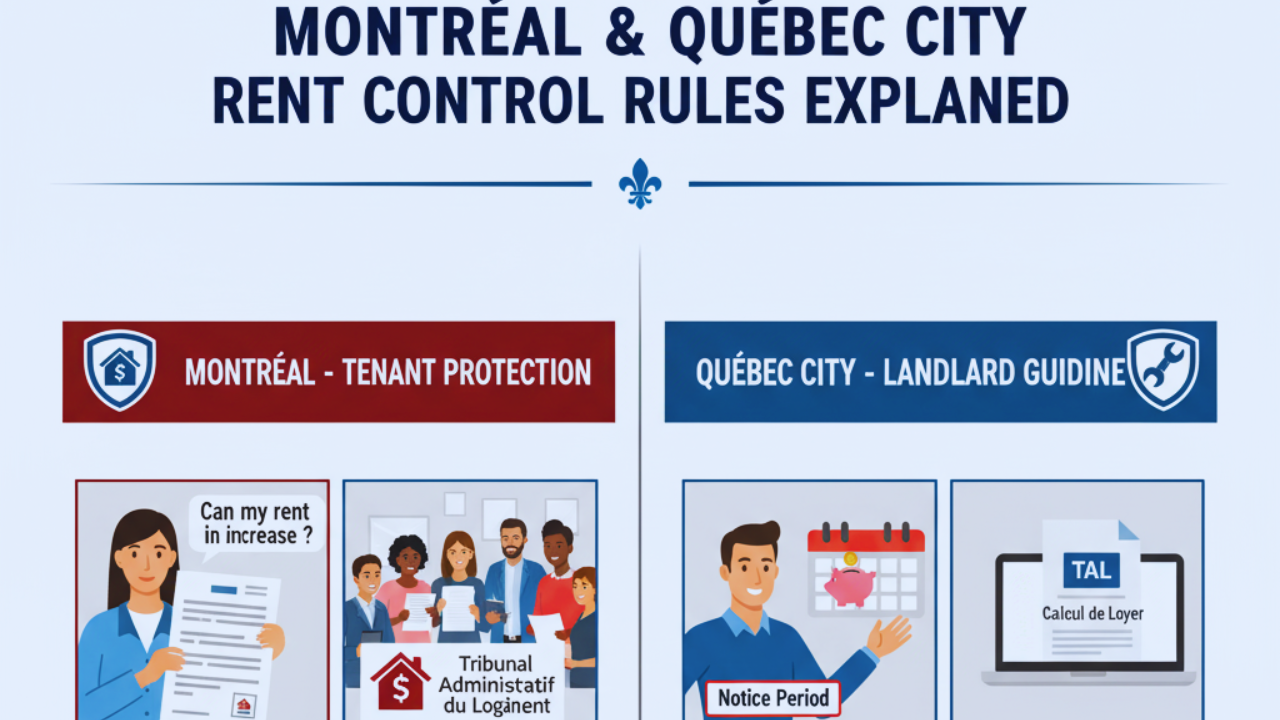
Rent Control Rules in Montreal and Quebec City: A Complete Guide
Rent control is an essential aspect of housing in Quebec, particularly in Montreal and Quebec City, where rental demand is high. These rules protect tenants from sudden and unfair rent increases, ensuring affordable housing and stability for residents.
For landlords, understanding the regulations helps maintain compliance and avoid disputes. This guide explains the key rent control rules, tenant protections, and what renters and property owners need to know in 2025.
Overview of Rent Control in Quebec
Quebec’s rent control system is governed by the Civil Code of Quebec and enforced by the Tribunal administratif du logement (TAL). The regulations cover:
-
Annual Rent Increases: Landlords must follow guidelines set by TAL for rent adjustments each year. Increases are based on inflation, property maintenance costs, and other factors.
-
Tenant Rights: Tenants cannot be evicted without proper notice or legal justification. They also have the right to contest rent increases deemed unfair.
-
Lease Agreements: Standard lease terms are regulated to ensure clarity and fairness for both landlords and tenants.
Rent Control in Montreal
Montreal, as Quebec’s largest city, has a diverse rental market. Key points include:
-
Annual Increases: Landlords can increase rent once per year. The increase is generally tied to TAL’s guideline percentage, which considers inflation and operating costs.
-
Notice Requirements: Tenants must receive written notice of rent increases at least three months before the lease renewal.
-
Challenging Increases: Tenants who believe a proposed rent increase is excessive can file a complaint with TAL within one month of receiving the notice.
Montreal also has programs to support tenants in older buildings or those with low incomes, offering additional protections and rent review processes.
Rent Control in Quebec City
Quebec City follows similar provincial regulations with a few local considerations:
-
Annual Adjustments: Rent increases are also regulated by TAL guidelines and must be justified based on property expenses.
-
Tenant Protections: Tenants cannot face arbitrary eviction, and landlords must provide legal notice and justification.
-
Lease Renewal: Landlords and tenants are encouraged to communicate openly regarding renewals, and disputes are settled through TAL if necessary.
Tenant Rights Under Quebec Law
Understanding tenant rights is critical to navigating rent control regulations:
-
Right to Fair Rent: Tenants can contest increases that exceed TAL guidelines.
-
Right to Proper Notice: Written notice is required for rent increases, evictions, or changes in lease terms.
-
Right to Habitable Housing: Landlords must maintain the property in a safe and livable condition.
-
Right to Renewal: Tenants generally have the right to renew a lease unless the landlord has legal grounds to refuse.
How Rent Increases Are Determined
TAL provides an annual formula to determine permissible rent increases:
-
Operating Costs: Includes property taxes, insurance, maintenance, and utilities.
-
Inflation Rate: Adjustments reflect changes in the Consumer Price Index (CPI).
-
Additional Factors: Major renovations or improvements may justify higher increases.
Landlords must provide a detailed breakdown of these factors when notifying tenants of an increase.
Tips for Tenants in Montreal and Quebec City
-
Keep Records: Maintain copies of lease agreements, notices, and correspondence with landlords.
-
Know TAL Guidelines: Familiarize yourself with annual allowable rent increases.
-
Inspect the Property: Document existing conditions to avoid disputes over maintenance issues.
-
Communicate Professionally: Discuss rent concerns with landlords before filing complaints.
-
Seek Assistance: Local tenant associations offer guidance and support for disputes.
Tips for Landlords
-
Follow TAL Regulations: Ensure any rent increase follows legal guidelines and is properly documented.
-
Provide Proper Notice: Always give written notice to tenants at least three months in advance.
-
Maintain Property: Compliance with habitability standards avoids legal disputes and penalties.
-
Keep Detailed Records: Track operating costs and renovations to justify rent adjustments.
-
Resolve Disputes Professionally: Engage in TAL mediation if disagreements arise with tenants.
Common Misconceptions About Rent Control
-
All Rent Increases Are Capped: Not entirely. Increases are regulated but can include justified expenses for major repairs or improvements.
-
Landlords Cannot Raise Rent: Annual increases are permitted within guidelines; the law prevents arbitrary or excessive hikes.
-
Tenants Can Stay Forever: Lease renewal rights exist, but landlords can legally refuse renewal under specific conditions, such as personal use or major renovations.
The Role of TAL in Rent Disputes
The Tribunal administratif du logement is Quebec’s governing body for residential lease disputes. Key functions include:
-
Resolving disagreements over rent increases
-
Handling eviction notices
-
Reviewing lease terms and tenant complaints
-
Ensuring compliance with provincial housing laws
TAL ensures both tenants and landlords have a fair process for resolving conflicts.
Rent control in Montreal and Quebec City is designed to balance tenant protections with landlord rights. By understanding provincial regulations, tenants can contest unfair rent increases and ensure livable conditions, while landlords can manage properties legally and responsibly.
Staying informed about TAL guidelines, proper notice requirements, and tenant rights is essential for a smooth rental experience. For newcomers and long-term residents alike, knowledge of rent control ensures fair and secure housing in Quebec’s major cities.