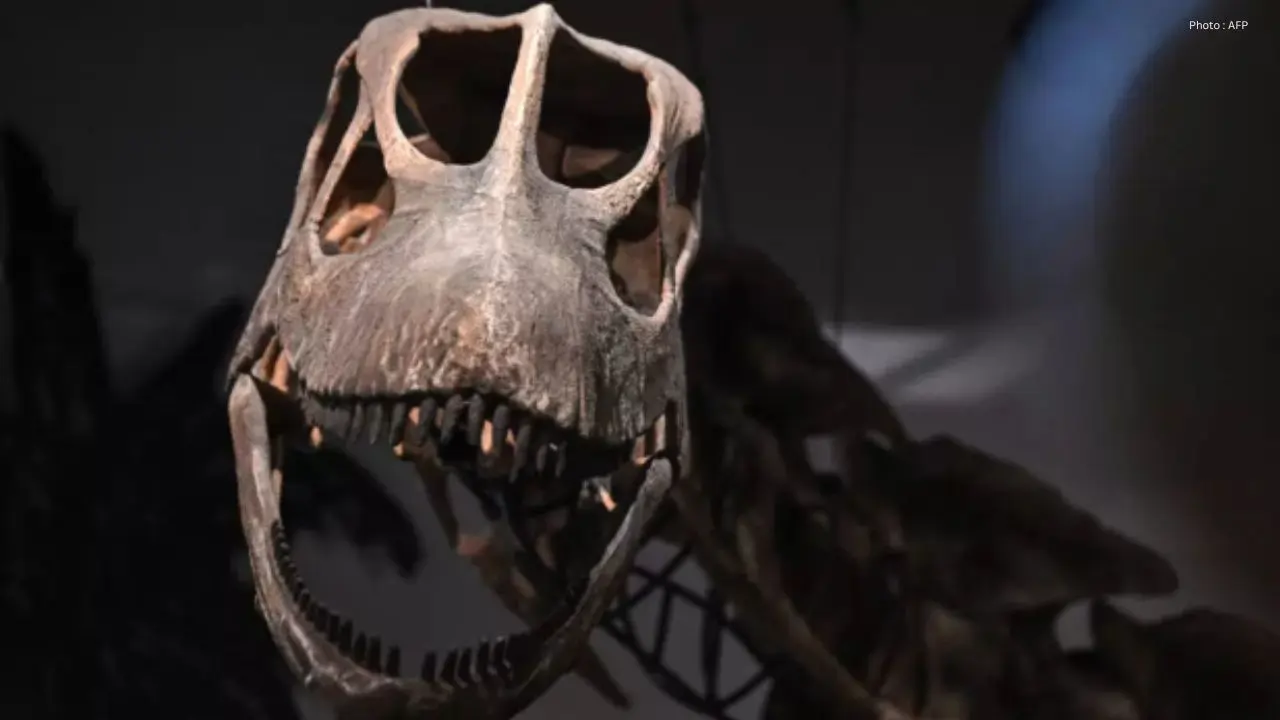
Scientists in Thailand have identified what is now believed to be the largest dinosaur ever discovered in Southeast Asia. The massive prehistoric animal was identified through fossil remains found in northeastern Thailand, where researchers say the discovery could provide important new information about dinosaur life in the region millions of years ago.
According to Thai paleontologists, the dinosaur belonged to a group of giant long-necked plant-eating dinosaurs known as sauropods. Researchers estimate the enormous creature measured more than 30 metres in length and weighed several tonnes, making it the largest dinosaur species yet confirmed in Southeast Asia. The fossils were discovered in sedimentary rock formations believed to date back roughly 130 million years to the Early Cretaceous period.
The discovery was made in Thailand’s Nakhon Ratchasima province, an area already known for important prehistoric fossil sites. Scientists said the remains included large vertebrae, limb bones, and parts of the animal’s tail, allowing researchers to study the dinosaur’s size, movement, and physical structure in greater detail.
Researchers explained that the dinosaur likely lived in a warm environment filled with rivers, forests, and large floodplains that supported giant herbivorous species. During the Early Cretaceous period, Southeast Asia had a very different climate and landscape compared to today, with many large reptiles and prehistoric animals living across the region.
Paleontologists believe the newly identified dinosaur may represent either a completely new species or one closely related to giant sauropods previously discovered in other parts of Asia and South America. Scientists are continuing laboratory studies to determine the dinosaur’s exact classification and evolutionary connections.
Experts involved in the project said the discovery is important because Southeast Asia has historically produced fewer large dinosaur fossils compared to countries such as China, Argentina, or the United States. The finding could help scientists better understand how giant dinosaurs spread and evolved across ancient continents millions of years ago.
The research team also highlighted the growing importance of Thailand in international paleontology. Over the past several decades, the country has become increasingly recognized for important fossil discoveries involving dinosaurs, ancient crocodiles, turtles, and other prehistoric species. Thai museums and research institutions have expanded fossil excavation programs as more discoveries continue emerging from the region.
Scientists said studying the giant dinosaur’s bones may also reveal information about its growth rate, diet, and movement patterns. Advanced scanning and fossil analysis techniques are now being used to examine the remains more carefully. Researchers hope future excavations in the area could uncover additional fossils from the same species or even more unknown prehistoric animals.
The discovery has already attracted strong interest from both the scientific community and the public. Dinosaur enthusiasts across Asia have praised the finding as one of the region’s most exciting paleontological discoveries in recent years. Thai officials also said the fossils could eventually become part of museum exhibitions and educational programs promoting science and natural history tourism.
Experts believe the identification of Southeast Asia’s largest dinosaur marks another important step in understanding Earth’s prehistoric past. As research continues, scientists hope the discovery will help reveal more about the ancient ecosystems that once existed across the Asian continent millions of years before humans appeared.