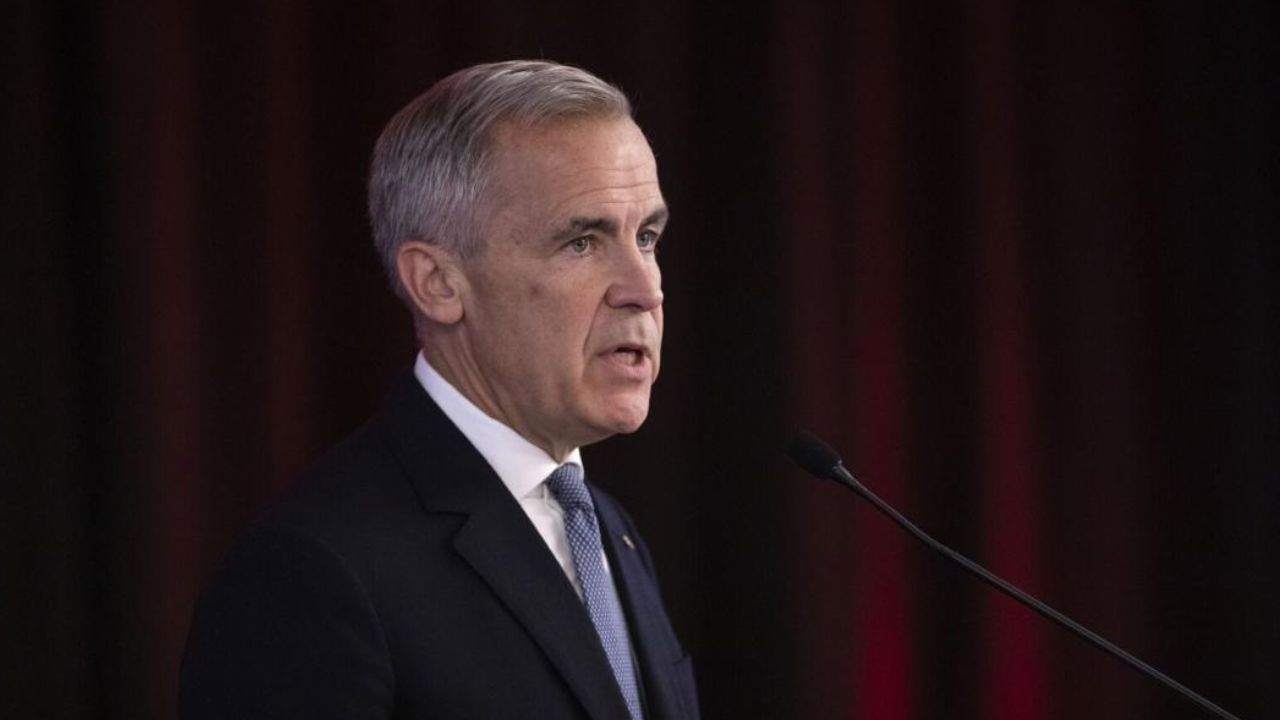
Prime Minister Mark Carney has revealed the first phase of major national projects aimed at boosting Canada’s economy. The announcement, made from Edmonton, Alberta, confirms that the government is moving ahead with projects that span the country from coast to coast.
The first five projects include energy, mining, and transportation initiatives. They are designed to strengthen Canada’s economic position and create jobs across multiple provinces.
LNG Expansion in British Columbia
The first project is the LNG Canada Phase 2 project in Kitimat, British Columbia. This expansion will double Canada’s production of liquefied natural gas (LNG). For years, former Prime Minister Justin Trudeau argued that exporting LNG to Europe was not viable. However, Carney’s government is now promoting Canadian LNG to new markets, including Germany.
Energy Minister Tim Hodgson said there is growing international demand for Canadian LNG. He added that these exports will support economic growth and strengthen Canada’s position as a global energy supplier.
Nuclear, Mining, and Port Expansion Projects
The other four major projects in Carney’s first phase include:
Darlington New Nuclear Project in Ontario – This will make Canada the first G7 country to operate a small modular reactor (SMR).
Contrecœur Terminal Container Project in Quebec – The expansion of Montréal’s port will increase its capacity by about 60 percent.
McIlvenna Bay Foran Copper Mine in Saskatchewan – This project supports Canada’s growing demand for critical minerals.
Red Chris Mine Expansion in British Columbia – This will enhance the production capacity of one of Canada’s major copper and gold mines.
These projects show Carney’s government is focused on energy security, natural resources, and modernizing Canada’s infrastructure.
Future Projects in Early Development
The government also highlighted other projects in early stages that may be approved later. These include:
Wind West Atlantic Energy Project in Nova Scotia, leveraging 50 GW of wind power potential.
Pathways Plus in Alberta, a carbon capture and storage initiative.
Arctic Economic Security Corridor to support northern mineral projects and security.
Port of Churchill Plus in Manitoba for upgrading port facilities.
Alto High-Speed Rail connecting Toronto to Québec City over 1,000 km.
Carney emphasized that while pipelines are not part of this first phase, the list of projects will continue to grow as new proposals are developed.
Streamlining Approval and Fast-Tracking Projects
The Major Projects Office (MPO) will oversee these projects to ensure fast-track regulatory approval. The MPO, led by Dawn Farrell, former CEO of Trans Mountain Corporation, was created under Bill C-5, the Building Canada Act. The law gives the government broad powers to approve projects considered vital for the nation.
Carney stated that these initiatives are part of a larger effort to protect Canada’s economy amid the ongoing trade tensions with the United States. He called for national unity and determination, comparing the scale of change to post-World War II reconstruction efforts.
National Importance and Economic Goals
The first five projects represent a mix of energy, mining, and infrastructure development. They are expected to generate jobs, improve Canada’s export capabilities, and strengthen domestic industries. The government hopes these projects will help Canada remain competitive in a challenging global economy.
Alberta Premier Danielle Smith commented that the absence of pipelines in the initial phase should not be a concern, as the project list will be updated continuously.
Prime Minister Carney’s first phase of projects is a bold step toward modernizing Canada’s economy. With LNG, nuclear energy, mining, and port expansion at the forefront, the government is signaling a commitment to long-term economic growth. While more projects are still under review, the first five show Canada’s focus on energy security, industrial development, and infrastructure improvement. These initiatives are designed to create jobs, support international trade, and prepare the nation for future challenges.