On Monday, the political landscape in Venezuela shifted dramatically as the detained President Nicolas Maduro braced for his upcoming federal court appearance in the United States. This follows a high-stakes raid by U.S. forces in Caracas over the weekend, generating global concerns and debates over the implications.
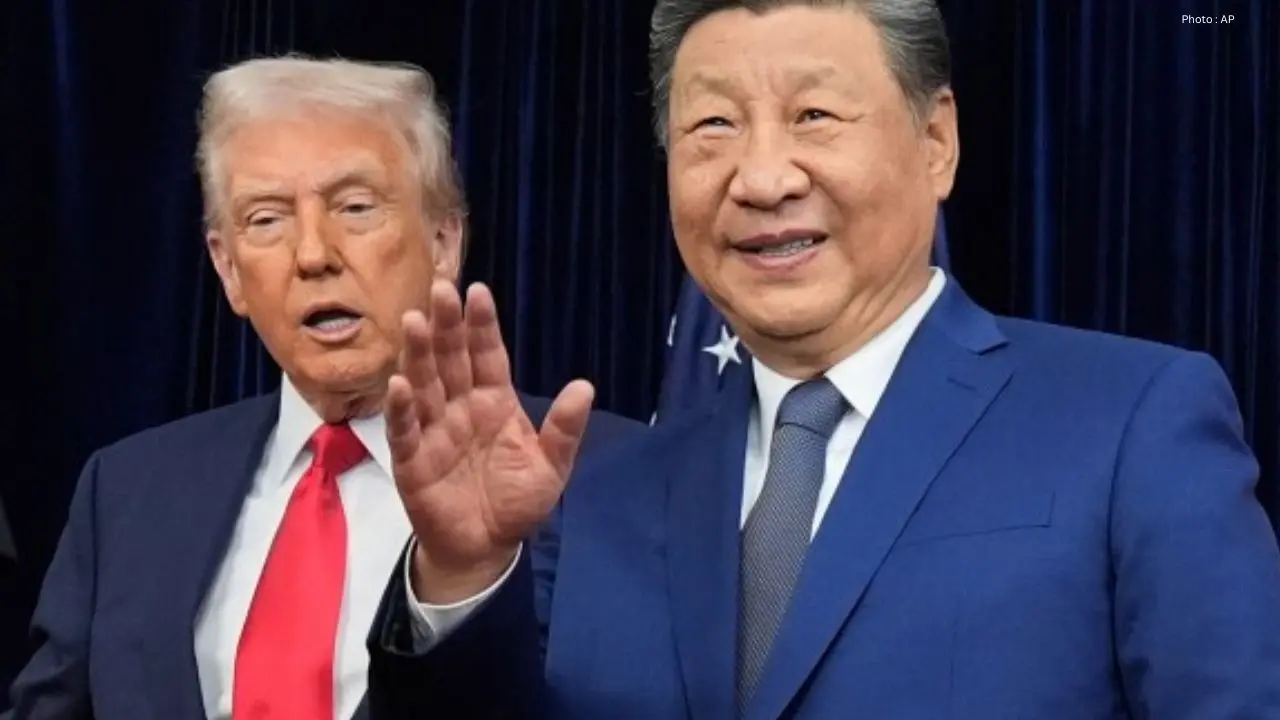
U.S. President Donald Trump indicated on Sunday that further military interventions in Venezuela are still on the table. He stated that if the interim leadership of Venezuela does not comply with U.S. requests, Washington may consider additional military action. Trump emphasized the United States' desire to revitalize Venezuela's oil sector and enhance efforts against drug trafficking.
During a press briefing on Air Force One, Trump extended warnings to neighboring countries, suggesting that Colombia and Mexico might face military repercussions for failing to combat drug shipments entering the U.S. He also noted the fragile state of Cuba's communist government, hinting at its potential downfall.
Detained during the U.S. raid, the 63-year-old Maduro is now facing longstanding allegations of narco-terrorism conspiracy. U.S. prosecutors claim he collaborated with prominent drug trafficking organizations, orchestrating cocaine routes and employing the military for protection while allowing drug transport through government channels.
The charges against Maduro, initially filed in 2020, have recently been expanded to include his wife, Cilia Flores, who is supposedly implicated in orchestrating kidnappings and murders linked to criminal activities. Both Maduro and Flores have rejected the allegations. Legal analysts predict a lengthy process before the case reaches trial.
Trump's administration has characterized the mission as a law enforcement initiative aimed at capturing a fugitive. However, Trump has noted that other motivations, such as the mass migration crisis from Venezuela and historical nationalizations of U.S. oil properties, contributed to the operation. He mentioned potential billions in investment from American oil firms to revive Venezuela's oil production.
Despite Maduro's apprehension, his government remains intact, with Vice President Delcy Rodriguez declaring herself the interim leader. Rodriguez insists that Maduro remains Venezuela's legitimate president, dismissing Trump's assertions that she is open to collaboration with U.S. authorities, and accusing the U.S. of aggression.
The future of Venezuela's political landscape remains uncertain. The United States has consistently labeled Maduro as illegitimate, especially after his contentious election win in 2018. However, Trump has ruled out the possibility of a transition to opposition leader Maria Corina Machado, claiming she lacks widespread support. Machado and her supporters assert that opposition figure Edmundo Gonzalez won the 2024 elections with a democratic mandate.
Reactions worldwide to Maduro's capture have been varied. Many countries reject his governance, but some have raised legal concerns regarding the seizure of a sitting head of state. The U.N. Security Council plans to convene to examine the situation, and the U.N. Secretary-General has cautioned that this action could create a precarious precedent.
The operation has also created tensions in Washington, where opposition Democrats express dissatisfaction over their lack of involvement in the operation's planning and question its legal foundation. Secretary of State Marco Rubio will likely provide updates to lawmakers regarding the unfolding situation.
Once one of the wealthiest nations in Latin America, Venezuela has suffered an extensive economic downturn in recent decades, prompting millions to seek better living conditions abroad. While some view Maduro's removal as a positive change, others fear it could exacerbate the existing instability in an already struggling country.
As Maduro approaches his court date in the U.S., the international community watches with bated breath, understanding that the next steps will significantly influence not only Venezuela's future but also the U.S.'s role in Latin America going forward.