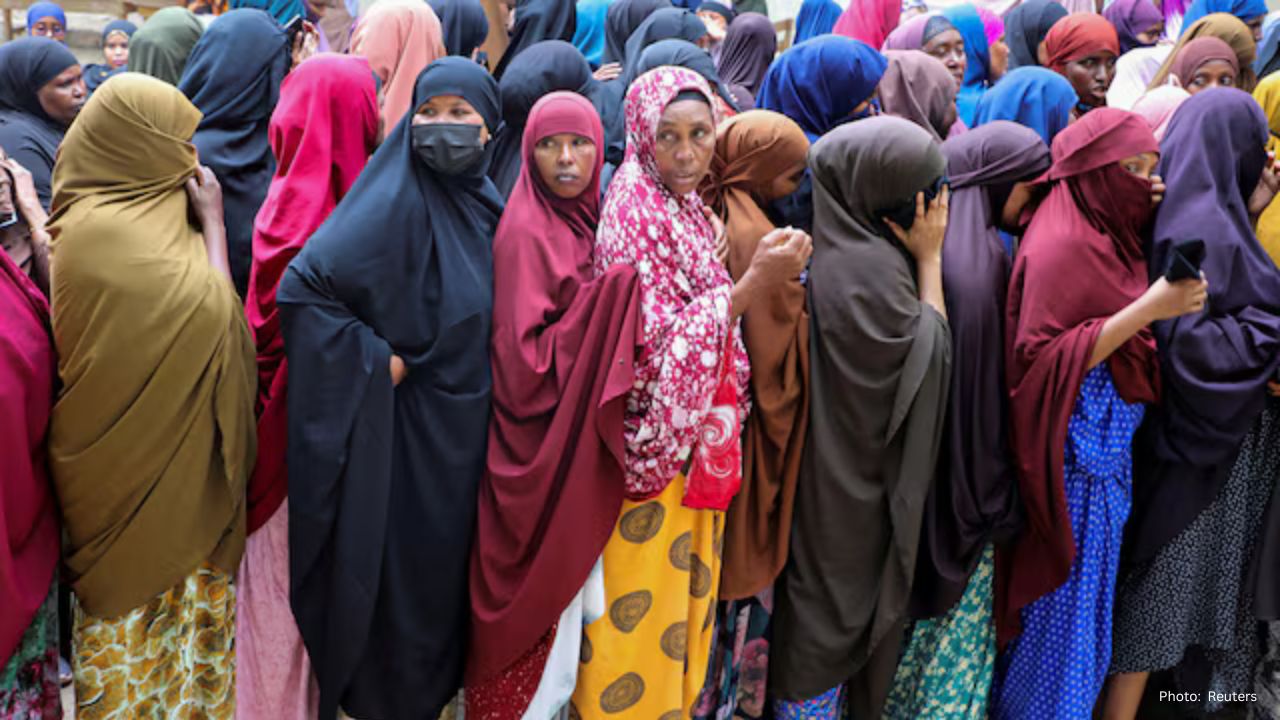
On Thursday, the capital of Somalia, Mogadishu, experienced a landmark event as citizens participated in local government elections. This pivotal vote signifies the initial stride towards reinstating universal suffrage in a nation that has not seen it at the national level for more than 50 years.
The last instance of direct voting by Somalis in national elections occurred in 1969, just prior to a military coup led by General Mohamed Siad Barre. Following the collapse of his regime in 1991, the country was engulfed by civil war. To mitigate factional conflicts, Somalia adopted an indirect voting framework in 2004, where clan elders appointed lawmakers who then selected the president and other officials.
This indirect approach has faced criticism from citizens who argue it excludes the general populace from influencing decisions and invites corruption. The elections in Mogadishu herald a departure from this norm, enabling residents for the first time in many years to directly elect their local representatives.
In this election, approximately 1,605 candidates vied for 390 seats on district councils throughout the city. These council members are tasked with later appointing Mogadishu’s mayor. Officials view this vote as a preliminary exercise for nationwide direct elections slated for 2026.
Security forces were heavily mobilized across the city, leading to the closure of roads, businesses, the airport, and the port for the day. Around 10,000 personnel were dispatched to safeguard polling stations. Despite the persistent risks posed by the al-Qaeda-affiliated group al Shabaab, voter engagement was robust, with many lining up early in the morning.
For many participants, the day was imbued with profound emotional significance. Older voters, some casting ballots for the first time, expressed feelings of pride and hope. Many viewed the election as a testament to Somalia's gradual progress after prolonged instability.
In 2024, Somalia enacted legislation reinstating universal suffrage ahead of federal elections anticipated in the coming year. Despite this, political discussions continue. President Hassan Sheikh Mohamud, alongside certain opposition figures, acknowledged that while lawmakers would be elected directly come 2026, the presidency would still be determined by parliament. Critics warn that such rapid changes could advantage existing power holders.
Concerns over security persist, particularly from opposition parties, given that al Shabaab still maintains control over significant rural regions and continues to launch attacks in urban areas. They question the country's readiness for comprehensive national voting.
Nonetheless, the Mogadishu elections are perceived as a beacon of hope, reflecting a public yearning for change and an evolution toward granting citizens a more influential role in crafting Somalia’s future.