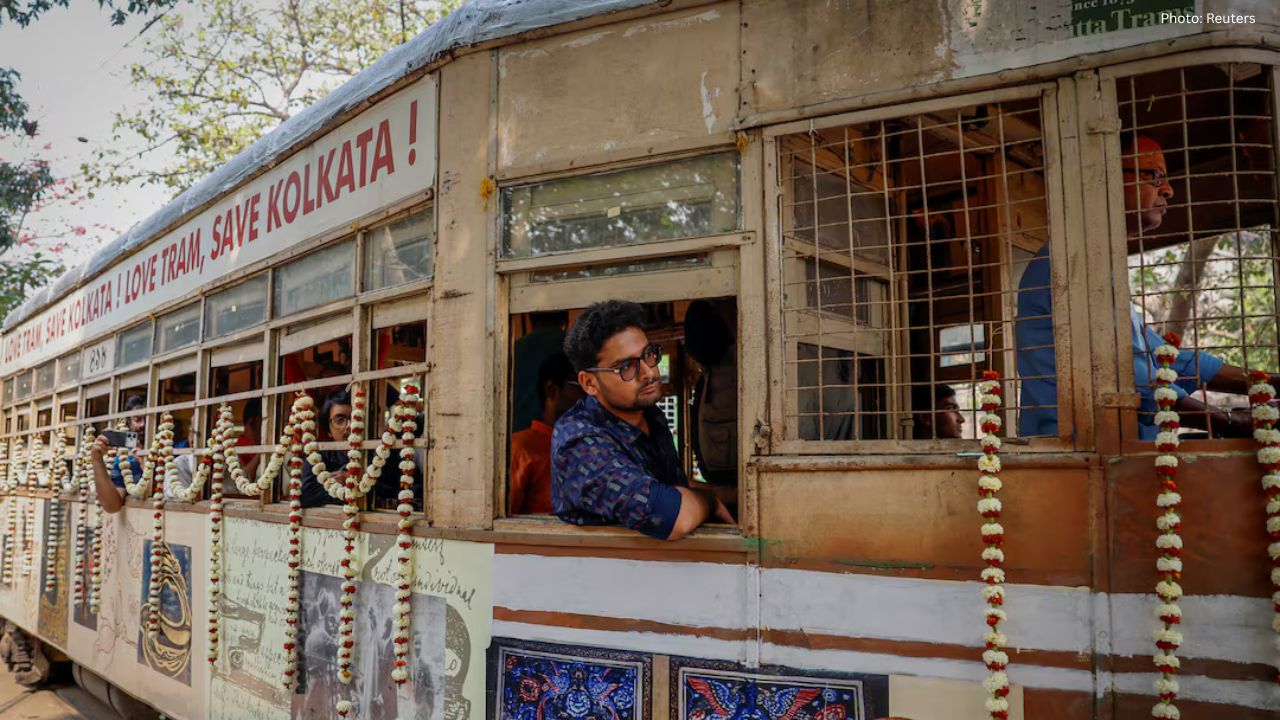
For more than 150 years, the trams have marked Kolkata's streets, with their distinctive chimes echoing the lives of countless commuters. Originating in 1873 as horse-drawn vehicles and electrified by 1902, these trams grew to become integral to the city's daily rhythm, maneuvering through colonial-era architecture and vibrant neighborhoods. Yet today, this cherished network is in jeopardy, as local authorities plan to close most tram routes to facilitate modern transport initiatives.
At its height, the service boasted over 340 trams covering the city, but now fewer than 10 operate on just two lines. The government has started selling off depots and dismantling older units, arguing that modernization is necessary to alleviate traffic congestion. With Kolkata's streets becoming increasingly congested, trams find it hard to compete with buses, taxis, and the growing metro system.
“The trams were a cornerstone of my childhood,” reminisced Abha Maity, 44, about her school and college commutes. “I can’t picture a Kolkata without them.” Many locals share a strong emotional bond with the trams, regarding them as emblems of the city’s history and identity.
Longtime conductor Bacchu Sidda, who dedicated 36 years to the trams, remarked on the drastic changes. “When I started, there were over 340 trams, now we have just seven or eight,” he explained, gesturing to the schedule displayed at the last operational depot in Gariahat.
Community members and heritage advocates strive to safeguard the tram network. The Calcutta Tram Users Association (CTUA), active since 2016, has initiated legal efforts to preserve the existing routes. “I cherish my trams more than anything,” expressed Deep Das, 19, a journalism student and CTUA member. “Their loss would feel like a part of me is gone.”
Despite the public outcry, the West Bengal government is heavily investing in the expansion of the metro system and the development of wider roads and new highways to enable faster, more effective transportation. These advancements illustrate the city's aim for modernization in the face of rising traffic demands.
For now, the fate of Kolkata's aging trams is pending legal decisions. As the remaining trams continue to transport passengers, they serve not only as vehicles but as living testaments to the city's rich cultural heritage.
The looming closure of Kolkata's tram system signifies the end of an era. While the shift toward modernization is crucial in meeting modern needs, there is hope among residents that at least a fragment of heritage can be preserved, maintaining ties to the past for future generations.