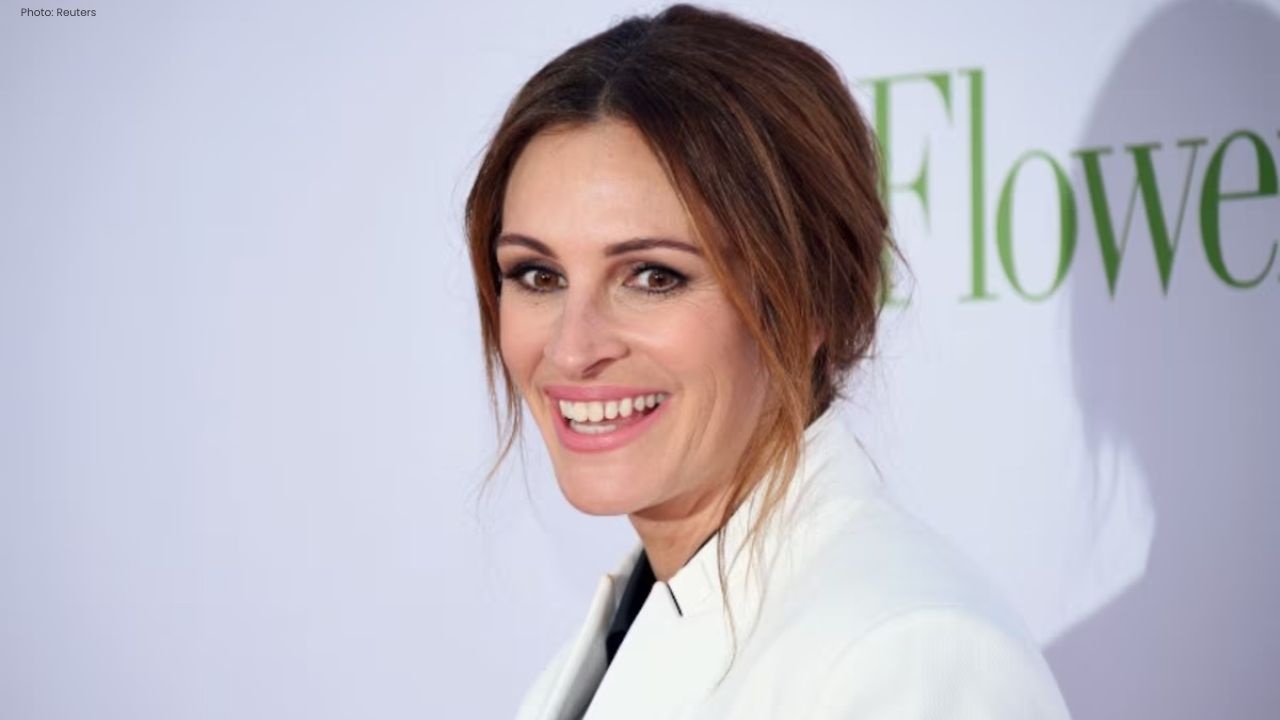
Luca Guadagnino vividly recalls the moment he was first struck by Julia Roberts’ star presence—back in 1989, when she portrayed the unforgettable Shelby in Steel Magnolias. Over thirty years later, the director finally met the Hollywood legend at a lavish party in Los Angeles, where a mutual friend introduced them during an engaging conversation on a couch that would spark a long connection.
Despite his vast experience, Guadagnino felt a rush of nerves meeting Roberts. However, her warmth immediately put him at ease. “She made me feel like I’d known her forever in an instant,” he shares. “As we conversed, we discovered shared interests.”
Their first discussion soon shifted to a promising new screenplay by up-and-coming writer Nora Garrett. Guadagnino was gearing up to direct it following his upcoming releases Queer and Challengers. The film, After the Hunt, is set against the backdrop of Yale’s politically charged academic scene, teeming with characters who conceal complex truths beneath carefully crafted exteriors.
Roberts takes on the role of Alma, a sharp and driven philosophy professor embroiled in a tense battle for tenure with her colleague—and potential love interest—Hank, portrayed by Andrew Garfield. Their top student, Maggie (Ayo Edebiri), becomes a pivotal figure in this complicated dynamic marked by power struggles and privilege, especially with Maggie’s affluent, donor parents.
Conflict arises when Maggie shows up at Alma’s home late one night, claiming she has been sexually assaulted by Hank. Alma's reaction is anything but sympathetic. The incident pulls Alma’s caring but exasperated husband Frederik (Michael Stuhlbarg) and university psychiatrist Kim Sayers (Chloë Sevigny) into the fray, triggering a series of events that delve into themes of generational conflict, race, class, and sexuality.
Roberts is drawn to the film's compelling ensemble. “Every character plays a crucial role in the narrative,” she notes. “You rarely find films with such intricate interpersonal dynamics.”
The title of the film references Otto von Bismarck's adage about deception being most prevalent “after a hunt, during a war, or before an election.” In After the Hunt, dishonesty seems nearly instinctual. Many are calling this one of Roberts' most powerful performances since Closer, particularly in intense moments where she tells Maggie, “Not everything is designed to be comfortable… Not everything should feel like a lukewarm bath.”
Guadagnino commends Roberts’ versatility: “She possesses a movie-star immediacy—familiar yet magnificently capable of transformation.”
The film has drawn comparisons to Tár for its psychological intricacies and cultural depth. Guadagnino credits influences ranging from Hitchcock to Bergman's Persona, as well as Mike Nichols’ storytelling, while also acknowledging Gena Rowlands in Another Woman.
Rehearsals unfolded at Roberts’s San Francisco residence, where she treated the cast to home-cooked meals—her banana bread becoming a legendary highlight during press events. Guadagnino, lactose-intolerant, appreciated the gesture: “Julia is an amazing chef.”
He fondly remembers their time together in the city. “She doesn’t realize it, but for me, San Francisco will always remind me of Julia,” he reflects. “Walking with her, attending church together—Julia has influenced me immensely.”
Their bond remains strong, with Roberts visiting him on the set of his latest film, Artificial, also filmed in San Francisco. Guadagnino states he would collaborate with her again “without hesitation.”
After the Hunt has swiftly become one of the most discussed films of the year, now streaming in over 300 million households on Prime Video. With its thorny moral themes, the film is ready to spark conversations this holiday season.
Is Alma a flawed representation of generational divides? Is Hank manipulative? Are younger generations overly sensitive—or are they rightfully seeking accountability?
Roberts appreciates the ambiguity: “I struggled to determine whether I liked her or found her detestable,” she states about Alma. “That’s what intrigued me.”
Debates ignited immediately after the film’s premiere at the Venice Film Festival, especially when an Italian journalist posed a question that overlooked Edebiri; Roberts subtly highlighted the oversight, reflecting the film’s themes of bias.
Guadagnino welcomes the passionate responses. “It’s vital to engage in discussions with audiences,” he asserts. “The wonder of art is that another viewer's perspective can be entirely different from yours.”
Though he abstains from reading online opinions, he feels pride in the conversations the film has triggered.
When questioned about the film’s opening credits paying homage to Woody Allen’s classic style, Guadagnino refrained from over-explaining artistic intentions. “People should first consider their own biases,” he argues.
Roberts encapsulates the film's essence: “This is one of those films where you can analyze every moment afterward and debate each character’s motivations. For me, that's what makes a trip to the movies worthwhile.”