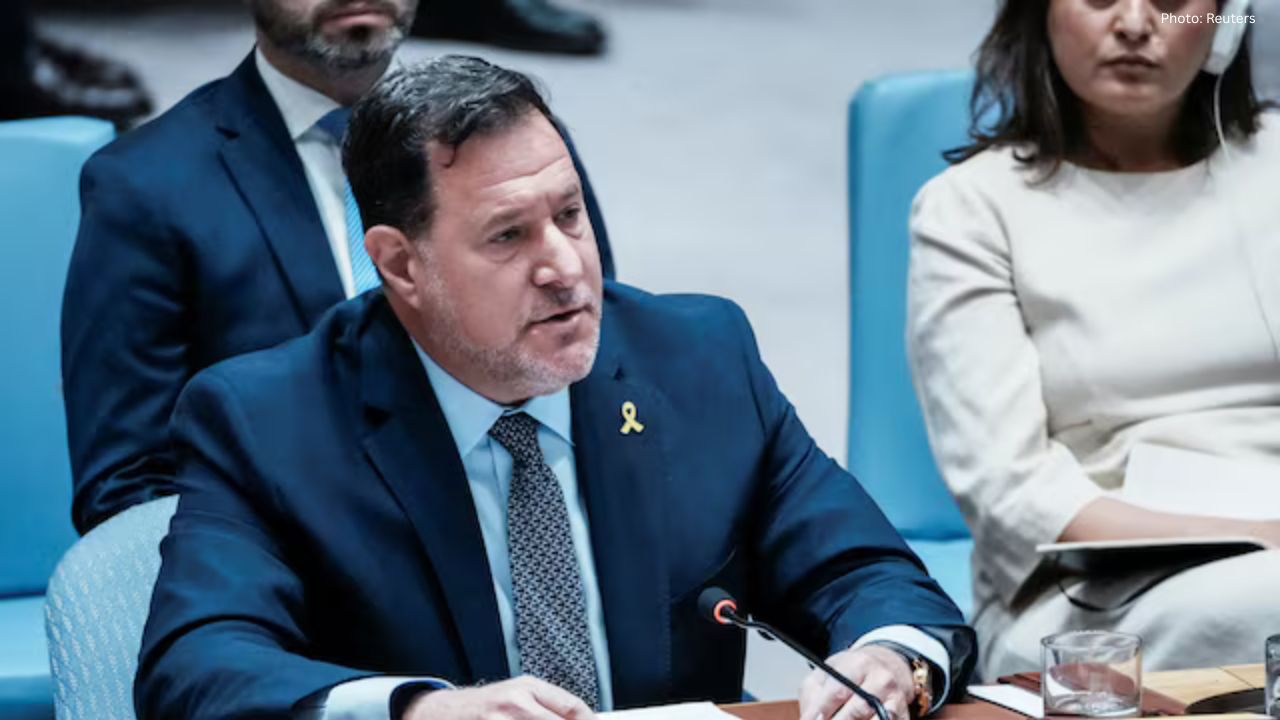
Israel's recent formal recognition of Somaliland at the United Nations has ignited significant international debate. Although Israel framed the action as a unique diplomatic step, other nations have expressed apprehensions that it may be linked to intentions regarding Gaza, including the potential relocation of Palestinians or the establishment of military sites abroad.
The U.N. Security Council engaged in discussions about the implications of this recognition amidst ongoing turmoil related to Israel's operations in Gaza. Critics have raised questions about Israel's motivations, recalling previous comments from Israeli officials regarding possible destinations for Palestinians affected by the Gaza crisis. Representatives from the Arab League cautioned that recognizing Somaliland could facilitate unjust displacement or allow for military exploitation of Somalia’s northern ports.
Pakistan voiced similar concerns, highlighting the alarming precedent set by Israel's declaration, particularly in light of previous references suggesting Somaliland as a haven for Palestinians from Gaza. Somalia and other council members rejected any notion of relocating Palestinians from their homeland, underscoring that such moves would violate international law and exacerbate instability in the region.
While Israel refrained from addressing these allegations during the debate, its deputy ambassador to the U.N. clarified that the recognition of Somaliland wasn't intended as an affront to Somalia and shouldn't be interpreted as hindering future dialogue. He argued for viewing the recognition as an opportunity for partnership and progress rather than hostility.
Somaliland, which previously functioned as a British protectorate, has enjoyed self-governance since 1991 but had not received recognition from any nation until now. The decision from Israel has sparked optimism in Somaliland that other countries may soon follow, enabling improved access to international markets and lending legitimacy to their aspirations.
The discussions underscored broader divisions within the United Nations. The United States accused the Security Council of bias, pointing out that several Western nations have recently acknowledged Palestinian statehood. U.S. officials contended that the council's focus on Israel often overshadows other conflicts and legal issues.
Contradictory views emerged from other nations, with Slovenia and several Security Council members asserting that Palestine is still deemed occupied under international law and holds observer status at the U.N. They maintained that recognizing Somaliland differs fundamentally as it pertains to an established U.N. member state, Somalia, thereby contravening the U.N. Charter.
This conflict arises as the Israeli government confronts scrutiny over its Gaza and West Bank policies. Some factions within Israel's ruling coalition are open about backing the annexation of Palestinian territories and encouraging Palestinian emigration, amplifying global worries regarding forced displacement. Despite assurances from U.S. President Donald Trump’s Gaza peace plan, skepticism about potential coercion remains widespread.
Israel has announced plans to engage with Somaliland in sectors like agriculture, health care, technology, and economic growth. Proponents of this recognition suggest it could usher in investments and stability to the Horn of Africa. Nevertheless, critics fear that geopolitical motives centered around Gaza might overshadow these purported benefits.
As discussions progress in the United Nations, Israel’s acknowledgment of Somaliland evolves into a pivotal topic that touches upon international law, regional security, and the fate of Palestinians in Gaza. The future trajectory of this situation may significantly impact political dynamics in the Middle East and the delicate balance in Africa in the coming months.