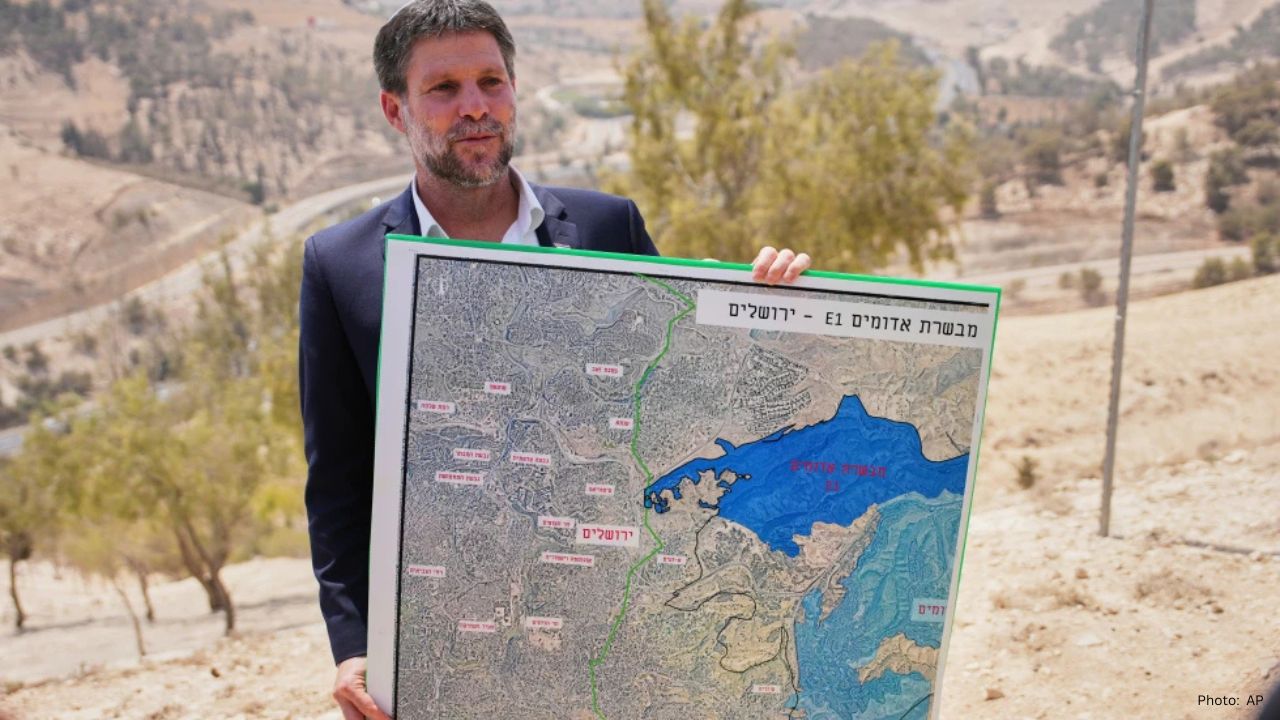
The Israeli government has officially authorized the construction of the E1 settlement project adjacent to Jerusalem. This controversial initiative stands to potentially split the West Bank in half, as officials recently issued a tender for the development of 3,401 housing units.
The E1 project, situated to the east of Jerusalem, has been discussed for over two decades and was previously stalled due to international pressure, notably from the U.S. This renewed momentum, championed by right-wing government members like Finance Minister Bezalel Smotrich, marks an apparent shift in policy.
Critics argue that erecting settlements in the E1 zone jeopardizes the possibility of a viable Palestinian state, thereby undermining the two-state solution. Organizations like Peace Now view this tender as indicative of Israel’s intensified construction efforts in the area.
“The Palestinian state is being erased from the table not with slogans but with actions,” Smotrich stated in August 2025, post-approval of the project.
The international community predominantly regards settlement-building in the West Bank as illegal under international law and a significant impediment to peace. Officials from both Europe and the U.S. have consistently urged Israel to suspend activities in disputed regions to prevent further escalations.
Amid these developments, the region is grappling with various security issues. Recent confrontations in the West Bank have left many injured, while access for aid and journalists remains limited in Gaza, despite a ceasefire established in October 2025.
Both the United Nations and the European Union have expressed unease regarding Israel’s restrictions on humanitarian aid and media presence in Gaza. Though thousands of displaced Palestinians are returning, access to crucial services and support continues to present significant challenges.
According to experts, the timing of the E1 project approval is particularly sensitive. It not only strains relations with Palestinians but also complicates Israel's interactions with neighboring countries and the international arena. This decision underscores the ongoing difficulties in reaching a sustainable peace between Israel and Palestine.
The current climate in the West Bank and Gaza remains precarious, as settlement expansion, security measures, and limited humanitarian access escalate political and social tensions in the area.