Israel and Iran appeared to pause further military action on Monday after exchanging attacks for the first time since a ceasefire brokered by the United States in April. The latest violence briefly raised fears that the Middle East could once again slide into a broader conflict, but both sides signaled they were prepared to avoid further escalation while warning that they would respond forcefully to any new attacks.
The renewed fighting marked the first major breach of the ceasefire that ended months of hostilities between the two regional rivals. Since the conflict intensified in late February, it has affected global markets, driven up energy prices and increased the cost of everyday goods around the world.
Following the latest exchange, U.S. President Donald Trump called for an immediate end to the violence. Shortly afterward, Iran's military command announced that it was suspending offensive operations. However, Iranian officials warned that any future attacks by Israel or its allies would trigger a stronger response.
Israeli Prime Minister Benjamin Netanyahu also suggested that the latest round of fighting had ended but emphasized that Israel would retaliate if Iran launched additional attacks. He said Israel would continue military operations against Hezbollah in Lebanon and maintained that the country would exercise its right to self-defence whenever necessary.
As tensions eased, both countries began lifting emergency restrictions introduced during the attacks. Israeli authorities announced that most schools that had been closed would reopen, while Iranian officials reopened the country's airspace to civilian flights.
Despite the relative calm, several unresolved issues continue to threaten the fragile ceasefire. Iran has maintained tight control over the Strait of Hormuz, a vital route for global oil and natural gas shipments. Disruptions in the region have contributed to higher fuel prices worldwide.
Meanwhile, Israel has continued operations against Hezbollah in Lebanon. The United States has also maintained a blockade on Iranian ports. On Monday, U.S. Central Command said its forces disabled an oil tanker in the Gulf of Oman after the vessel allegedly attempted to violate the blockade. Indian authorities later confirmed that all 24 crew members aboard the ship were safe after a fire broke out.
Diplomatic efforts intensified as regional governments worked to prevent a return to full-scale war. Officials from Egypt, Saudi Arabia, Türkiye, Pakistan and Qatar urged Washington to pressure Israel to halt military operations. They also called on Iran to stop launching attacks against Israel.
Pakistan's Prime Minister Shehbaz Sharif appealed for restraint, urging all parties to give diplomacy another chance. Iran's ambassador to the United Nations expressed optimism that ongoing discussions with the United States could eventually lead to a broader peace agreement.
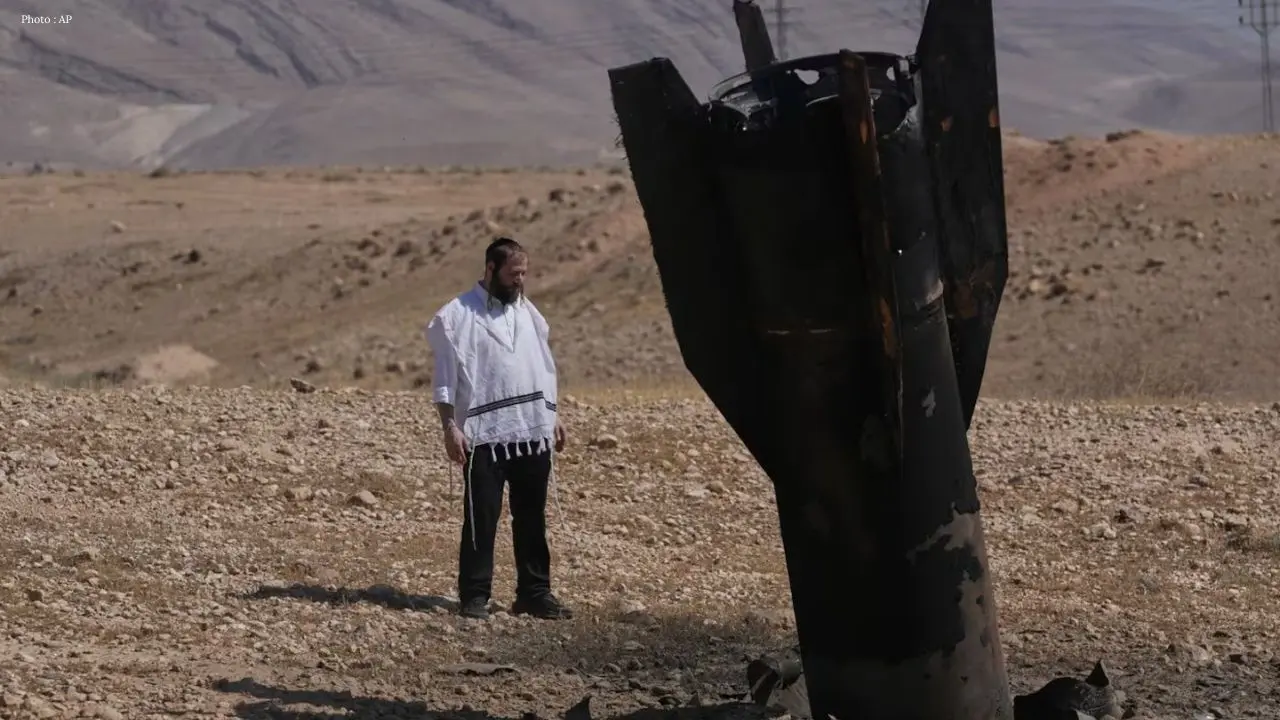
Before tensions eased, Iran launched several waves of attacks targeting Israel, while Israeli forces struck sites in central and western Iran. Iranian media reported that at least 15 people were injured following explosions in Tehran and other cities. There were no immediate reports of fatalities.
Israeli officials said they targeted facilities linked to ballistic missile production and mobile missile launchers. In response, Iran's Revolutionary Guard stated that two military bases inside Israel had been targeted.
Iran accused the United States of supporting Israeli actions, claiming that Israel would not act without coordination with Washington. The accusation reflected growing strains in the region and highlighted the delicate position of the United States as it seeks to prevent further escalation.
Observers have also noted signs of tension between Trump and Netanyahu. Although both leaders closely coordinated at the beginning of the conflict, differences have emerged over strategy. Trump has repeatedly expressed a desire to end the war and reduce economic uncertainty, while Netanyahu faces domestic pressure ahead of upcoming elections and remains focused on countering threats from Iran and Hezbollah.
Another concern emerged from Yemen, where the Iran-backed Houthi movement announced that it had resumed targeting Israel-linked vessels in the Red Sea. Similar attacks during the Israel-Hamas war disrupted international shipping and affected one of the world's most important trade routes.
Although Monday's pause has lowered immediate fears of a wider war, uncertainty remains high. Diplomatic efforts are continuing, and leaders across the region are seeking ways to preserve the ceasefire and prevent another major escalation that could further destabilize the Middle East and impact the global economy.
For all the latest major updates and developments, stay connected with us.