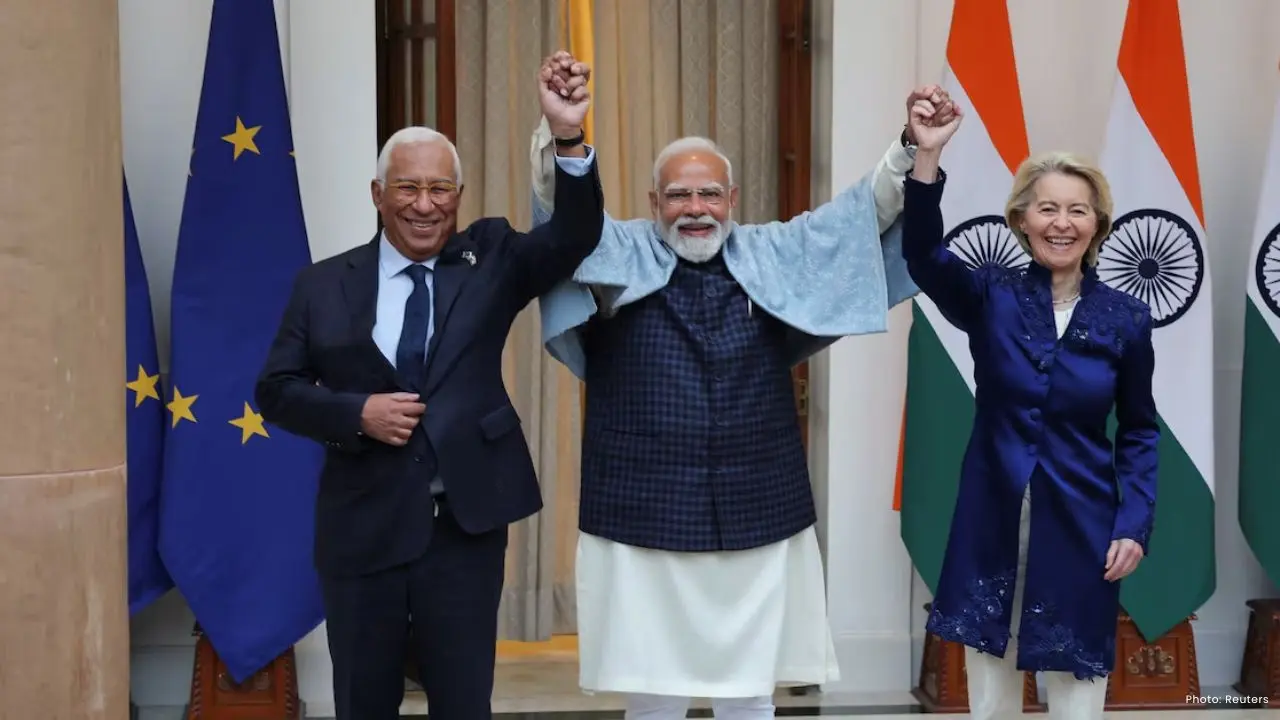
India and the European Union have concluded a monumental trade agreement, considered one of the largest economic deals globally. Prime Minister Narendra Modi hailed the announcement on Tuesday, referring to it as a transformative moment that will recalibrate trade dynamics between India and the EU.
This agreement comes after nearly two decades of challenging negotiations. Once finalized and enacted, it will connect India’s expansive economy to the 27-member European Union, establishing a trade relationship that constitutes roughly 25% of global economic output and nearly one-third of world trade.
Prime Minister Modi emphasized the deal's potential as a significant opportunity for citizens on both sides. He stated it would be advantageous for India’s 1.4 billion population as well as millions in Europe by creating new market openings, generating jobs, and fostering investment. European Commission President Ursula von der Leyen is anticipated to join Modi for an announcement at an India–EU summit in New Delhi, where further details will be unveiled.
The European Union stands as India’s largest trading partner, with bilateral trade reaching $136.5 billion in the fiscal year ending March 2025. The new agreement is expected to elevate this figure by lowering tariffs, simplifying trade regulations, and enhancing access for goods and services.
This deal illustrates India's readiness to liberalize certain segments of its historically protected market for international competition. Such a move is expected to bolster Indian industries, elevate product standards, and draw increased foreign investment. Conversely, European firms, especially in sectors like automobiles, technology, renewable energy, and manufacturing, view India as a rapidly expanding market with substantial demand.
The agreement aligns with a broader international trend, where numerous nations seek to strengthen trade alliances independent of the United States as political uncertainties loom. Recent strains, including elevated U.S. tariffs on Indian products and stalled India–U.S. trade dialogues, have motivated New Delhi and Brussels to enhance their collaboration.
In recent weeks, the European Union has also engaged in major trade arrangements with entities like the South American Mercosur bloc. Simultaneously, India has been active in finalizing pacts with Britain, New Zealand, and Oman. These strategies reflect how countries are redesigning trade frameworks to shield their economies from abrupt policy shifts elsewhere.
While the agreement is politically finalized, it is not yet fully operational. Anticipated legal reviews and formal procedures are expected to take another five to six months prior to the official signing and implementation of the pact.
Nonetheless, this announcement is perceived as a pivotal event. If executed without hitches, the India–EU trade agreement could bolster economic vitality, enhance global supply chains, and provide both parties with more security amidst an unpredictable global economy.