In Venezuela, an increasing number of families are courageously stepping forward, declaring that their loved ones are being unjustly held as political prisoners. This move comes after years of fear and suppression. Recent governmental promises to release detainees have sparked a fragile hope, but the sorrow and frustration among family members remain palpable.
The tragic story of Edilson Torres, a police officer who died in prison following his arrest in December—allegations his family believes were politically motivated—highlights the pain these families endure. Torres, aged 51, passed away from a heart attack just as his family awaited news of his potential release. He was laid to rest this week in his rural hometown, leaving behind a grieving family grappling with the loss of freedom that came too late.
His death has catalyzed many families to act. The human rights organization Foro Penal reports receiving hundreds of inquiries from relatives seeking assistance. Initially hesitant to speak out for fear of repercussions, families now sense a glimmer of hope for the release of their loved ones.
According to Foro Penal, approximately 300 families have reached out recently, with about 100 cases verified as politically motivated detentions. Many detainees are former members of Venezuela's military or state institutions, with over 800 individuals still imprisoned for political reasons.
This surge follows an announcement by National Assembly leader Jorge Rodríguez, stating that the government would release a "significant number" of both Venezuelan and foreign detainees as a means to soothe tensions amid dramatic political events earlier this month.
A handful of releases have transpired, with Foro Penal confirming at least 56 individuals have been set free. Conversely, the government claims around 400 were released, though critics argue the absence of names or details makes it impossible to verify these claims.
The Venezuelan government continues to refute allegations of holding individuals unjustly, asserting that detainees are implicated in crimes such as terrorism or conspiracies against the state. Human rights advocates contend these allegations are often vague, used to suppress dissenters and opposition voices.
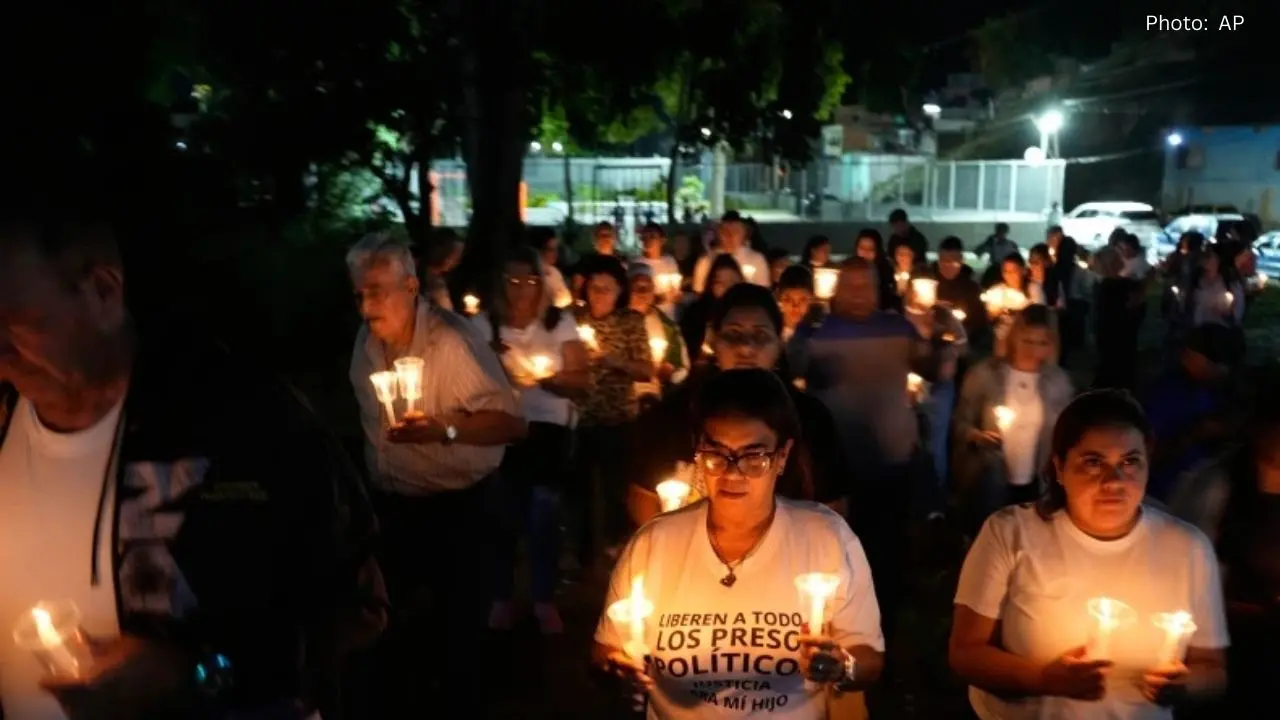
Scenes outside prisons depict the emotional toll on families. Relatives gather with candles, photographs, and signs, imploring for the release of their loved ones. Some endure long waits outside detention centers, hopeful for updates, while others mourn those who were unable to return.
Recently, a few high-profile detainees—including politicians, activists, and foreign nationals—have been released. One freed businessman described his detention as complete isolation, cut off from family, legal representation, and the outside world, echoing the claims of many families.
Despite the ongoing suffering, the recent releases have ushered in a rare sense of hope. For families who have awaited change for years, even the slightest indications matter. However, fears loom large, particularly after the government enacted laws that facilitate targeting human rights organizations following the contentious 2024 elections.
Venezuela finds itself at a pivotal moment. Families are demanding transparency, accountability, and the safe return of their loved ones. The global audience is closely monitoring whether the promised releases will manifest into genuine actions or dissolve into another tale of loss and silence.