How War Strains Are Shaping US Employment and Prices
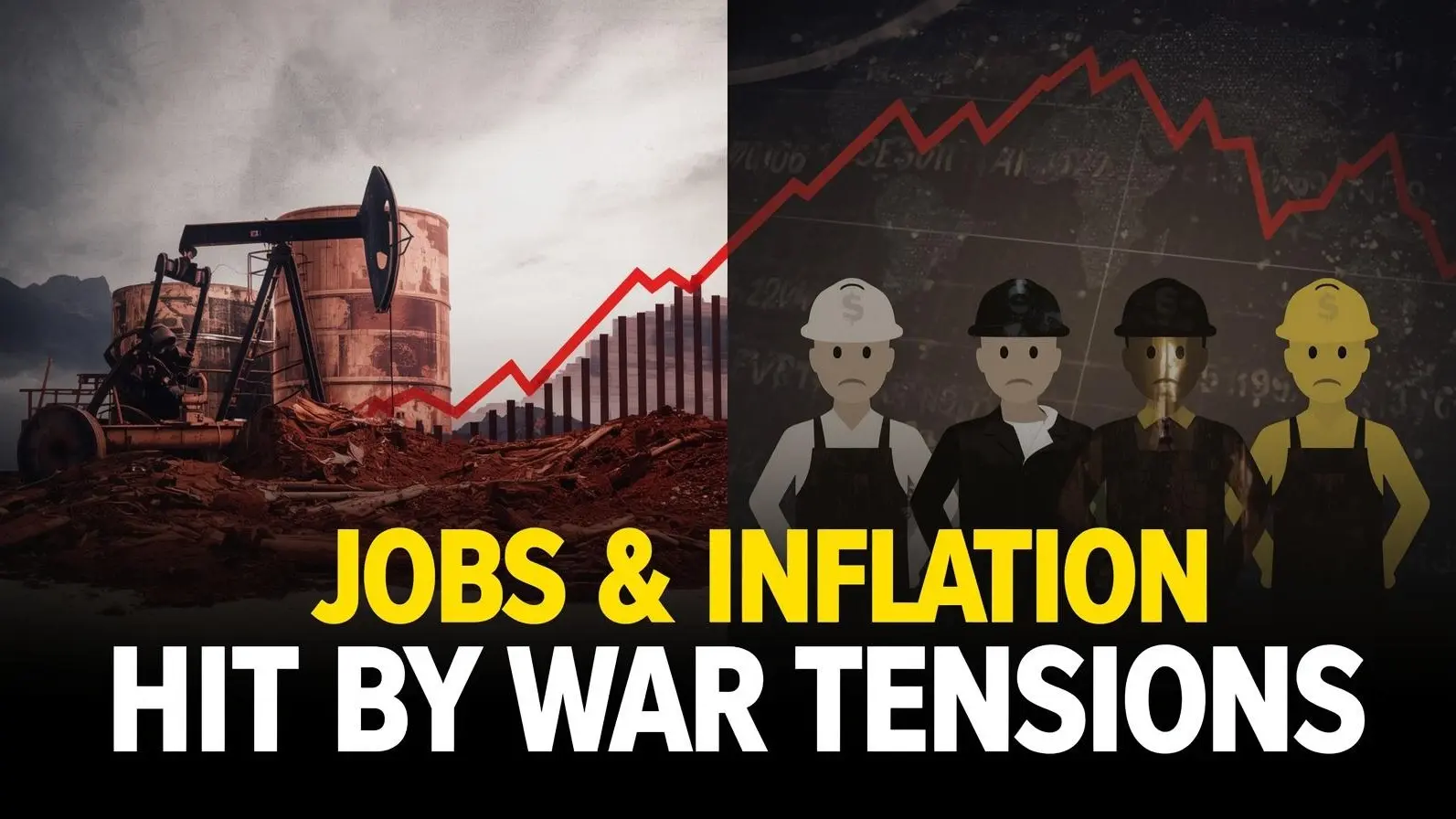
The ongoing conflict between the United States and Iran transcends geopolitical boundaries; it's now impacting the US economy, employment landscape, and daily living expenses. What many perceive as a distant conflict is significantly affecting fuel prices, hiring patterns, corporate confidence, and inflation rates throughout the U.S.
Central to this economic chain reaction is the Strait of Hormuz, a vital artery for global oil trade. Heightened tensions in this region lead to immediate repercussions in the U.S. economy, as energy prices affect numerous sectors.
The Oil Shock: The Starting Point
The primary economic ripple begins with oil prices.
Owing to the conflict, global oil production has faced interruptions, causing crude prices to spike. In certain instances, prices have exceeded $110 per barrel, significantly impacting U.S. fuel expenses.
Here's why:
- The Strait of Hormuz is responsible for nearly 20% of global oil supply
- Any disruption leads to supply shortages
- Markets swiftly respond with price hikes
Oil is not merely a commodity; it's the backbone of modern economies. As oil prices climb, the cost of nearly everything else follows suit.
The Inflationary Pressure from Rising Oil Prices
Escalating oil costs directly correlate to higher inflation, a reality that Americans are witnessing.
Here's how this occurs:
- Fuel prices rise
- Transportation expenses soar
- Businesses elevate prices to balance costs
- Consumers face higher expenses for goods and services
These changes have resulted in:
- Surging gas prices
- Increased airfare and shipping rates
- Soaring costs for food, groceries, and necessities
Even sectors like agriculture feel the pinch, as fuel and fertilizer prices escalate.
Economists warn that this could lead to a state of chronic inflation, where higher prices persist for an extended duration.
The Challenges of Controlling Inflation
This scenario poses significant challenges for policymakers.
Typically, inflation can be curbed through adjustments in interest rates. However, the current inflation is driven by supply chain disruptions, not consumer demand.
This creates a challenging dilemma:
- Raising rates may stymie job growth
- Reducing rates might exacerbate inflation further
This raises fears of a scenario similar to stagflation, characterized by:
- Persistently high inflation
- Slowed economic growth
- Decreased job availability
US Employment: A Sign of Slowdown in Hiring
Visible effects of rising costs and uncertainty manifest prominently in the job market.
Businesses exhibit heightened caution due to:
- Escalated operational costs
- Volatile economic conditions
- Strain on profit margins
Consequently:
- Many companies are curtailing hiring
- Plans for expansion are stalling
- Job growth sees slowdowns across various sectors
Service industry sectors employing substantial portions of the workforce are particularly impacted.
Job Losses and Gains by Sector
The repercussions differ across industries.
Sectors facing difficulties:
- Airlines and travel (due to fuel prices)
- Logistics and transportation
- Retail and consumer goods
- Manufacturing
These sectors heavily depend on stable fuel prices and robust supply chains, rendering them particularly susceptible to rising costs.
Sectors benefiting:
- Energy companies
- Defense-associated industries
Energy firms are enjoying the advantages of rising oil prices, while defense companies witness heightened demand owing to escalated geopolitical tensions.
Business Strategies in Response to Rising Costs
U.S. companies are adapting their strategies to navigate the tumultuous waters.
Common strategies include:
- Reducing hiring
- Raising prices of products and services
- Minimizing operational expenditures
- Transferring costs to customers
As an example, transport firms are imposing fuel surcharges, ultimately driving prices up for consumers.
This generates a loop where rising costs continuously fuel inflation.
Effects on Everyday Americans
Average Americans are already feeling the bite.
- Increased fuel expenditures
- Rising grocery costs
- Higher travel expenses
- More costly everyday services
Simultaneously, job prospects may become less stable, adding strain to household budgets amid rising costs.
This interplay of increased costs and stagnant income growth places pressure on overall standards of living.
Investor Sentiment and Market Movements
The uncertainty stemming from war tensions is shifting financial landscapes.
- Some sectors like energy are faring well
- Wider markets are demonstrating volatility
- Investor sentiment is becoming more cautious
This can result in:
- Decreased business investments
- Slower economic expansion
- Fewer job prospects
Such factors amplify economic strains.
The Risk of Broader Economic Slowdown
If these tensions persist, the likelihood of a wider economic slowdown increases.
Likely consequences encompass:
- Slowed economic growth
- Rising unemployment levels
- Enduring high inflation
The prolonged disruption of global oil supply could lead to increasingly serious effects.
The Duration of the Conflict: A Critical Concern
A key factor is how long the conflict persists.
- Short-term tensions result in temporary price hikes
- Long-standing conflicts can lead to enduring economic pressures
If disturbances in the Strait of Hormuz continue, the repercussions on inflation and employment may deepen significantly.
Wider Economic Implications
The U.S. economy remains robust yet is intricately linked to global systems.
Despite domestic energy production, the nation is still subject to influences from:
- Global oil fluctuations
- International trade routes
- Supply chain interdependencies
Thus, external conflicts can continue to exert substantial effects on the U.S. economy.
Final Thoughts
War tensions between the United States and Iran are causing significant ripples in the economy, impacting both inflation and job creation.
At the core of these impacts lie escalating energy prices, which are driving up costs across industries and prompting businesses to rethink their strategies.
As it stands, the U.S. faces a precarious balancing act:
- Inflation is climbing due to global supply challenges
- Job growth is slowing amid uncertainty and heightened costs
If tensions persist, the potential for a more profound economic downturn cannot be discounted.
The coming weeks will be pivotal in determining whether the situation stabilizes or escalates into further economic turmoil.
Disclaimer
This article serves informational purposes and reflects current economic trends. Conditions may evolve based on global shifts.