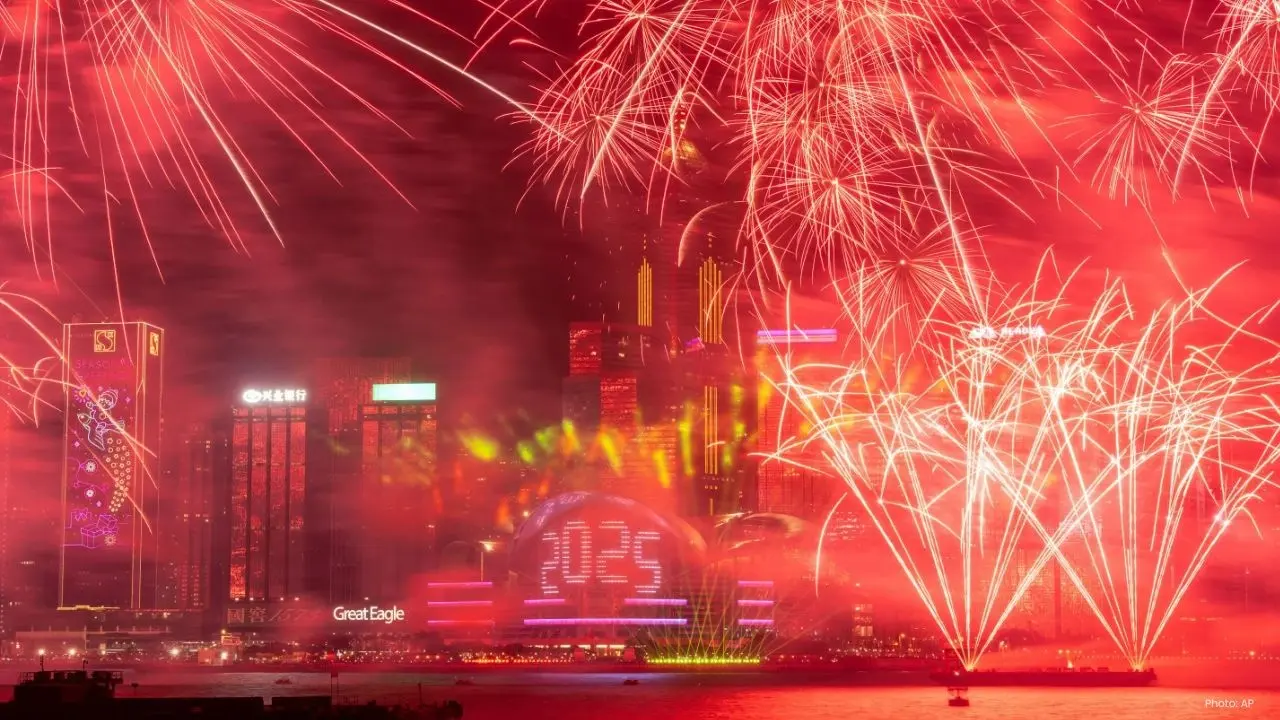
Hong Kong will usher in 2026 without its iconic New Year fireworks display over Victoria Harbor, marking a significant shift in the city’s celebratory landscape. This decision comes in the wake of a tragic fire in November that resulted in at least 161 fatalities.
Instead of the customary pyrotechnic show, the Hong Kong Tourism Board plans to host a musical event this New Year’s Eve in Central. The evening will feature performances by popular soft rock band Air Supply alongside other artists. As the clock strikes midnight, eight prominent landmarks will illuminate as colossal countdown clocks, complemented by a brief three-minute light performance.
For years, fireworks have been a hallmark of Hong Kong’s festive occasions, including the New Year, Lunar New Year, and National Day, attracting countless locals and tourists to the harbor promenade for the colorful displays against the city's skyline.
Rosanna Law, the Secretary for Culture, Sports and Tourism, noted that the absence of fireworks would have repercussions for the hotel and restaurant sectors that depend on holiday tourism.
This choice follows the city’s deadliest fire since 1948, which ravaged Wang Fuk Court in the Tai Po district, with flames spreading through an apartment complex under renovation. Substandard bamboo scaffolding and foam boards contributed to the disaster, forcing thousands of displaced residents into temporary accommodations as they cope with significant loss.
Hong Kong has previously scrapped fireworks displays in response to other calamities, including a 2012 boat collision that resulted in 39 deaths, a bus accident in 2018, and during the protests in 2019 and the COVID-19 pandemic.
Fireworks have deep historical roots in China, with their origins tracing back to the second century B.C. Bamboo stalks thrown into fire would create explosive sounds. During the Tang dynasty, monk Li Tian is credited as the pioneer of the first documented firecrackers, using gunpowder-filled bamboo to drive away malevolent spirits during festivities.