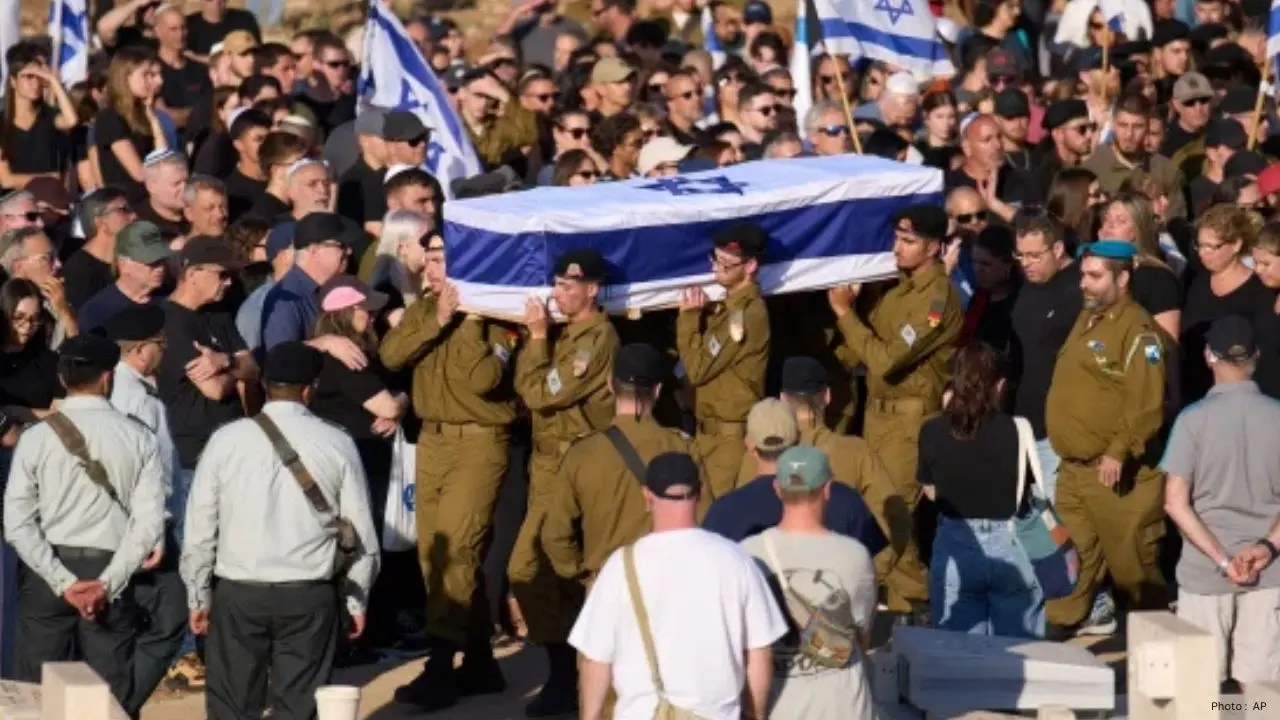
The resurgence of military activity along the Israel-Lebanon border has reignited serious concerns throughout the Middle East, with security implications affecting both parties involved.
In recent statements, Israeli Prime Minister Benjamin Netanyahu has highlighted the ongoing dilemma posed by Hezbollah, a Lebanese militant group that has long represented a significant security threat to Israel.
This border region has seen a concerning increase in confrontations, including the deployment of rockets, drones, and artillery exchanges. Local communities near the border are grappling with heightened anxieties as military maneuvers and persistent security alarms disrupt daily routines.
Backed by Iran, Hezbollah plays a pivotal role in Lebanon's political landscape and maintains a formidable military presence. The group remains an active participant in various regional conflicts, strengthening its strategic alliances.
Israeli officials persist in their warnings that attacks launched from northern points could provoke retaliatory military actions should security deteriorate further.
The situation has escalated following increased violence in Gaza, raising apprehensions that hostilities could spill over into neighboring regions. Numerous armed factions with regional ties have ramped up their military engagements since the onset of the Gaza conflict.
Residents near the border on both sides have been displaced due to fears of missile attacks and possible military escalation.
Lebanon is already grappling with dire economic and political challenges, including soaring inflation, rampant unemployment, and faltering public services. Any significant military confrontation could exacerbate these economic hardships and further strain the country's fragile infrastructure.
International leaders and diplomatic entities continue to call for restraint to avert a broader conflict. Concerns are mounting that escalated fighting could destabilize the entire region, leading to serious humanitarian repercussions.
Peacekeeping forces from the United Nations stationed in southern Lebanon are vigilantly observing the developments. However, persistent security incidents underscore the ongoing difficulties in maintaining peace in this volatile area.
Military analysts warn that the possibility of unintended escalation is alarmingly high, as even minor skirmishes could ignite more extensive military responses.
This unfolding crisis is a reflection of the broader geopolitical rivalry involving Israel, Iran, and various armed factions throughout the region. Recent security events in Lebanon, Gaza, Syria, and surrounding maritime routes have increasingly intertwined due to regional competition.
Diplomatic initiatives aimed at curbing conflicts continue facing significant hurdles, as enduring distrust and historical animosities obstruct pathways to sustainable stability.
Observers note that both Israel and Hezbollah are striving to maintain strong military postures while steering clear of a full-scale war, yet ongoing confrontations near the border inject further uncertainty into the equation.
Economic factors are also a growing concern, as instability in the Middle East impacts tourism, trade, business confidence, and foreign investments.
Global energy markets are closely monitoring changes in the region, as major confrontations involving Middle Eastern states can influence oil prices, trade routes, and supply chains.
For Lebanon, avoiding broader conflicts is crucial, given its economy's precarious state. Any renewed hostilities could severely damage public infrastructure and worsen existing humanitarian needs.
Israeli communities near northern border areas continue to experience security concerns, prompting high levels of military readiness.
Political analysts contend that achieving long-term stability will necessitate serious diplomatic negotiations, enhanced communication, and wider regional cooperation aimed at minimizing military confrontations.
At present, uncertainty dominates as both sides remain on high alert, with global powers closely observing the evolving situation.
The ongoing border crisis between Israel and Hezbollah once again illustrates how swiftly instability in one area of the Middle East can reverberate throughout regional security and diplomatic efforts.
As military actions and political tensions persist, global focus is likely to remain on strategies to prevent escalating conflict and safeguard civilian welfare across the region.