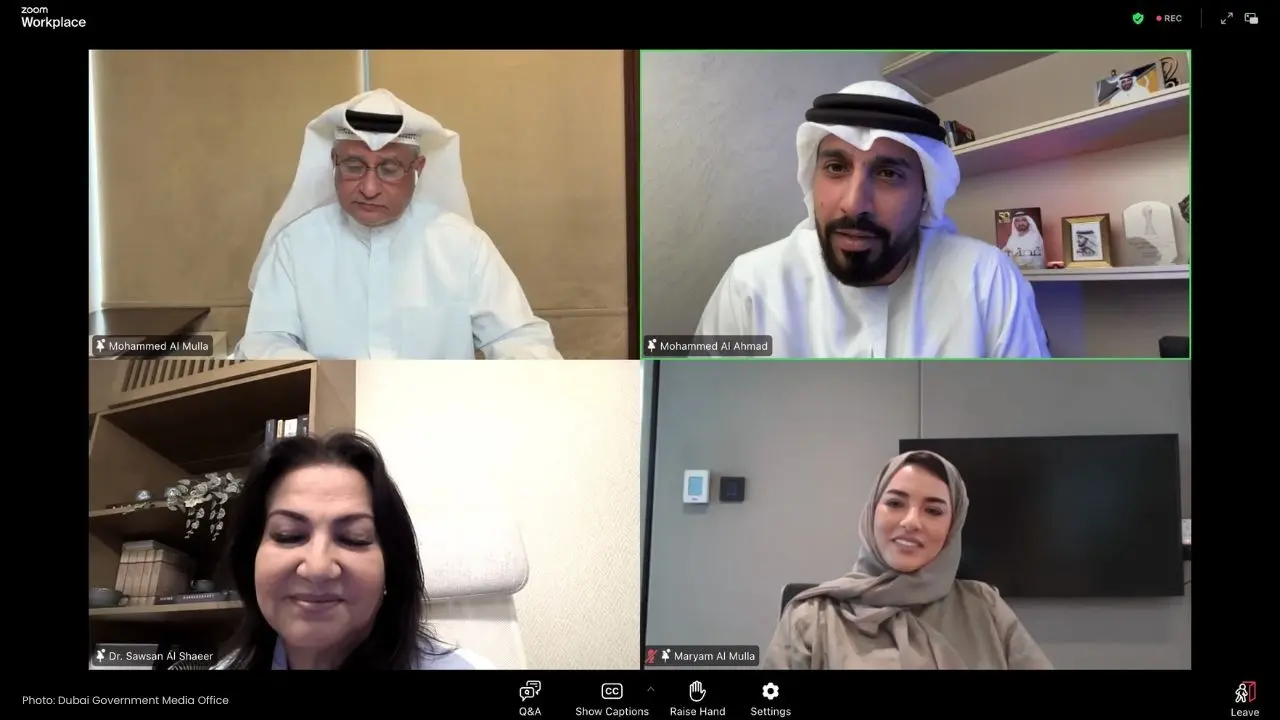
The Dubai Press Club (DPC) held an online session called “The Gulf in the Aftermath of the Iran Ceasefire”, engaging prominent regional figures to explore recent developments.
Participants included Kuwaiti media figure Mohammed Al-Mulla and Bahraini author Sawsan Al-Sha’er, moderated by Mohammed Al-Ahmed of Abu Dhabi Media Network.
The conversation spotlighted the shifting dynamics in the region, with a keen focus on mitigating tensions in the wake of the Iran ceasefire. The significance of media in navigating the difficulties faced by Arab Gulf nations was a central theme.
Speakers emphasized that media is crucial for heightening awareness, instilling values of loyalty, and guiding youth. They highlighted ongoing investments in youth and human capital as a long-term strategy to bolster regional stability.
Mohammed Al-Mulla pointed out the urgent need for a unified Gulf defense initiative, calling it essential for ensuring the future security of the region.
Sawsan Al-Sha’er reiterated the necessity of an collective defence framework. She noted that although Gulf Nations have effectively countered recent threats, including attacks linked to Iran, a coordinated strategy is crucial.
She remarked that the strategy of containing Iran has not fully succeeded, referencing the discovery of proxy sleeper cells across several Gulf states. Effective coordination and law enforcement were deemed essential to tackling such dangers.
On the media's role in geopolitics, Al-Mulla described it as integral to “geopolitical defence,” emphasizing its involvement in discrediting misinformation and extremist narratives. He stressed the need for youth education and informed understanding of facts.
The session wrapped up with a proposal to strengthen the Gulf media sector and establish a definitive code of ethics aimed at promoting responsible journalism and combating misinformation regionally.