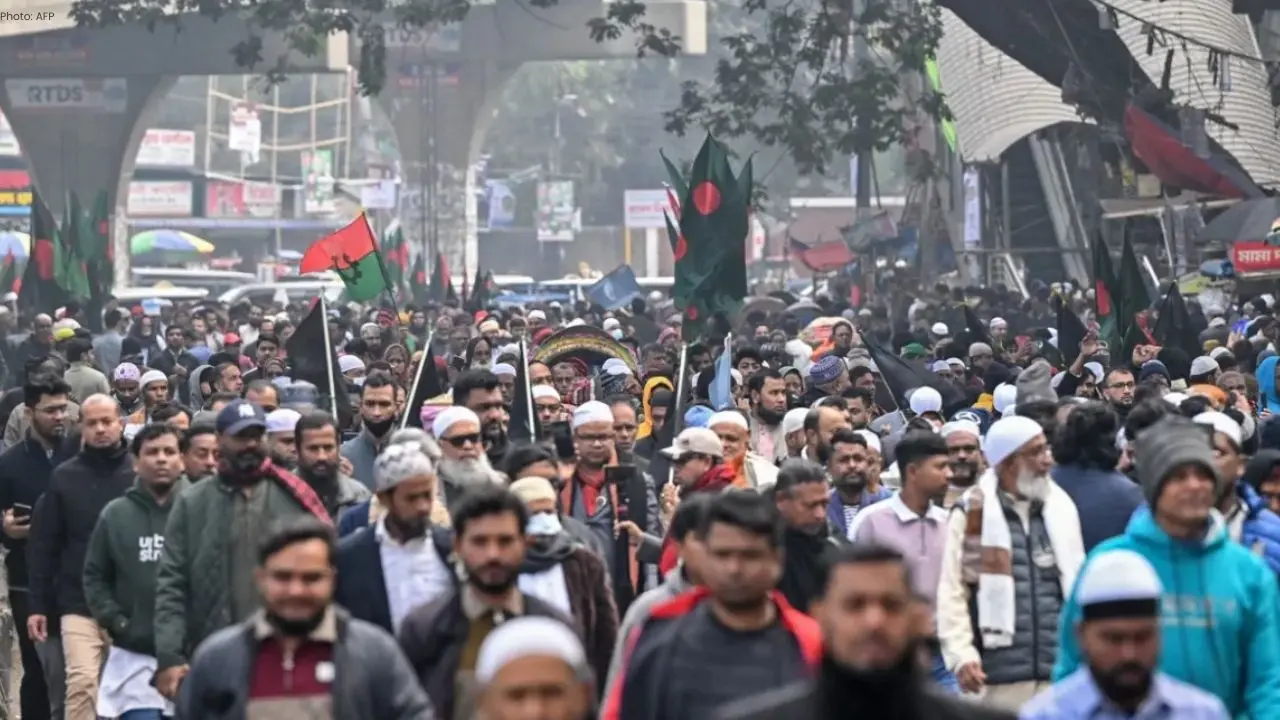
On Wednesday, a massive crowd gathered in Dhaka as hundreds of thousands journeyed from across Bangladesh to honor the late Khaleda Zia, a pivotal figure in the nation's political landscape.
Zia, who served as Bangladesh's first female prime minister, passed away on Tuesday at the age of 80 after a long battle with illness. The streets near the parliamentary complex were inundated with mourners as a hearse bearing her body, draped in the national flag, traversed the capital.
Supporters lined the streets, offering prayers and brandishing flags printed with her likeness. Flags were lowered throughout the country, and security forces were deployed in large numbers to maintain order amidst the extensive funeral procession.
“I travelled a long way just for the chance to say goodbye,” shared Setara Sultana, a devoted member of the Bangladesh Nationalist Party. “Even catching sight of her vehicle was profoundly significant to me.”
Sharmina Siraj, a mother of two, hailed Zia as a beacon for women, emphasizing that educational initiatives launched during Zia’s tenure significantly benefited her daughters’ futures. She expressed that Zia’s efforts toward empowering women left a lasting legacy.
Earlier that day, Zia's body was taken to the residence of her son, Tarique Rahman, where he recited Quranic verses near her workspace. The funeral drew several regional leaders and dignitaries, highlighting her impact beyond Bangladesh's borders.
Zia's political journey was remarkable. Following the assassination of her husband, President Ziaur Rahman, in 1981, she rose to prominence, becoming the leader of the Bangladesh Nationalist Party and serving two terms as prime minister in 1991 and 2001.
Known for her staunch opposition to military governance, Zia faced arrests and political challenges while fiercely advocating for democratic reforms. Together with her long-time adversary Sheikh Hasina, she significantly influenced the country’s modern political narrative.
In her later years, Zia encountered serious health issues and legal obstacles but remained a potent symbol of resistance for her supporters. Despite declining health, her party had made intentions clear for her participation in the parliamentary elections planned for February 2026.
Khaleda Zia will be interred next to her husband, signifying the end of a crucial chapter in Bangladesh's political history. The vast number of attendees at her funeral speaks volumes of her enduring legacy and the respect she garnered nationwide.
Her son, Tarique Rahman, lamented that the nation has lost a guiding figure pivotal in shaping its democratic aspirations.