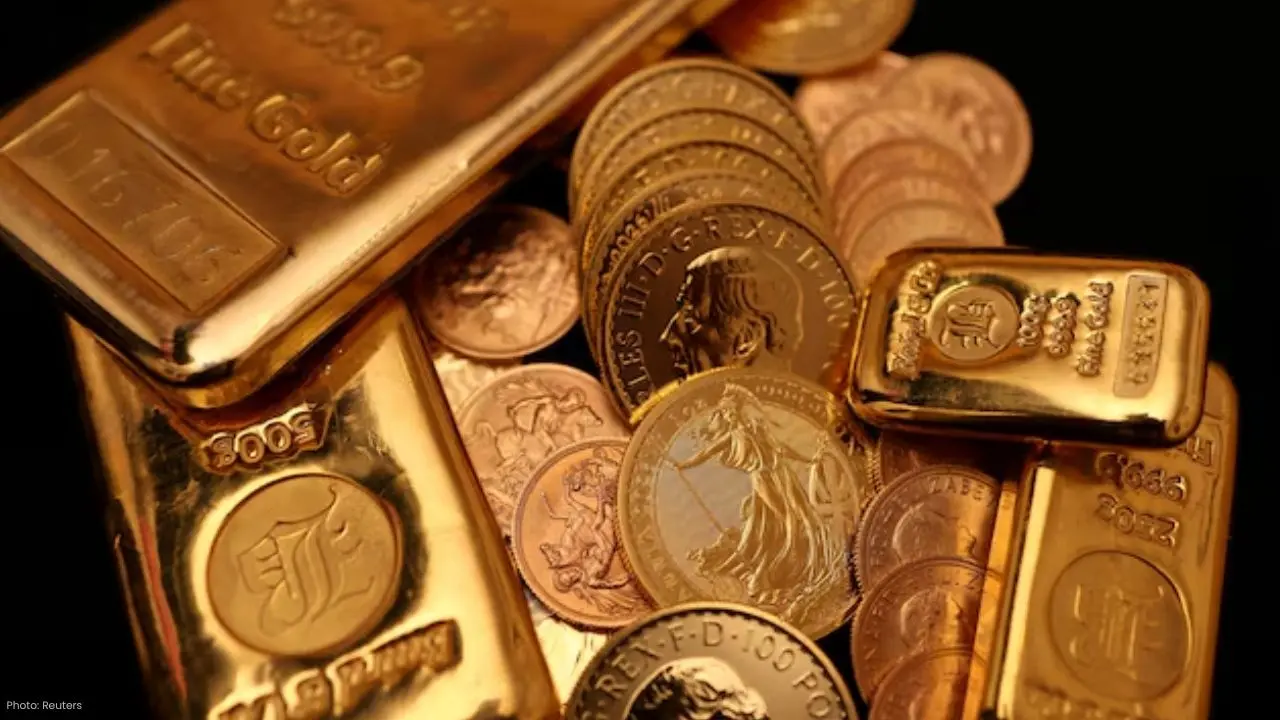
Gold prices experienced a downturn on Thursday as market participants braced for anticipated futures selling related to an imminent reshuffle in commodity indexes. Caution among traders grew as they began repositioning their investments, expecting adjustments from major funds managing substantial commodity benchmarks. This gearing up typically induces short-term volatility, and the gold market reflected this trend.
A stronger U.S. dollar added to the downward pressure on gold, rising against a group of major currencies. Since gold is dollar-denominated, a strengthening currency makes it pricier for international buyers, leading to decreased demand from crucial global markets. Movements in currency significantly impacted the decline on Thursday, compounding the effects of anticipated futures selling.
In the spot market, gold prices fell 0.6 percent to $4,428.06 per ounce as of 1115 GMT. Concurrently, U.S. gold futures for February delivery also decreased by 0.6 percent, trading at $4,436.30 per ounce. This parallel decline in both spot and futures prices underscored widespread selling pressure across the marketplace.
Analysts noted that the drop is primarily technical and not indicative of long-term weakening fundamentals. Commodity index reshuffles often result in temporary selling as funds readjust their holdings, particularly in liquid assets like gold. Traders tend to act preemptively to avoid sharp price fluctuations, contributing to short-term downward movements.
Despite this day's losses, gold continues to be sought after as a safe-haven investment amid global economic instability, geopolitical tensions, and varying interest rate expectations. However, in the short term, gold prices are inclined to be affected by movements in the U.S. dollar, bond yields, and futures market dynamics.
Investors are keenly watching forthcoming economic statistics and hints from central banks, especially the U.S. Federal Reserve, to gain insights into interest rate strategies. Increased interest rates often reduce the allure of non-yielding assets like gold, while prospects of monetary policy easing may provide some support.
In the interim, analysts predict that gold will trade within a volatile range as the market adapts to the implications of the commodity index reshuffle and reacts to currency variations. While the overall outlook for gold remains positive, short-term price movements are expected to face pressure until futures sales ease and currency trends stabilize.