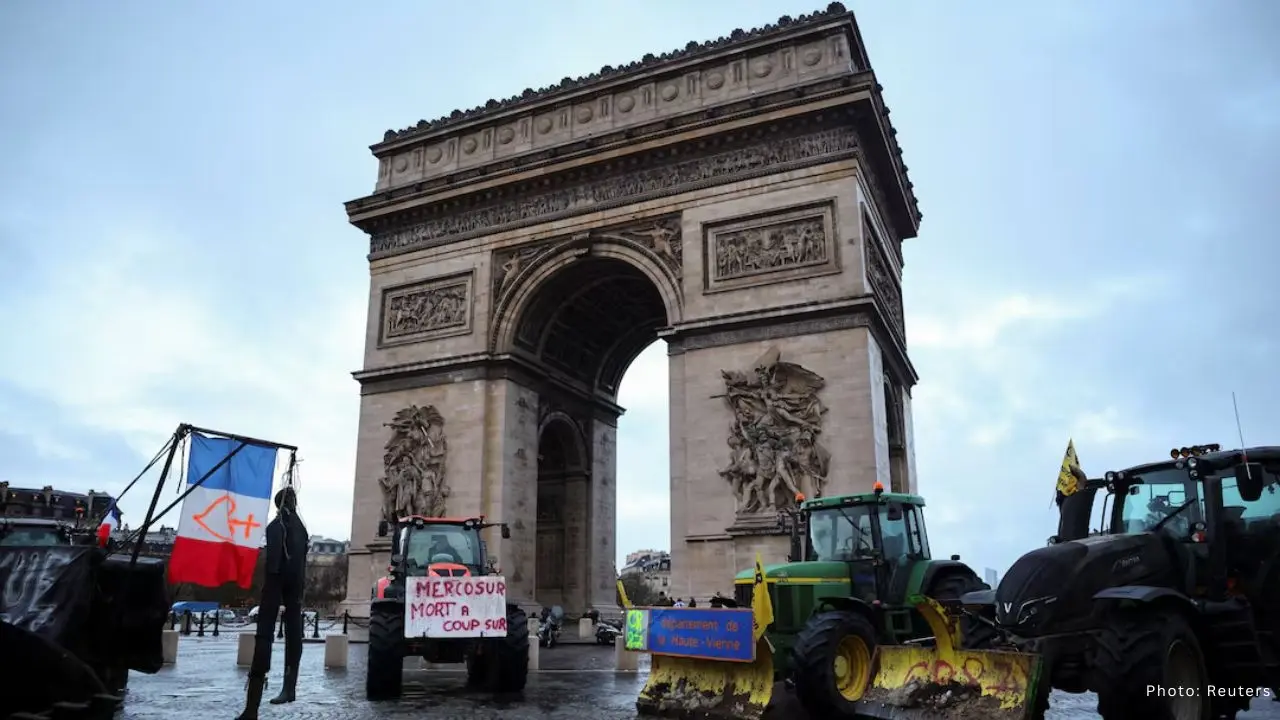
Thursday saw French farmers take to the streets of Paris, causing significant disruptions as they protested against the upcoming trade agreement between the EU and South American countries. The demonstrations reflected the profound discontent and worries of the farming community in France.
Starting before dawn, numerous tractors flooded the city, obstructing crucial highways and routes leading into the capital. Protests unfolded along iconic streets and near landmarks such as the Arc de Triomphe, resulting in traffic jams stretching over 150 kilometers.
The farmers vehemently oppose the EU–Mercosur trade deal, which aims to lower tariffs between the EU and nations like Brazil and Argentina. They fear this agreement will inundate European markets with low-cost food, making it increasingly difficult for local producers to survive.
With rising operational costs, stringent environmental regulations, and declining profits, many farmers express anxiety that cheaper imports could lead to the closure of small farms.
Additionally, frustration has surged over the handling of a cattle illness known as lumpy skin disease. Farmers criticize the government’s decision to cull infected cattle, advocating instead for vaccination initiatives.
A union representative articulated a sense of neglect among farmers, highlighting that the trade deal has become emblematic of broader challenges facing rural areas, including inadequate support and uncertainty.
This turmoil places additional pressure on President Emmanuel Macron, especially considering the current political climate in France, where parliament is notably fractured. A vote on the Mercosur deal is anticipated soon, potentially by Friday.
Despite longstanding opposition from France, other major EU nations like Germany and Spain support the agreement, with Italy likely to fall in line as well. If the deal garners enough votes, it could proceed without French backing.
In light of farmers' grievances, the European Commission has suggested expediting access to millions in EU agricultural funding and reducing import duties on select fertilizers. However, many farmers argue these actions are insufficient to address their concerns.
While police monitored the protests, they refrained from confrontations, acknowledging that farmers were expressing legitimate worries rather than acting as adversaries.
The events in Paris underscore a widening gap between favorable trade policies and the apprehensions of farmers about their financial futures. As the EU inches closer to a final decision, dissenting voices from French agricultural regions become increasingly difficult to overlook.