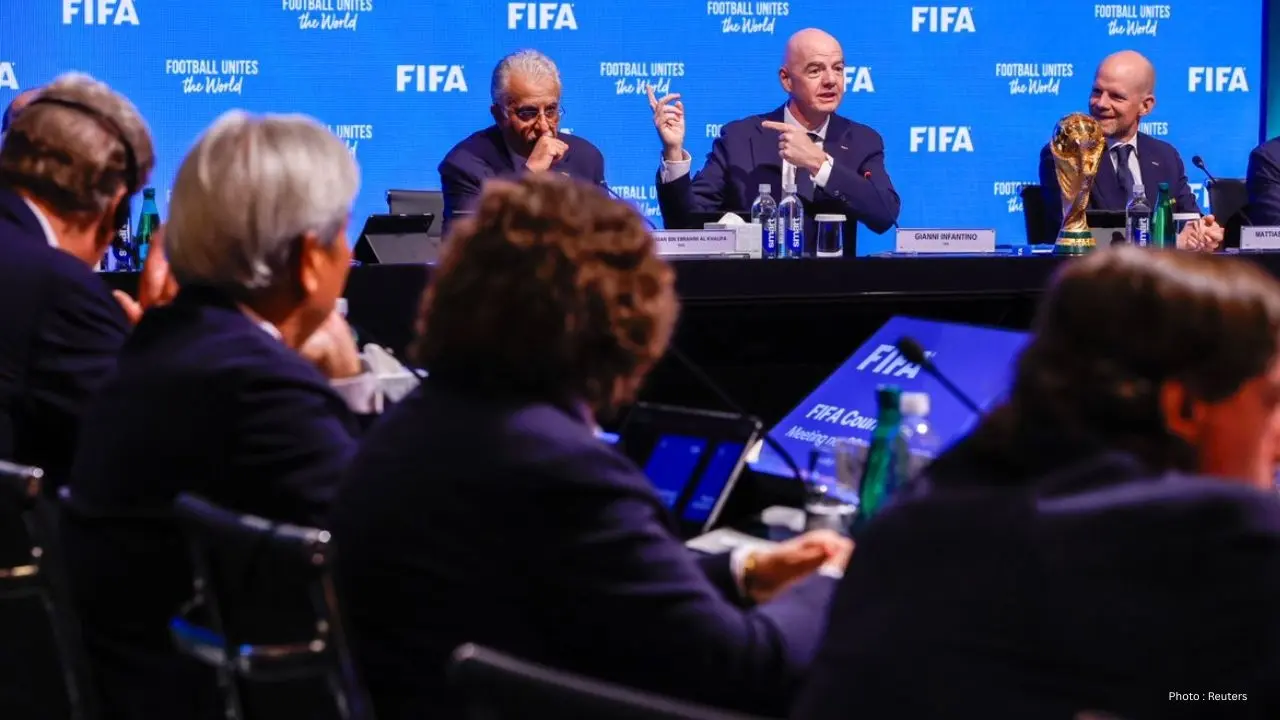
The recent FIFA Congress held in Vancouver has exposed growing divisions within international soccer leadership just weeks before Canada prepares to co-host the 2026 FIFA World Cup. The gathering brought together football officials from around the world but quickly became overshadowed by political disagreements, governance concerns, and uncertainty surrounding several major issues connected to the upcoming global tournament.
The congress took place at the Vancouver Convention Centre and included delegates from FIFA’s 211 member associations. Senior football officials, federation representatives, sponsors, and organizers attended the high-profile event as preparations continue for the 2026 World Cup, which will be jointly hosted by Canada, the United States, and Mexico.
While FIFA publicly presented the congress as a celebration of international football cooperation, tensions reportedly emerged behind the scenes over governance reforms, tournament expansion, human rights concerns, and financial disagreements. Several football officials privately expressed concern about how political disputes within the global game could affect preparations for the largest World Cup in history.
One of the major issues discussed during the congress involved growing concerns over FIFA’s increasing commercial influence and decision-making structure under FIFA President Gianni Infantino. Critics within some national football associations argued that FIFA leadership has become too centralized, with smaller federations having limited influence over major tournament decisions.
Human rights concerns also became a major point of debate during the meetings. Several advocacy organizations used the event to pressure FIFA over labour protections, migrant worker rights, anti-discrimination policies, and broader social issues connected to international football tournaments. Activists called on FIFA to strengthen transparency and accountability standards before the 2026 World Cup begins.
Political tensions between some member nations reportedly added further strain to discussions during the congress. International sporting organizations, including FIFA, have increasingly faced challenges balancing global political conflicts while attempting to maintain neutrality in international competitions. Officials privately acknowledged that geopolitical divisions are becoming harder to separate from major sporting events.
The congress also took place during growing uncertainty surrounding the future of the Vancouver Whitecaps. Reports that Major League Soccer received a relocation bid to move the Whitecaps to Las Vegas sparked protests outside the convention centre during the FIFA meetings. Supporters organized a “Save the ’Caps” rally, urging officials and political leaders to protect professional soccer’s future in Vancouver ahead of the World Cup.
British Columbia Premier David Eby said the province continues working to keep the Whitecaps in Vancouver and stressed the importance of maintaining strong soccer infrastructure as the city prepares to host World Cup matches. The possible relocation controversy added another layer of tension to the congress atmosphere.
Security, infrastructure, and financial planning for the 2026 tournament were also major discussion topics during the meetings. The upcoming World Cup will be the largest ever held, expanding to 48 national teams and involving matches across multiple cities in Canada, the United States, and Mexico. Organizers face enormous logistical challenges linked to transportation, stadium operations, crowd control, and international travel coordination.
Some officials reportedly expressed concern about the growing commercial costs associated with hosting major sporting events. Critics argue that FIFA places increasing financial pressure on host cities while maintaining tight control over sponsorship, branding, and revenue rights connected to the tournament.
Despite the disagreements, FIFA leadership continued emphasizing that preparations for the 2026 World Cup remain on schedule. Gianni Infantino praised cooperation between the three host nations and described the upcoming tournament as a historic opportunity to grow football across North America. FIFA officials also highlighted expected economic benefits, tourism growth, and global exposure linked to the event.
Canada is expected to host matches in Vancouver and Toronto during the tournament, while the United States will stage the majority of games, including the final. Mexico will also host matches across several cities, marking the first time three nations have jointly organized a FIFA World Cup.
However, analysts say the divisions visible during the Vancouver congress demonstrate how modern international football has become deeply connected to politics, business, social issues, and global power struggles. What was once mainly a sporting event now carries major diplomatic, economic, and cultural significance worldwide.
As countdown preparations continue for the 2026 World Cup, FIFA now faces growing pressure to manage internal disagreements while ensuring the tournament remains focused on football rather than controversy. The congress in Vancouver highlighted both the excitement surrounding the upcoming World Cup and the challenges that could shape the event in the months ahead.