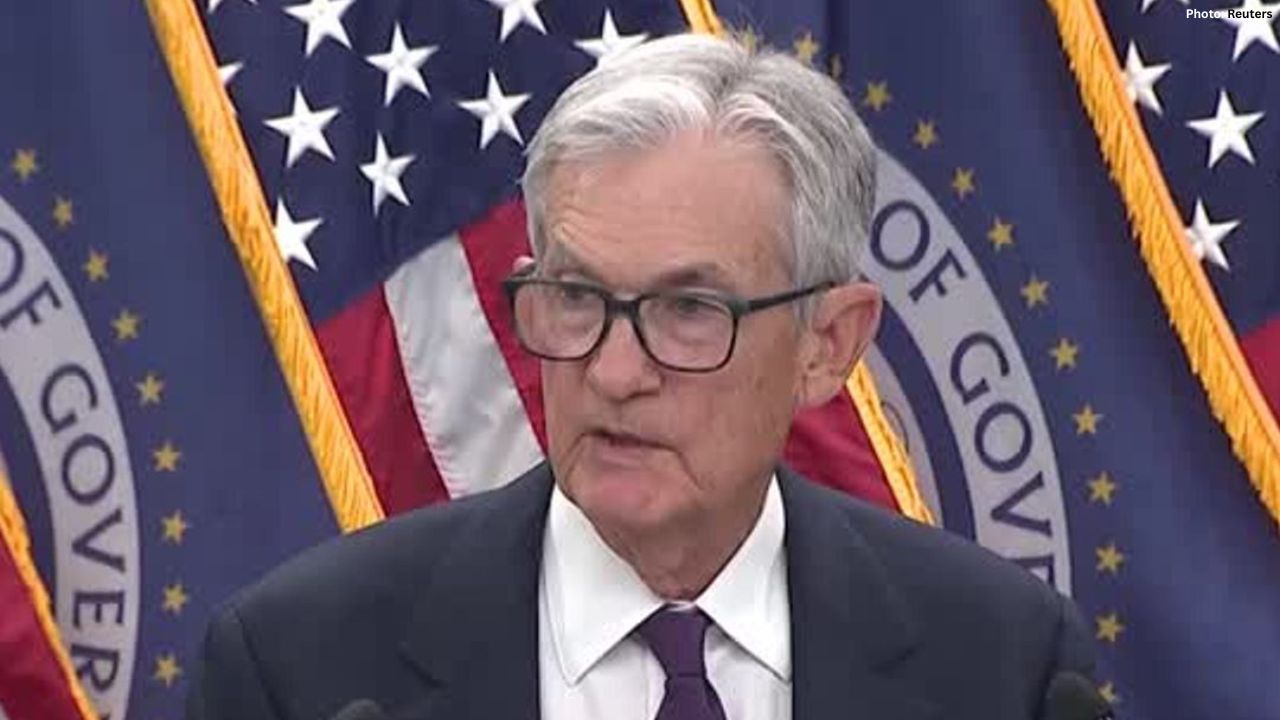
The U.S. Federal Reserve voted to keep its benchmark interest rate unchanged as Chair Jerome Powell delivered a firm defence of central bank independence at a moment of heightened political scrutiny and legal pressure. The Fed left its key lending rate at 3.5% to 3.75%, noting that U.S. economic activity “has been expanding at a solid pace,” even as the labour market gradually stabilises. The decision comes as the central bank seeks to balance inflation concerns with signs of easing pressure in the jobs market.
President Donald Trump has repeatedly criticised Powell for not cutting interest rates aggressively enough, arguing that faster reductions would make borrowing cheaper for both the U.S. government and American households. Powell is also facing an unusual and controversial criminal investigation by federal prosecutors over testimony he gave to the Senate related to building renovations at the Federal Reserve. At his Wednesday press conference, however, Powell declined to comment directly on the probe.
He instead stressed that the credibility of U.S. monetary policy depends on independence from partisan influence. “If a central bank loses its independence, it would be hard to restore the credibility of the institution,” Powell said. He reiterated that monetary decisions must not be controlled by elected officials, calling the Fed’s arm’s-length structure an “institutional arrangement that has served the people well.” Powell has previously suggested that the investigation may have been fuelled by Trump’s frustration over the pace of rate cuts.
With Powell’s term as Fed chair ending in May, Trump is expected to announce a replacement soon. The prospect of a new chair has raised concerns over whether the next leader will be able to act independently after years of heightened political pressure. Several former Federal Reserve leaders have strongly criticised the Department of Justice probe, calling it an attempt to undermine the institution’s autonomy.
Powell said recent economic data shows surprising resilience, with signs of stabilisation in the labour market — job creation has slowed, but the unemployment rate has edged lower. Policymakers are assessing the impact of three rate cuts last year, which were aimed at stimulating economic activity amid fears of a weakening job market. Inflation, however, remains above the Fed’s 2% target, keeping pressure on policymakers to hold rates steady for now.
While two Fed officials — Stephen Miran and Christopher Waller — voted in favour of a rate cut, the board ultimately concluded that steady economic momentum justified maintaining the current rate range. Both dissenting officials have close associations with the Trump administration, and Waller is reportedly under consideration to replace Powell.
Financial markets reacted cautiously to the announcement. The S&P 500 briefly surpassed the 7,000-point mark for the first time before closing nearly flat as investors weighed Powell’s comments against expectations for future cuts. Analysts say the Fed is signalling that rate reductions may come later in the year but only once policymakers see clearer evidence of declining inflation.
The political landscape surrounding the Fed continues to intensify. Trump has escalated personal attacks on Powell, calling him a “numbskull” and accusing him of harming the U.S. economy — even though Trump originally appointed him during his first presidential term. The president has also targeted Fed governor Lisa Cook, accusing her of mortgage fraud, an allegation she denies. The Supreme Court is now reviewing the case, with justices expressing concern about its implications for the Fed’s independence and the stability of the wider economy.
Powell attended the hearing and later described it as “perhaps the most important legal case in the Fed’s 113-year history,” suggesting that the court’s ruling could shape the future of central bank governance in the United States. Meanwhile, speculation continues about the next Fed chair, with BlackRock executive Rick Rieder emerging as a leading candidate.
As political pressure mounts and economic conditions evolve, the Federal Reserve faces one of its most consequential periods in decades — one in which its independence, credibility and leadership are all under intense scrutiny.