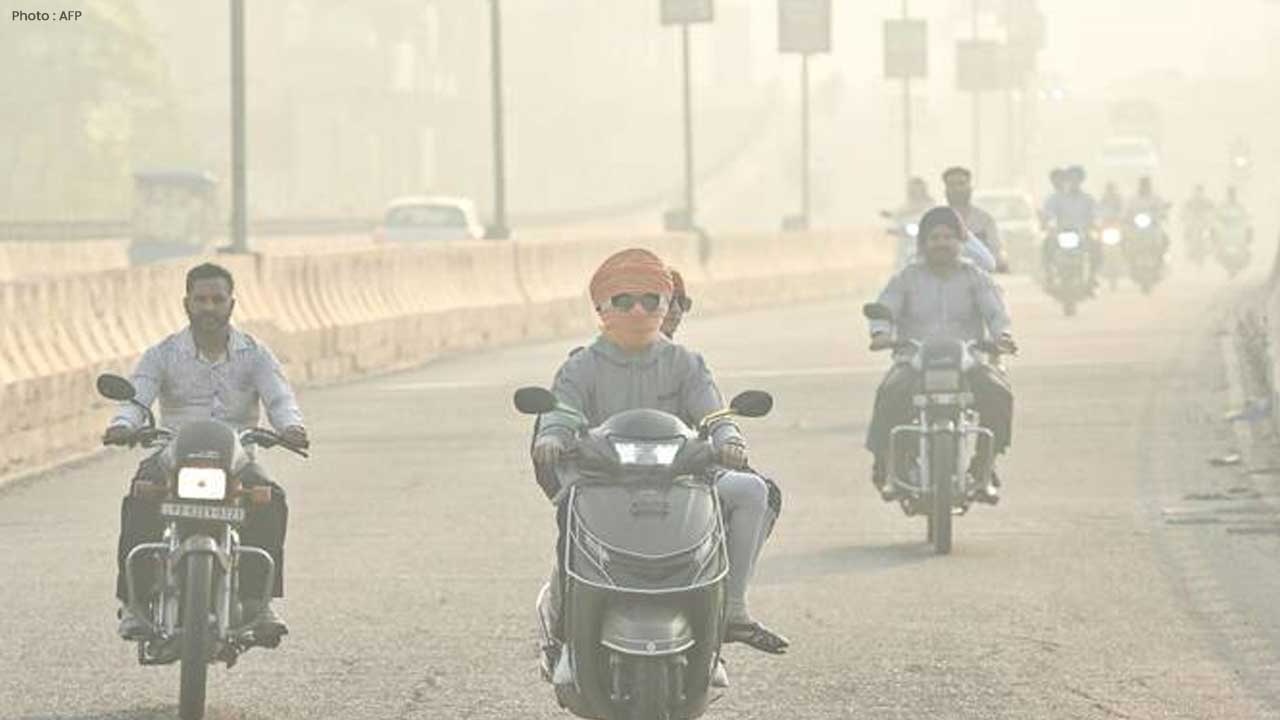
Delhi woke Thursday to a heavy, lingering smog that pushed air quality into dangerous territory after a sharp decline overnight. The Central Pollution Control Board (CPCB) reported an overall Air Quality Index reading of 352 — roughly an 80-point rise from levels earlier in the week — raising alarm across the city.
Neighbouring urban areas including Noida, Ghaziabad and Gurgaon also slipped into the ‘very poor’ band. Several localities recorded critically high readings: Vivek Vihar reached an AQI of 415, Anand Vihar 409 and Wazirpur 394, all within the ‘severe’ bracket. For context, an AQI between 0 and 50 is considered ‘good’, underscoring how elevated the pollution has become.
The deterioration coincided with Delhi’s first cloud-seeding attempt in more than fifty years, a collaborative effort with IIT Kanpur intended to trigger artificial rain and clear the air. The operation did not produce the desired rainfall because the clouds lacked sufficient moisture. IIT Kanpur experts said effective cloud seeding typically needs about 50–60% humidity, whereas the clouds during the trial contained only around 10–15% moisture.
In response to the hazardous readings, authorities invoked GRAP II restrictions, including limits on construction activity, to try to curb emissions. Officials also reiterated plans to bar non-BS-VI commercial vehicles from entering the city from November 1 as part of broader mitigation steps.
With visibility falling and respiratory risks rising, residents — particularly children, the elderly and those with pre-existing lung conditions — are being advised to take protective measures. The unsuccessful cloud-seeding experiment has highlighted the need for sustained, long-term strategies to confront Delhi’s entrenched air pollution problem.