China has initiated significant changes to bolster its emerging private space sector by relaxing stock market listing requirements for companies focused on developing reusable rockets. This policy shift underscores Beijing's commitment to narrowing the technological gap with the United States, currently the frontrunner in reusable rocket tech.
The Shanghai Stock Exchange has announced that firms engaged in constructing reusable commercial rockets will now have expedited pathways to initial public offerings on the STAR Market, a platform dedicated to technology-driven businesses. These companies are exempt from some stringent financial benchmarks typically imposed on new listings, such as achieving profitability and meeting minimum revenue criteria.
Shifting the focus from profitability to technological advancement, the revised regulations dictate that rocket companies must demonstrate tangible progress, including a minimum of one successful orbital launch utilizing reusable rocket technology. This adjustment is critical, considering the prolonged development timelines and substantial investments required before any profit can be generated.
This strategic decision comes as China seeks to compete with the United States, where Elon Musk’s SpaceX currently leads the charge in reusable rocket launches. SpaceX's Falcon 9 rocket remains the only model routinely launched, landing back and being reused, which has significantly reduced launch costs and facilitated more frequent satellite deployments.
Chinese officials view the U.S. advantage as a dual challenge—economic and security-related. There is a growing consensus that dependency on foreign space technology poses significant risks, particularly as satellites increasingly serve vital roles in communication, navigation, and national defense. Consequently, Beijing is aggressively working to establish its satellite networks and launch capabilities.
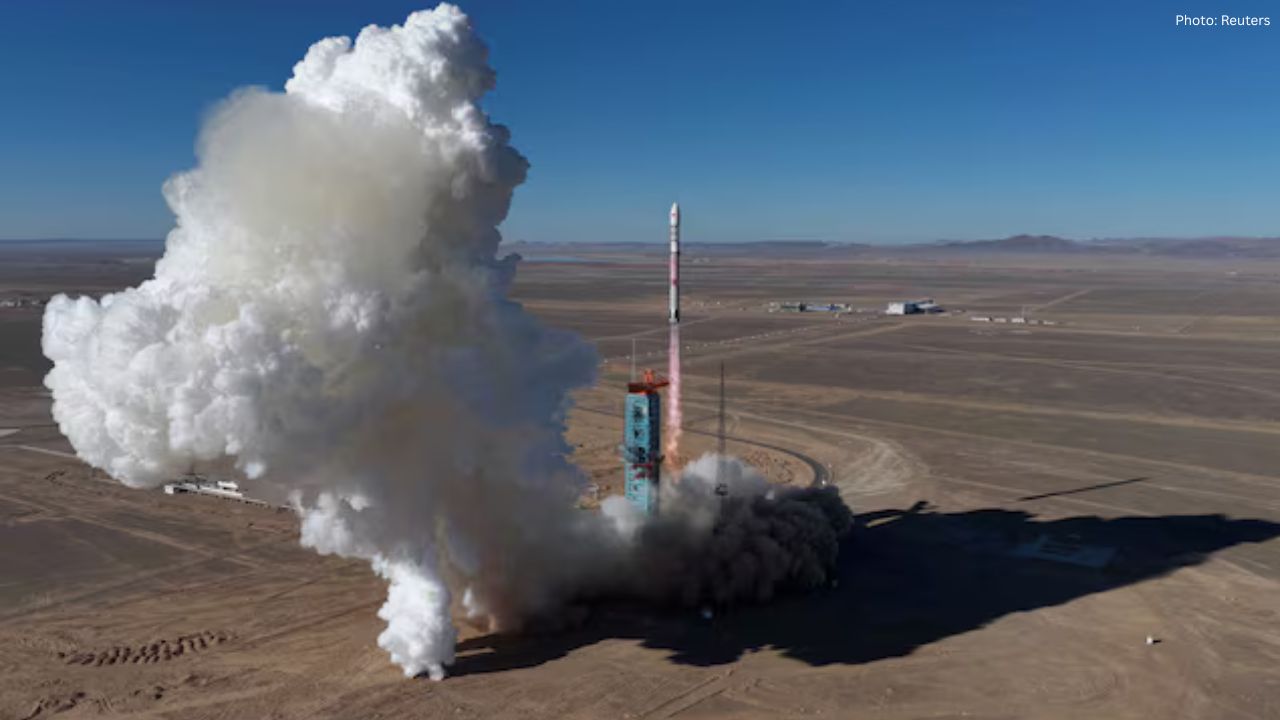
Earlier this month, the Chinese private rocket venture LandSpace made waves by successfully launching its Zhuque-3 rocket, marking the first complete test of a reusable rocket from a private firm in China. Although the booster recovery did not succeed, this launch represents a substantial advancement in the sector. LandSpace has expressed plans for another launch in mid-2026, aiming for full recovery.
Companies like LandSpace emphasize that access to public investment is crucial; developing reusable rockets entails significant costs, and without robust financial support, outpacing well-capitalized competitors like SpaceX proves to be challenging. The updated IPO regulations aim to address these financial hurdles by enabling promising firms to attract investments sooner.
The Shanghai exchange has also highlighted that companies involved in national missions or major government-backed space projects will receive prioritized assistance. This illustrates the deep interconnection between China’s private space sector and the nation’s long-term strategic objectives.
In summary, the adapted IPO regulations reflect China’s broader ambitions to foster innovation, nurture private enterprises, and fortify its positioning in space technology. By prioritizing technological achievements over immediate profits, Beijing aims to accelerate development and cultivate a robust, competitive space industry in the upcoming years.