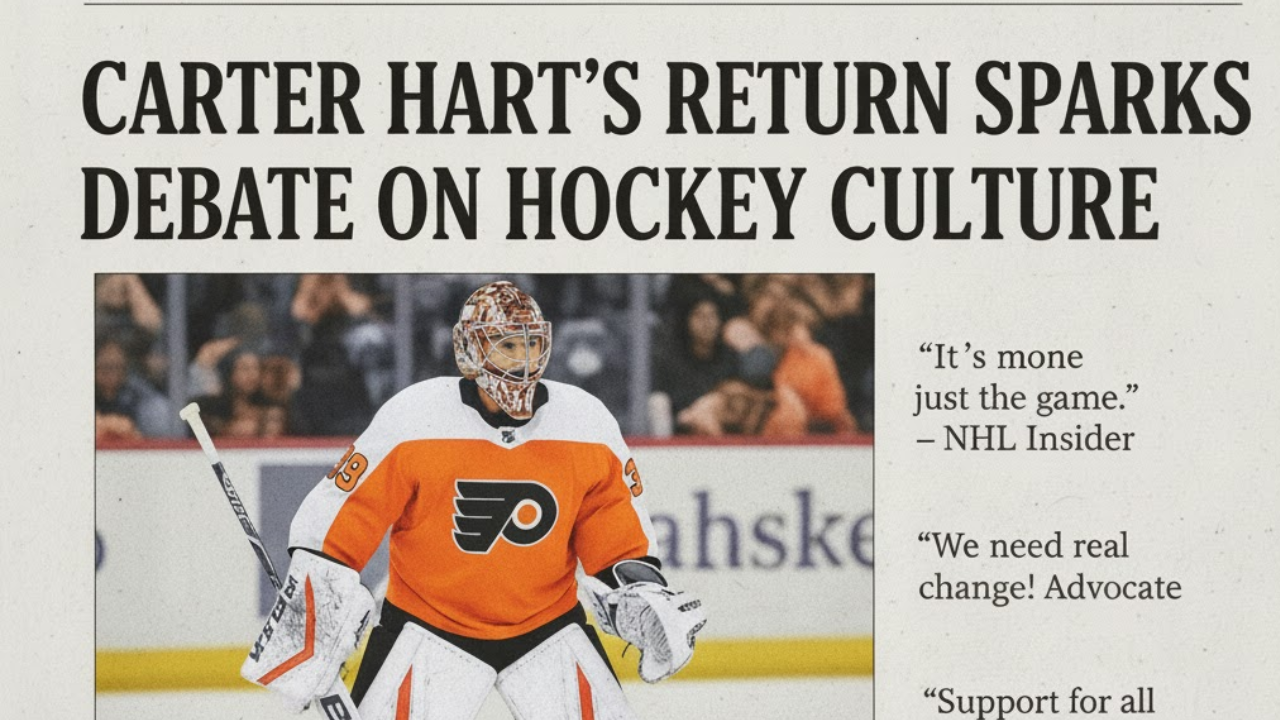
Carter Hart’s reinstatement to the NHL after his acquittal in the long-drawn Hockey Canada scandal has reignited one of the most polarizing debates in Canadian sports history — the conflict between redemption and accountability. As the 27-year-old goaltender signs a professional tryout contract with the Vegas Golden Knights, fans, journalists, and former players are divided. Is this a story of second chances, or a sign that hockey culture remains resistant to meaningful change?
A Timeline of the Carter Hart Case
The 2018 Hockey Canada Scandal
The roots of the controversy date back to 2018, when a group of Canadian World Junior players — including Carter Hart — were accused of sexual assault following a gala event in London, Ontario. The allegations sparked nationwide outrage and led to years of investigation, forcing Hockey Canada to confront deep institutional issues involving power, consent, and silence.
Legal Proceedings and Acquittal
After multiple legal delays and extensive media scrutiny, Carter Hart was acquitted in 2025 of all charges. The court cited insufficient evidence and inconsistencies in testimonies. Yet, while the verdict cleared Hart legally, it didn’t absolve the broader hockey ecosystem that had long shielded its athletes from public accountability.
Hart’s Career in Limbo
Before the trial, Hart was viewed as one of Canada’s most promising goalies — a rising star for the Philadelphia Flyers, known for his composure and precision. But after the charges surfaced, his contract was terminated, endorsements were withdrawn, and he retreated from the public eye for nearly two years.
Now, with his return via the Vegas Golden Knights, he faces not only the challenge of re-establishing his athletic career but also navigating the ethical storm surrounding his name.
The Vegas Golden Knights’ Controversial Decision
The Vegas Golden Knights, a franchise celebrated for its competitive spirit and entertainment-first approach, surprised the hockey world by extending a tryout contract to Hart. According to team insiders, the move was purely “performance-driven,” focusing on his skill rather than his history.
However, critics argue that the signing sends a problematic message — that the NHL is willing to overlook serious allegations in favor of talent and public appeal. Supporters, on the other hand, claim that once a player is acquitted, he deserves the right to rebuild his career.
A Divided Fanbase
In Canada and beyond, reactions have been fiery. Social media platforms saw trending hashtags like #CarterHartReturn and #HockeyCanadaScandal, with some fans defending Hart’s innocence and others calling his comeback a setback for victims of abuse in sports.
Sports journalist Katie Strang summarized the sentiment: “The real question isn’t whether Carter Hart deserves a second chance — it’s whether the system that produced this silence has learned anything at all.”
The Culture of Silence in Canadian Hockey
What “The Code” Means
Within Canadian hockey circles, there exists a long-standing unspoken code — a loyalty that binds players, coaches, and management. It often translates into silence around misconduct, especially when it threatens the sport’s image. This “code” has protected stars, silenced victims, and perpetuated toxic locker-room hierarchies for decades.
Institutional Protection
Hockey Canada’s handling of the 2018 scandal drew severe criticism for using hush funds to settle cases and protect its athletes. Even after public outrage forced leadership changes, many argue that little has truly changed in the sport’s core culture.
Hart’s return, therefore, symbolizes not just a personal comeback — but a test of whether Canadian hockey is truly ready to confront its systemic flaws.
Media and Public Reaction
Support for Hart’s Return
Certain sections of the media frame Hart’s comeback as a redemption story. Columnists highlight the importance of separating legal verdicts from public assumptions, arguing that athletes deserve rehabilitation after acquittal.
Several former players, including ex-teammates, have voiced their support. “He’s served his time in the court of public opinion,” said one retired defenseman. “Now let him play.”
Outrage and Activism
Conversely, advocacy groups and women’s organizations across Canada have condemned the NHL’s decision. They argue that Hart’s reinstatement trivializes survivors’ trauma and signals a return to hockey’s “business-as-usual” mentality.
The Canadian Women’s Sports Alliance released a statement emphasizing that “professional leagues must prioritize ethics over entertainment. Without accountability, the cycle of silence will continue.”
The NHL’s Dilemma: Redemption vs. Responsibility
The NHL faces a moral and branding dilemma. On one hand, it champions inclusivity and mental health awareness through campaigns like “Hockey Is For Everyone.” On the other, it has often been criticized for protecting players accused of misconduct.
Commissioner Gary Bettman, while commenting indirectly on the case, stated that “teams have the right to evaluate players based on legal outcomes and performance potential.” Yet, this pragmatic stance does little to address the deeper cultural issues the scandal exposed.
Historical Parallels
The league has seen similar controversies before — from Patrick Kane’s assault allegations to Slava Voynov’s domestic violence case. Each incident reignited debates about where the line between personal redemption and organizational responsibility should be drawn.
Canadian Hockey’s Reckoning
A Generational Shift in Attitude
Younger players entering the NHL today are more vocal about mental health, consent, and team culture. Many have begun questioning traditional power dynamics within the sport, demanding transparency and respect both on and off the ice.
In 2025, post-scandal Canada is witnessing this generational shift. Fans, too, are redefining what it means to support the game — not just the goals, but the values it represents.
The Need for Cultural Rebuilding
For hockey to move forward, experts insist that reform must be systemic, not symbolic. Independent investigations, mandatory ethics training, and survivor-support initiatives have been proposed. The Carter Hart case, while centered on one player, reflects a deeper wound in the nation’s sporting identity.
Psychological Toll on the Player
Hart himself has largely stayed silent since the verdict. In a brief statement released by his management, he expressed gratitude for “those who stood by through difficult years” and pledged to “focus on hockey and personal growth.”
Sports psychologists highlight that returning to high-level competition after public scandal is psychologically demanding. The player must deal with scrutiny from fans, teammates, and the media — a test of resilience as much as skill.
Can Hart Rebuild His Image?
Rebranding after controversy is no easy feat. Sponsors remain cautious, and fan loyalty is unpredictable. However, performance often changes narratives in professional sports. If Hart excels with Vegas, the conversation could slowly shift from controversy to comeback — though his past will never completely disappear from the headlines.
The Ethics of Forgiveness in Sports
Forgiveness in sports is complex. While legal justice determines guilt, moral accountability operates on a different level. The public expects their heroes to embody integrity, not just athleticism.
In the court of public opinion, forgiveness is earned through transparency, remorse, and consistent behavior. The question now is: has Hart earned that? For many, the silence surrounding the case — from both Hockey Canada and Hart himself — remains unsettling.
What This Means for Future NHL Policies
Hart’s return may serve as a blueprint (or a cautionary tale) for how future cases are handled. Legal acquittals alone might no longer suffice for reinstatement; teams could be pressured to weigh ethical optics alongside athletic performance.
Possible Reforms Ahead
-
Ethical review panels before player reinstatement
-
Public disclosure policies on past investigations
-
League-funded victim support programs
-
Education initiatives to change locker-room culture
Such measures, if implemented, could signal that the NHL truly intends to move beyond its history of selective accountability.
The Broader Canadian Conversation
The Carter Hart episode transcends hockey. It has sparked nationwide discussion about celebrity immunity, male privilege in sports, and the moral responsibility of institutions. Universities, minor leagues, and youth academies are now revisiting their training policies, emphasizing consent and conduct more rigorously.
Canada’s national relationship with hockey — once purely a source of pride — is now intertwined with questions of morality and modern ethics. This reckoning might be uncomfortable, but it’s necessary for the sport’s long-term credibility.
The Road Ahead for Carter Hart
Whether Hart’s stint with the Golden Knights evolves into a full contract remains uncertain. What’s clear is that every save, every press conference, and every fan reaction will be viewed through the lens of his past.
For now, Hart stands as both a symbol of redemption and reminder — redemption for some who believe in second chances, and a reminder for others that justice and integrity in sports remain a work in progress.
Disclaimer
This article is based on publicly available information from verified news outlets, including The Guardian and AP News (October 2025). It reflects journalistic analysis and does not imply legal or personal judgment against any individuals or organizations mentioned. All opinions are contextual and for informational purposes only.