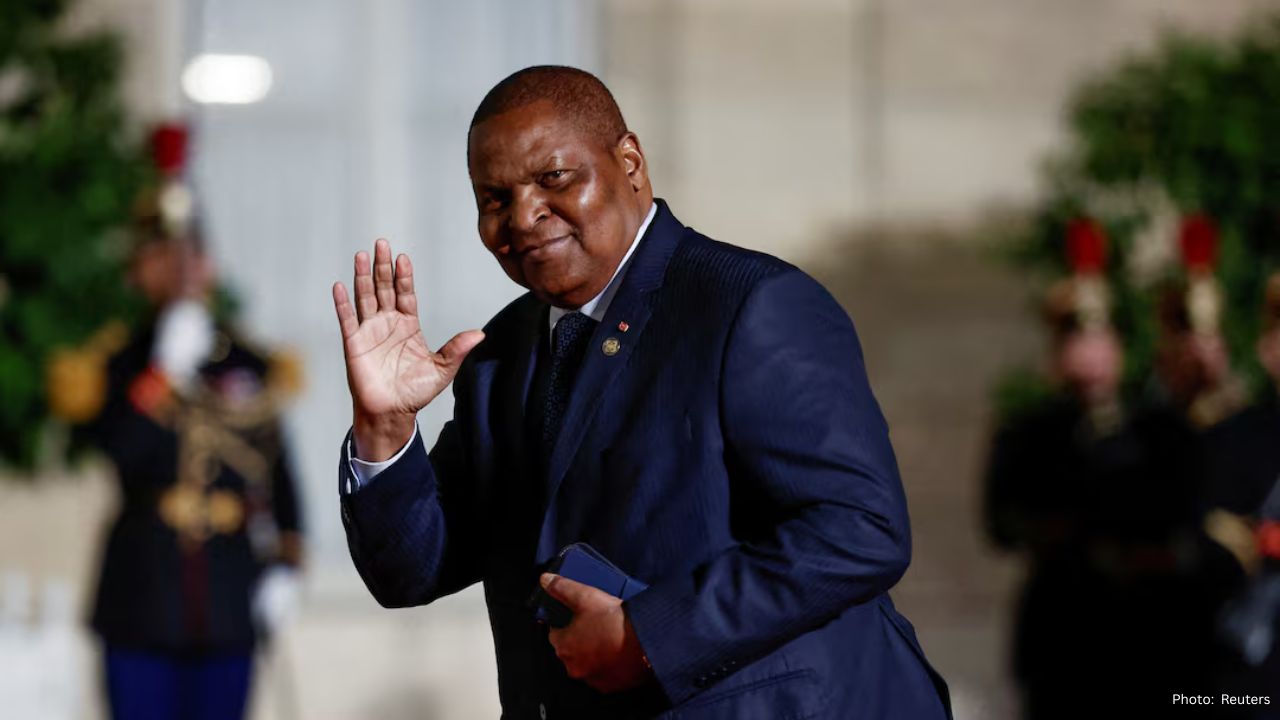
The President of the Central African Republic, Faustin-Archange Touadera, is vying for a controversial third term in this weekend's elections, after nearly a decade of governance characterized by foreign security dependency, fragile peace, and sluggish economic growth.
Touadera, aged 68, ascended to power in 2016 when the nation was plagued by instability. With armed factions controlling considerable regions, the government struggled to operate beyond the capital. Since assuming office, he has leaned heavily on foreign allies, particularly from Russia and Rwanda, to restore security.
In 2023, he oversaw a constitutional amendment that repealed presidential term limits, paving the way for his re-election. Critics contend that this move undermines democracy in a nation fraught with political turmoil, while supporters argue that maintaining stability through his leadership is essential during a delicate recovery.
A significant aspect of his presidency was the introduction of Russian security forces in 2018, including Wagner Group mercenaries. The Central African Republic became the first in the region to pursue this route, with others like Mali and Burkina Faso following. In return for security assistance, Russia obtained access to the country's gold and natural resources.
Touadera has sought to position himself as a progressive and innovative leader. In 2022, the country became the first in Africa to recognize bitcoin as legal currency. More recently, a deal to introduce Starlink satellite internet aims to enhance digital connectivity in a country with underdeveloped infrastructure.
During campaign events, he emphasizes the improvements in safety, asserting that travel is now safer and that violence has diminished compared to a decade ago. The continued presence of Rwandan troops and recent peace agreements with various rebel factions indicate a downward trend in conflict across certain areas. International estimates suggest economic growth has reached around 3% as a result of these efforts.
Nevertheless, many experts caution that the current peace is tenuous. Rebel groups remain armed, disarmament efforts are incomplete, and violence from neighboring Sudan still destabilizes eastern regions. Human rights organizations have reported severe abuses, including torture and executions, involving foreign fighters such as Russian mercenaries.
Security is paramount for voters, with citizens expressing a desire for peace, roads, and essential services. However, daily life remains exceedingly difficult, with two-thirds of the populace living in poverty and widespread youth unemployment.
Moreover, Russia's backing comes at a steep cost. Estimates suggest Russian-affiliated groups have profited billions from Central African gold. Touadera's ventures into cryptocurrency have raised concerns about potential corruption and connections to criminal activities.
Despite promises of investments, illegal and hazardous mining activities persist. The prevalence of kidnapping and extortion poses risks, leading several foreign governments to caution their citizens about serious threats in the sector. Economic reforms have yet to provide substantial relief to most families.
Most analysts predict that Touadera will emerge victorious, bolstered by significant state resources and weak opposition. Nonetheless, the upcoming election raises profound questions about whether a stability reliant on foreign influences and resource deals can genuinely translate into peace, job creation, and dignity for the common populace.