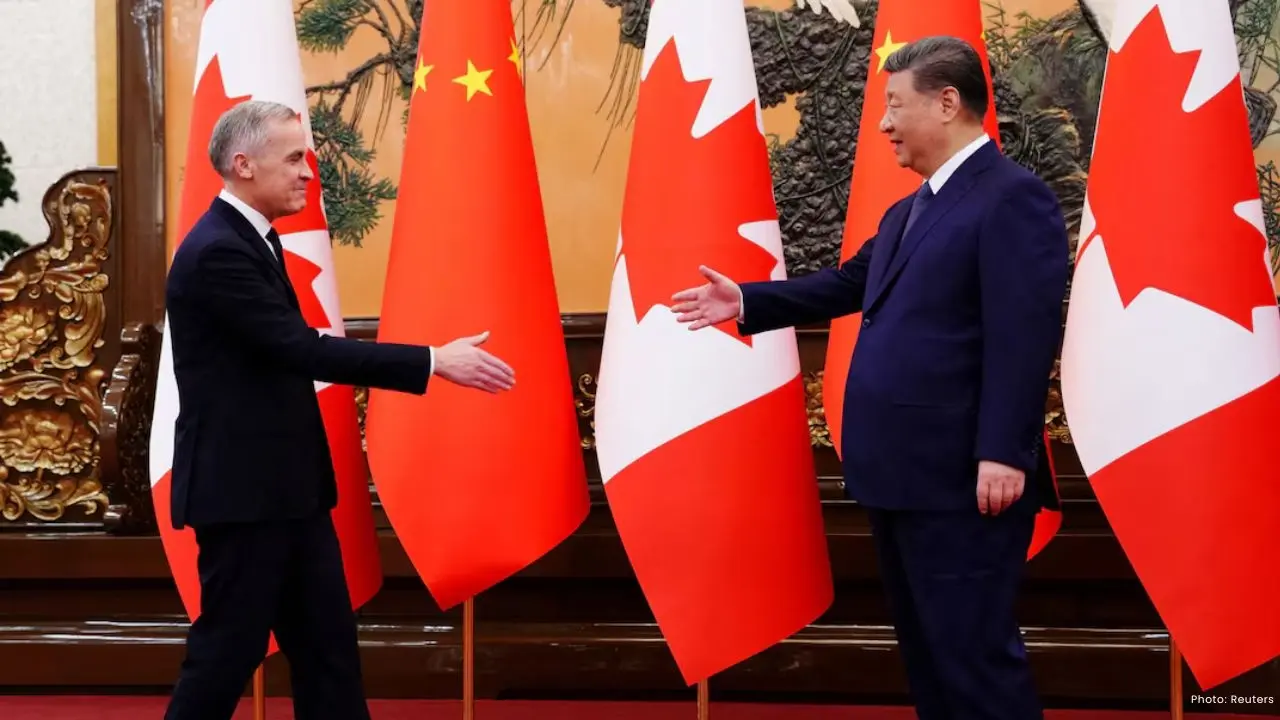
During a landmark visit to Beijing, Canadian Prime Minister Mark Carney and Chinese President Xi Jinping unveiled a strategic partnership that has the potential to deliver “historic” economic benefits for both nations. This marks Carney’s first trip to China as prime minister since 2017 and signals a renewed effort to enhance Canada’s relationship with its second-largest trading partner, trailing only the United States.
Amid global divisions, Carney highlighted essential areas for collaboration, including agriculture, agri-food, energy, and finance, indicating that these sectors could yield both immediate and lasting advancements. He expressed hope that the partnership would fortify economic and diplomatic connections between Canada and China.
China, which has been navigating trade tensions with the U.S. during the Trump administration, welcomed this new partnership. President Xi expressed enthusiasm for cooperating with Carney, emphasizing their mutual responsibility for both nations and the broader global community.
This new collaboration arises during a time of economic volatility. Canada is strategically aiming to diversify its trade connections and strengthen ties with China after facing tariffs from the Trump administration. Conversely, China seeks cooperation with countries traditionally aligned with the U.S. amidst its own challenges from U.S. tariffs on exports.
Experts suggest that this reconciliation could subtly alter the global economic landscape, illustrating that U.S.-initiated economic decoupling from China is not unanimously embraced, even among U.S. allies. Nonetheless, analysts assert that Canada is unlikely to deviate significantly from its close ties with the United States, given its deep-rooted integration with American security and intelligence frameworks.
Despite the optimistic outlook, significant hurdles remain. Canada recently imposed tariffs on Chinese electric vehicles, citing unfair competition linked to state subsidies for Chinese firms. In retaliation, China enacted tariffs on over $2.6 billion of Canadian agricultural products, such as canola oil and seeds, resulting in a 10.4% decline in Canada’s exports to China.
Experts underscore that resolving these trade disputes will be crucial for the partnership's full realization. If effectively addressed, this collaboration could enhance trade, energy initiatives, and financial integration, benefiting both markets.
Ultimately, Carney’s visit signifies a renewed dedication to constructive dialogue and pragmatic economic collaboration, marking a careful yet essential stride toward fortified Canada-China relations which may hold lasting significance in a landscape characterized by economic rivalry and shifting global alliances.