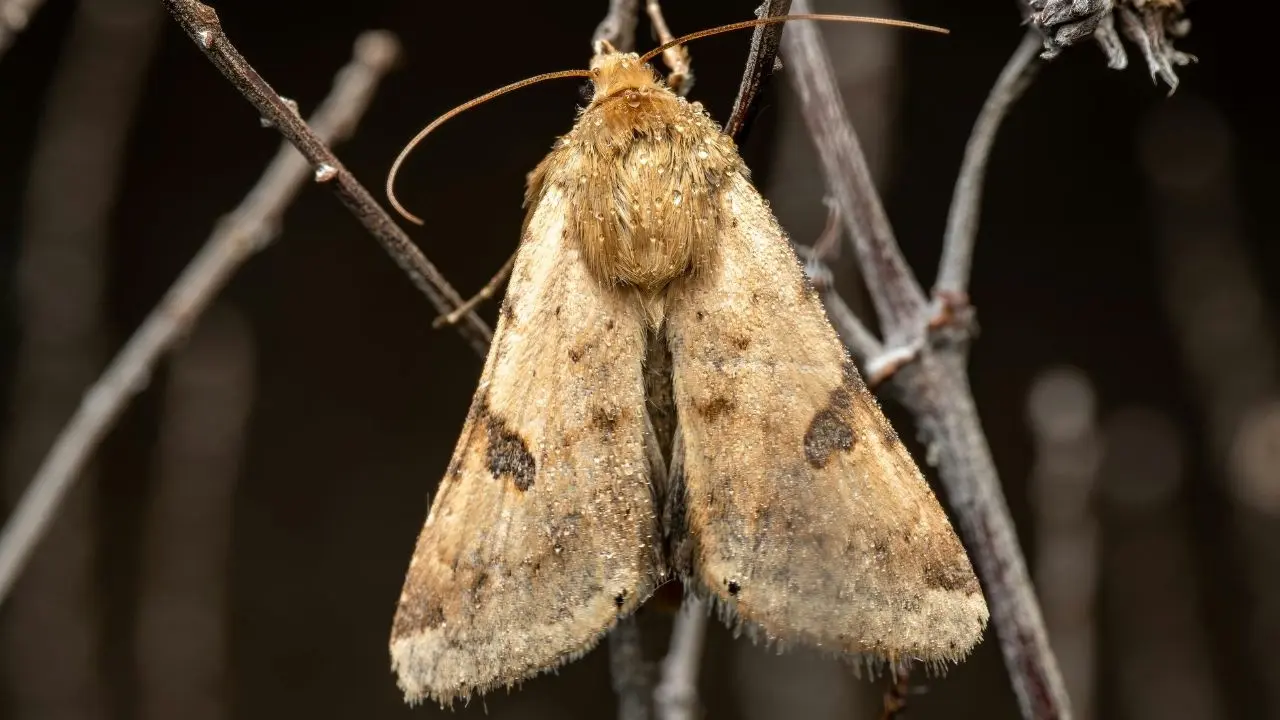
A recently discovered invasive moth species has sparked serious concerns for both the environment and agriculture in Ladakh, a region noted for its ecological sensitivity. The Phalera cf. bucephala, more commonly known as the buff-tip moth, has been identified in the Suru Valley of Kargil district. Local experts are apprehensive about the potential damage this insect could inflict on the region's farming economy, as it is known for its aggressive behavior towards trees and vegetation.
The identification was made by a team of four scientists who documented the species in one of Ladakh’s colder deserts. Originally native to regions in Africa, East Asia, and Europe, the buff-tip moth has raised questions among researchers, who utilized the “cf.” in its name to indicate that it could represent either a new regional species or a closely related variant. Further studies are necessary to determine its classification and the implications for the delicate Himalayan ecosystem.
Experts have highlighted that the caterpillars of the buff-tip moth are particularly destructive, capable of consuming extensive amounts of foliage in a brief span of time, stripping trees bare in mere weeks. This alarming behavior poses a risk to local communities as Ladakh's agriculture relies on limited vegetation and orchards, vital components for many families’ livelihoods.
The Suru Valley is notable for its agricultural endeavors and lush landscapes, setting it apart from other arid regions of Ladakh. Farmers cultivate crops and maintain orchards, with these practices providing crucial support to the local economy. Concerns are mounting regarding the potential spread of the invasive species, as it could ultimately harm local plantations, fruit-bearing trees, and native vegetation, leading to significant economic setbacks and ecological disruption.
Experts caution that the introduction of invasive species could result in long-term ecological issues, especially in sensitive environments like Ladakh. The region's fragile climate and biodiversity mean that any sudden influx of invasive insects could disturb its natural equilibrium. Of particular concern is the notion that climate change and rising temperatures may facilitate the survival and proliferation of such species in mountainous areas.
The buff-tip moth's remarkable camouflage makes it challenging to spot in nature. Adult specimens often mimic twigs or tree bark, aiding them in evading predators and remaining undetected. This natural defense adds a layer of complexity to monitoring and controlling the species, presenting further challenges to researchers and forestry authorities in the upcoming months.
Environmental scientists are calling on authorities to carefully monitor the moth’s spread and advocate for thorough ecological research in the area. Quick detection and proactive measures are deemed essential to safeguard Ladakh’s agriculture, biodiversity, and local economy from potential long-term repercussions. This discovery underscores the escalating environmental issues that Himalayan ecosystems face due to invasive species and shifting climate patterns.