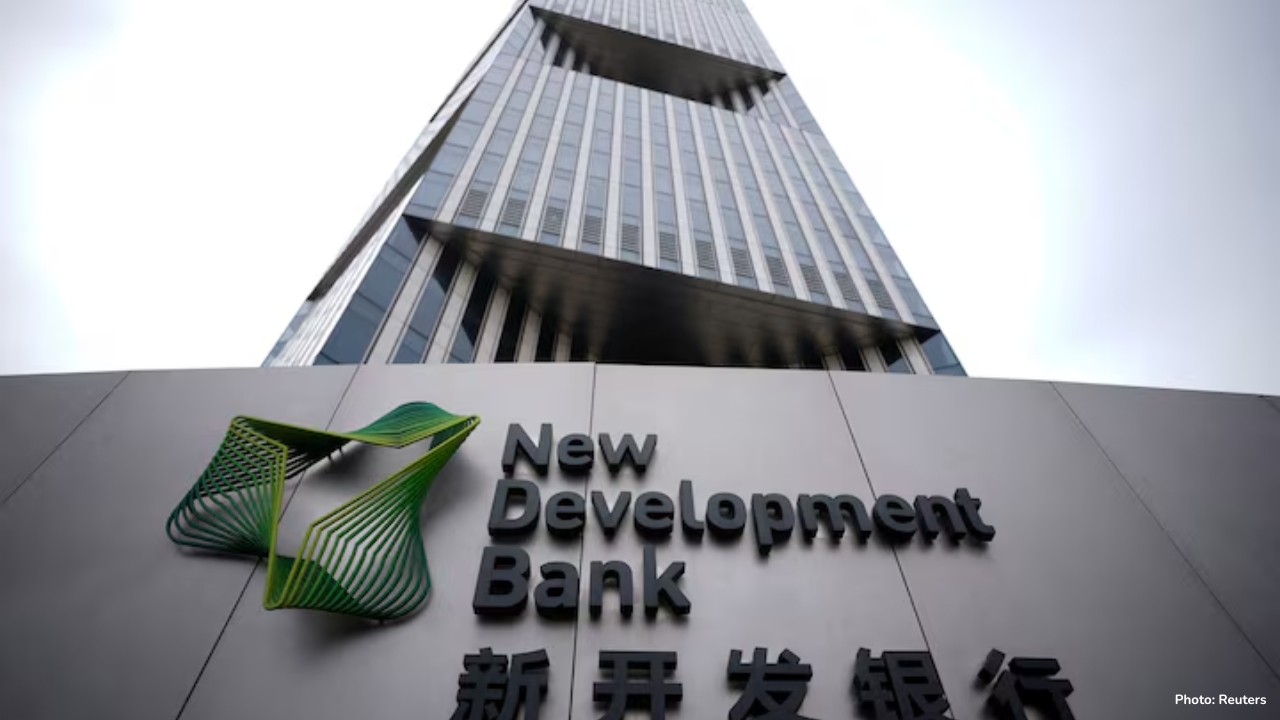
The New Development Bank (NDB), established by the BRICS countries—Brazil, Russia, India, China, and South Africa—is planning to issue its first bond in Indian rupees. According to sources familiar with the matter, the bank aims to launch the bond in India by March 2026.
The NDB intends to raise between $400 million and $500 million through this bond, which will have a maturity period of 3 to 5 years. This is the first time the bank will issue a bond in India’s local currency, highlighting its commitment to supporting development projects in India and promoting the Indian rupee in international finance.
About the New Development Bank
The NDB was created in 2015 during the sixth BRICS summit to finance sustainable development and infrastructure projects in emerging economies. Unlike traditional banks, the NDB focuses on development funding rather than purely profit-driven lending. Its main goal is to provide long-term loans to member countries for projects that improve infrastructure, energy, and social development.
Since its creation, the NDB has issued bonds in foreign currencies such as Chinese yuan and South African rand. Issuing a bond in Indian rupees represents a strategic step to further strengthen the bank’s presence in one of its largest member economies, India. By raising funds in the local currency, the NDB can support projects in India without exposing itself to currency exchange risks.
Purpose of the Indian Rupee Bond
Issuing a bond in Indian rupees serves several purposes. Firstly, it allows the NDB to fund Indian projects directly using local currency, reducing the need for currency conversions. This is particularly important for infrastructure and sustainable development projects where predictable cash flows are necessary. Secondly, it contributes to promoting the Indian rupee internationally.
As more global institutions issue rupee-denominated bonds, the currency’s use in cross-border finance increases, which could reduce reliance on the U.S. dollar. Finally, it attracts a diverse pool of investors who are interested in emerging markets and want exposure to Indian assets.
Structure of the Bond
The proposed bond will be issued in the Indian domestic market and is expected to attract both institutional investors and retail investors. Institutional investors could include banks, insurance companies, and mutual funds, while retail investors will consist of individual buyers seeking to invest in government- or bank-backed securities. The bonds will carry a fixed interest rate, which will provide predictable returns to investors over the bond’s 3-5 year period.
The proceeds from this bond will be used exclusively for projects in India. These may include infrastructure projects such as roads, railways, and ports, renewable energy projects such as solar and wind farms, and social initiatives like healthcare, education, and urban development. By funding projects in local currency, the NDB reduces financial risk for both itself and the Indian government.
Benefits for India
The issuance of rupee-denominated bonds by the NDB brings multiple advantages to India.
Increased Investment Inflows: The bond is expected to attract both foreign and domestic investment. This can help increase capital available for infrastructure and development projects.
Strengthening Financial Markets: A new bond in rupees issued by an international development bank improves market depth and liquidity. It also gives investors more options for safe and secure investments.
Economic Growth: Funds raised from the bond will support projects that create jobs, improve infrastructure, and stimulate the economy. With better roads, ports, and energy supply, India can accelerate its growth.
Currency Internationalization: As more bonds are issued in Indian rupees, the currency becomes more widely used in international finance, which may help stabilize exchange rates and reduce reliance on the U.S. dollar.
Challenges and Considerations
While the bond presents opportunities, there are challenges to consider:
- Currency Volatility: Fluctuations in the rupee’s value could affect returns for investors. A weaker rupee might reduce the real value of interest payments for foreign investors.
- Regulatory Approvals: Issuing a bond in India requires permission from the Reserve Bank of India (RBI) and other authorities. Any delays in approvals could push back the launch date.
- Market Conditions: Global and domestic financial conditions, including inflation, interest rates, and investor sentiment, could affect the bond’s success. Economic instability or uncertainty might make investors cautious.
- Competition: Other financial instruments in India, such as government bonds and corporate bonds, compete for investors’ attention. The NDB will need to offer competitive returns to attract buyers.
Expert Opinions
Financial experts view this move as significant for both India and the NDB.
- Vivek Rajpal, an Asia strategist at investment advisory firm JB Drax Honore, said that issuing bonds in rupees is a step toward "currency internationalization", helping the Indian rupee gain acceptance in global financial markets.
- Monale Ratsoma, CFO of the NDB, mentioned that the bank is actively working with the Indian government and regulators to ensure that funds raised in local currency can finance Indian projects efficiently.
- Experts believe this initiative could set a model for other emerging market countries. If successful, it may encourage other international development banks and private institutions to issue bonds in local currencies, making the global financial system more diverse and resilient.
Historical Context
The NDB has gradually expanded its presence in member countries through bonds issued in local currencies. Previously, the bank issued bonds in Chinese yuan and South African rand, which helped fund development projects in those countries. By issuing a rupee-denominated bond, the NDB continues this strategy in India, which is one of the fastest-growing economies in the world.
This bond also reflects India’s growing influence in the global economy. As the country continues to develop its financial markets and attract international investors, the rupee’s role in global finance is expected to strengthen.
Implications for Investors
- The NDB’s Indian rupee bond offers several advantages to investors:
- Stable Returns: As the bond is issued by a reputable international bank, it provides a relatively safe investment with predictable returns.
- Diversification: Investors looking to diversify their portfolios beyond U.S. and European assets may find rupee-denominated bonds attractive.
- Exposure to Emerging Markets: Investors gain exposure to India’s economic growth and development projects without directly investing in individual companies.
- At the same time, investors must monitor currency risk, economic stability, and market conditions to make informed decisions.
Broader Impact
Issuing rupee-denominated bonds can have a global impact beyond India.
Global Finance: More countries issuing bonds in their own currencies reduces global dependence on the U.S. dollar. This may lead to a more balanced and stable international financial system.
Emerging Market Investment: As investors gain confidence in rupee bonds, other emerging market currencies may also attract more investment.
Development Funding: Development banks using local currencies can fund projects more efficiently, reducing costs and supporting faster economic growth.
Government and Policy Support
The success of the rupee bond depends on government support and regulation. The Reserve Bank of India and other regulators play a key role in ensuring smooth issuance. Policies that promote investor confidence, such as clear tax treatment, transparency, and protection of bondholder rights, are essential.
The Indian government is likely to welcome this initiative, as it aligns with national goals of infrastructure development, job creation, and sustainable economic growth.
Future Outlook
The NDB plans to continue issuing bonds in local currencies as it expands its development projects. If the Indian rupee bond succeeds, it could pave the way for additional issuances in India and other BRICS countries. This will further strengthen the bank’s capital base and its ability to fund projects in emerging economies.
For India, this represents a chance to attract more international finance, improve infrastructure, and enhance the country’s standing in global financial markets. For investors, it offers a new option to participate in India’s growth story while diversifying portfolios.
The New Development Bank’s plan to issue its first Indian rupee-denominated bond is a major milestone for both the bank and India. The bond, expected to raise $400–500 million, will finance infrastructure, renewable energy, and social projects within India. It will also promote the international use of the Indian rupee and provide investors with stable, attractive investment opportunities.
While challenges like currency volatility, regulatory approvals, and market conditions remain, experts agree that this initiative is a positive step for India’s financial market and the NDB’s development goals. It reflects the growing influence of emerging markets in global finance and demonstrates how international institutions can collaborate to support sustainable growth.
As the NDB prepares for the bond launch by March 2026, investors, policymakers, and financial institutions around the world will be closely monitoring its success. The outcome may influence the future of rupee-denominated finance and inspire other emerging economies to explore local currency funding solutions.