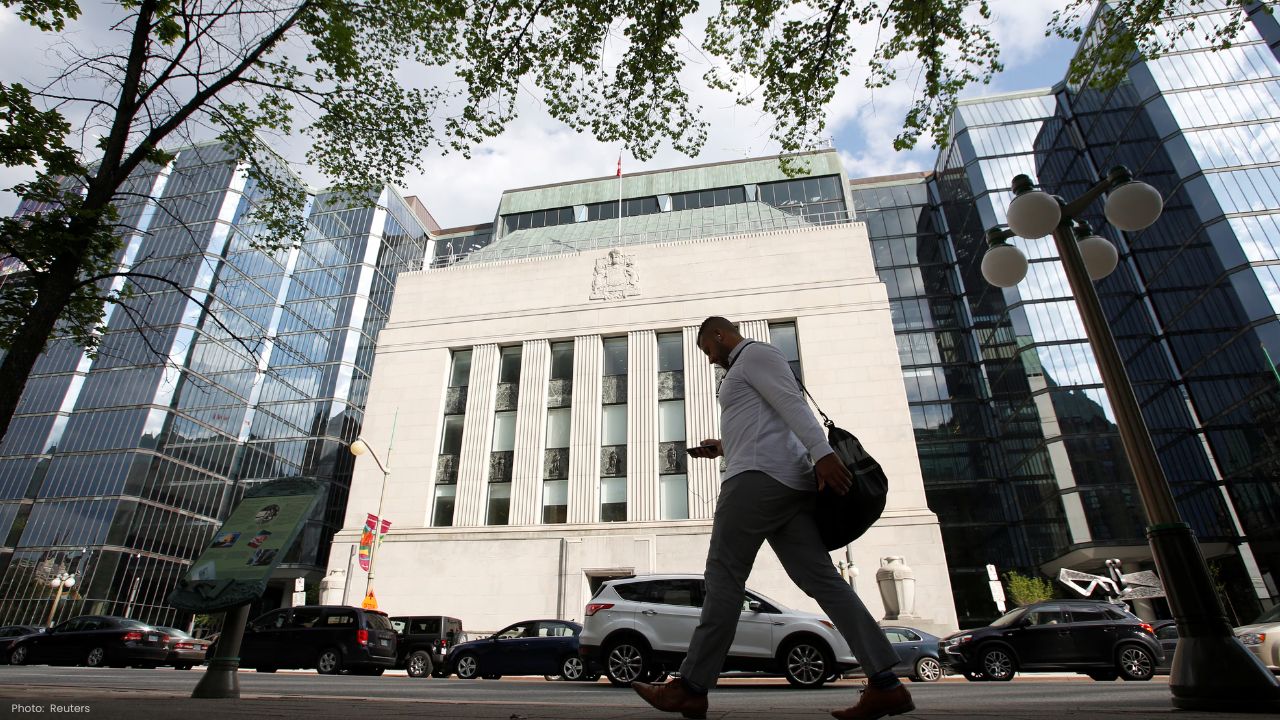
The Bank of Canada is set to make its latest interest rate announcement and release updated economic forecasts this morning — its first comprehensive economic outlook since January.
The move comes amid growing concerns about the country’s economic resilience in the face of global trade uncertainty and the impact of U.S. tariffs on key Canadian industries.
Last month, the central bank lowered its benchmark interest rate by a quarter of a percentage point to 2.5 per cent, marking its first rate cut since March. Now, most economists predict that the bank will deliver a second consecutive rate reduction, as signs of economic weakness continue to emerge.
Economic slowdown and trade pressure
Canada’s economy has been showing signs of strain in recent months. The manufacturing and export sectors, in particular, have been affected by ongoing trade tensions with the United States. The tariffs have led to higher costs for Canadian producers and a decline in export competitiveness, dampening overall growth prospects.
“Cracks are appearing in the economy, and the central bank is clearly taking note,” said a senior economist at TD Bank. “While inflation has edged up, the broader economic indicators are pointing toward a slowdown, which justifies another rate cut.”
Inflation trends and monetary policy outlook
Annual inflation rose slightly — up half a percentage point to 2.4 per cent in September — primarily due to higher energy and food prices. However, BMO chief economist Doug Porter suggested that “underlying inflation readings likely remained calm enough to warrant another cut.”
The Bank of Canada’s target inflation rate remains at 2 per cent, and while headline inflation is above that mark, policymakers are expected to look through temporary fluctuations driven by volatile items like gasoline and groceries.
Economists believe the bank will continue to balance its mandate of keeping inflation stable while supporting economic growth, particularly at a time when consumer and business confidence has been weakening.
Updated forecasts expected in the new Monetary Policy Report
In addition to its rate decision, the central bank will publish its Monetary Policy Report (MPR), providing a detailed outlook on growth, employment, and inflation. This will be the bank’s first full set of forecasts since January, after several months of uncertainty prevented it from offering forward guidance.
Analysts expect the updated report to reflect slower GDP growth projections for the remainder of the year, with only modest recovery expected in 2025. Household debt levels, weaker export demand, and subdued business investment are likely to remain key challenges for policymakers.
The bank’s Governor is also expected to address how global developments — including geopolitical tensions, fluctuating commodity prices, and the monetary stance of the U.S. Federal Reserve — are influencing Canada’s policy path.
Timing and fiscal considerations
The central bank’s decision comes just days before the federal government is set to table its fall budget next week, leaving policymakers without full visibility into Ottawa’s fiscal plans. Economists note that fiscal measures could either complement or complicate the bank’s efforts to steer the economy toward stable growth.
While some analysts caution that back-to-back rate cuts could risk fueling household borrowing, most agree that maintaining a supportive monetary stance is necessary given the current headwinds.
“Canada’s economy is navigating a delicate period,” said a CIBC economist. “With exports softening and consumer spending losing momentum, the central bank’s priority will be to prevent a deeper slowdown — even if it means tolerating slightly higher inflation in the short term.”
Markets will be watching closely for signals on whether the Bank of Canada plans to continue its rate-cutting cycle in the coming months or pause to assess the impact of recent moves. A more dovish tone could strengthen expectations of another rate cut before the end of the year, while a cautious stance may indicate the bank is nearing a neutral position.
The announcement, followed by a press conference from the Governor, will offer insights into the central bank’s view on the interplay between global trade risks, domestic growth, and inflation dynamics.
As Canadians await the decision, the overarching question remains: will another rate cut be enough to shield the economy from external shocks — or merely the beginning of a longer easing cycle?