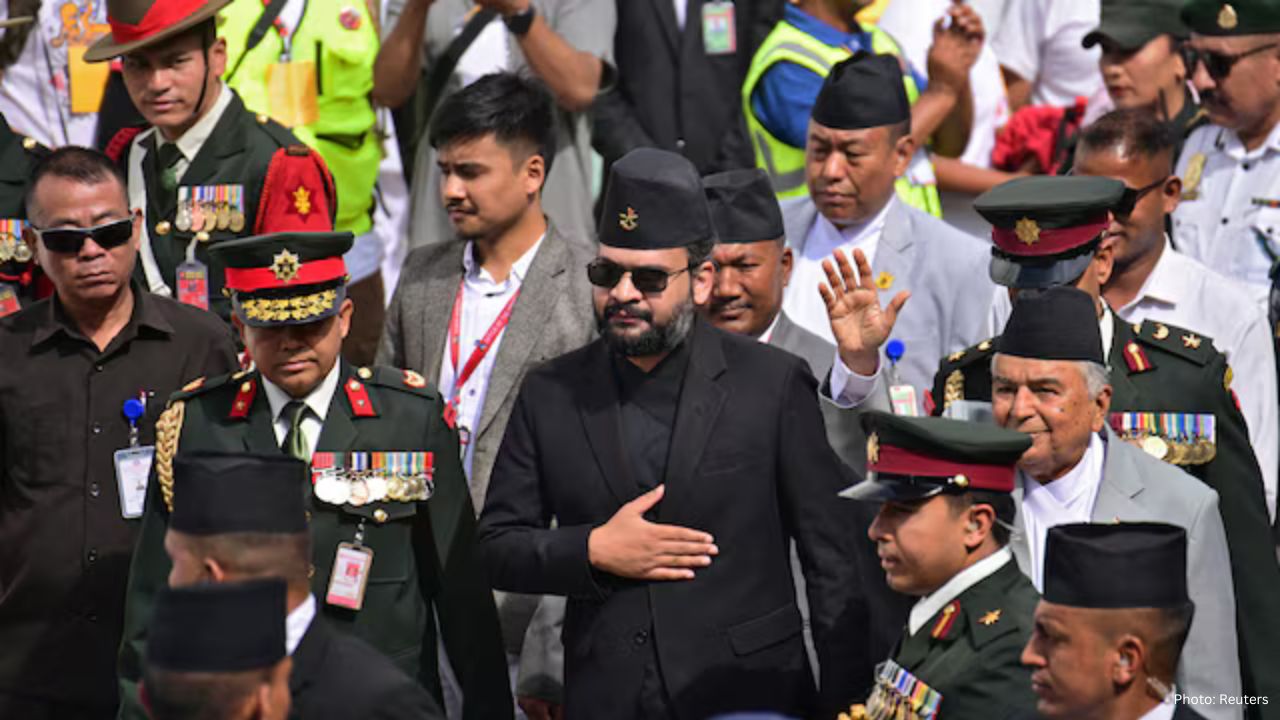
A significant political change is unfolding in Nepal as former rapper Balen Shah, currently serving as the mayor of Kathmandu, declares his intention to run for the position of prime minister in the parliamentary elections set for March 5. His candidacy emerges in the wake of transformative youth-led protests that have compelled established political figures to reconsider their positions.
At just 35 years old, Balen is a prominent figure among Nepal's younger populace, having gained fame for his rap music that often tackled pressing societal issues. His rise in the political arena mirrors the widespread dissatisfaction among youth towards conventional political parties that have governed Nepal for decades.
In preparation for the upcoming election, Balen has joined forces with the Rastriya Swatantra Party (RSP), a newly established political entity helmed by former television host Rabi Lamichhane. Their partnership stipulates that Balen would assume the prime minister role if the RSP is victorious, while Lamichhane maintains leadership of the party. Analysts note that this coalition merges youthful resonance with a structured political strategy.
The alliance is a response to the powerful “Gen Z” protests of September, where youth rallied against corruption, governance issues, and a lack of opportunities. These protests, which at times turned violent, left 77 dead and ultimately led to the resignation of Prime Minister K.P. Sharma Oli, marking a critical moment in Nepal’s political landscape.
Although Balen was not a frequent presence at protest sites, many young activists regarded him as a symbol of defiance. He effectively utilized social media to engage with supporters and played a vital role in the establishment of a transitional government led by former Chief Justice Sushila Karki, which is tasked with managing the election process.
With nearly 19 million eligible voters in a nation of about 30 million, the protests brought in close to one million new voters, predominantly young people. This demographic shift underscores the increasing influence of youth voters and poses significant challenges to older political factions.
The Nepali Congress and the Communist Party of Nepal (UML) have long dominated the political scene, yet leaders from these parties are dismissive of the new alliance, labeling both Balen and Lamichhane as contentious figures. They maintain that experience and stability are more valuable than popularity in the forthcoming election.
Nonetheless, supporters of this new alliance assert that it is essential for Nepal to have leaders who resonate with the aspirations and frustrations of young citizens. They emphasize that innovative ideas and fresh perspectives are crucial to overcome the cycle of corruption and ineffective governance hindering the nation’s progress.
While uncertainties linger regarding Balen’s leadership approach and Lamichhane’s ongoing legal issues, their collaboration is already reshaping political discourse. The upcoming election will reveal whether Nepal's electorate is prepared to embrace a new generation of leadership or revert to established political patterns.
Clearly, Nepal’s youth have asserted their voice. Through protests, electoral participation, and civic engagement, they are actively shaping the nation’s trajectory, marking an unprecedented shift in political dynamics.