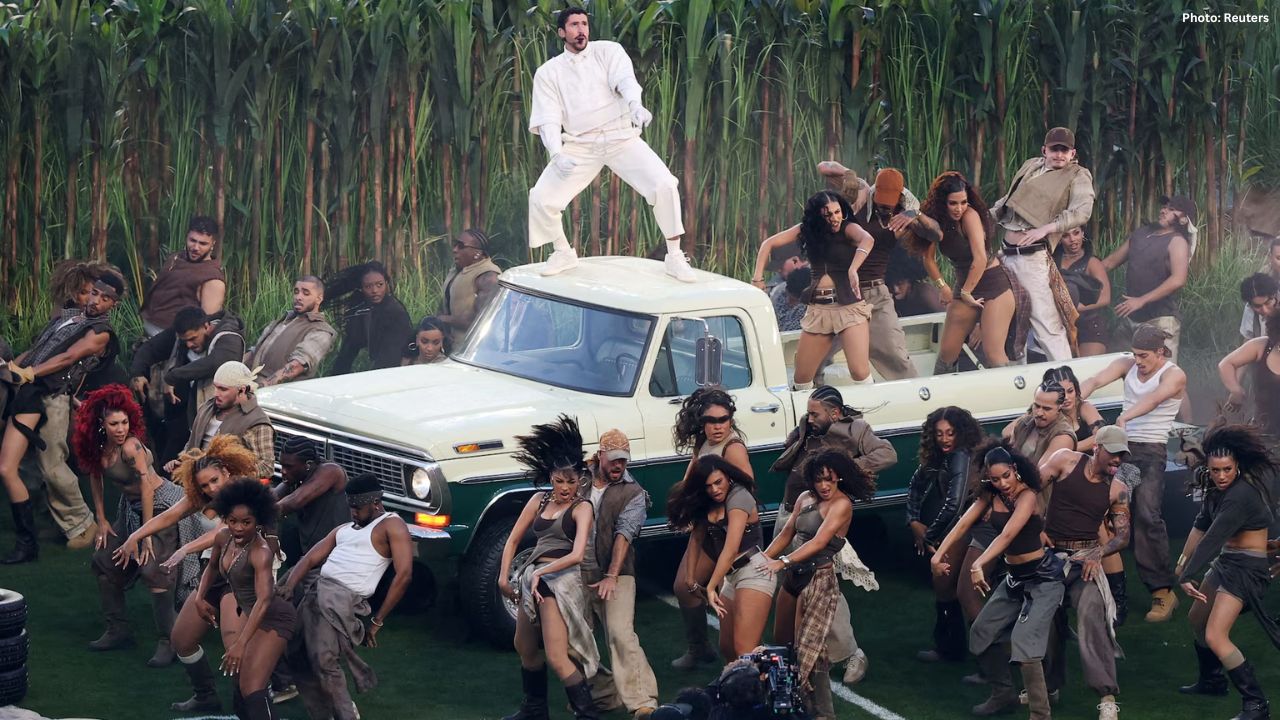
Bad Bunny delivered a widely praised halftime performance at Super Bowl LX on Sunday, blending high-energy music with cultural celebration in a set that many critics described as a “thrilling ode to Boricua joy.” The show, nearly all in Spanish, stood out as one of the most culturally resonant performances in recent Super Bowl history.
The Puerto Rican artist used the global stage to spotlight his heritage, infusing the performance with vibrant imagery, rhythmic beats and symbolic references that echoed the spirit of his homeland. Many commentators noted that the nearly all-Spanish set marked a significant moment for Latino representation on one of the world’s most-watched television broadcasts.
Reviewers highlighted the show’s dynamic staging and emotional impact, praising Bad Bunny’s ability to connect with audiences both through his music and through the cultural pride that permeated the performance. The energetic choreography, bold visuals and infectious rhythms helped elevate the halftime show into a memorable highlight of the night’s entertainment.
Fans and critics alike pointed to the inclusivity of the performance as a defining strength, noting that its celebration of language and identity resonated with diverse audiences around the world. Many described the show as not just entertainment, but a powerful cultural moment that transcended typical halftime spectacle.
Overall, Bad Bunny’s Super Bowl performance was celebrated for its joy, cultural richness and ability to connect with viewers, making it one of the most talked-about halftime shows of recent years.