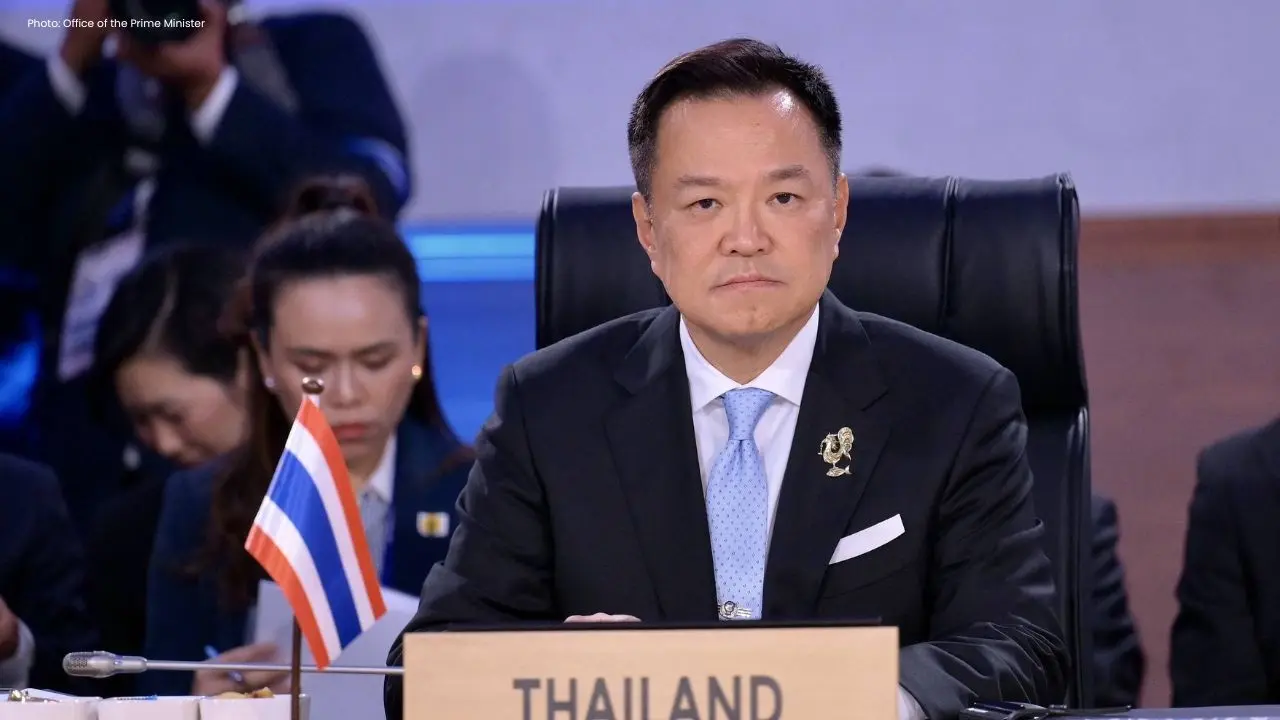
The 48th ASEAN Summit kicked off on Friday, May 8, 2026, at the Mactan Expo in Cebu, Philippines, gathering leaders from ASEAN member nations to address crucial issues surrounding regional collaboration, economic resilience, energy safety, and food sustainability. Thailand’s Prime Minister, Anutin Charnvirakul, along with his wife, participated in the opening ceremony and the key plenary session held at Hall 1 of the venue.
In his address, Prime Minister Anutin emphasized the necessity of fostering unity and collaboration amongst ASEAN countries, especially amid global uncertainties. He praised the Philippines for its excellent chairmanship of ASEAN and congratulated Vietnam’s Prime Minister Le Minh Hung on his new role. The PM expressed gratitude towards ASEAN member countries for their ongoing support following his return to office.
He noted that ASEAN has previously navigated numerous challenging scenarios, emerging more robust as a result of cooperative efforts. Current global issues, including conflicts in the Middle East and rising economic challenges, are once again testing ASEAN's solidarity and resilience. He articulated the need for ASEAN to remain cohesive, flexible, and ready for future global challenges.
Under the summit’s theme, “Navigating Our Future, Together,” Prime Minister Anutin underscored the critical need for enhanced cooperation in all sectors among ASEAN states. He voiced that the region cannot tackle global uncertainties alone and must join forces to guarantee peace, economic progress, and sustained regional stability.
A significant topic during the discussions was energy security. The PM pointed out that disruptions in global shipping routes and rising instability in supply chains are impacting energy prices in the region. He urged ASEAN members to bolster maritime security and safeguard navigation freedoms in key maritime areas. He also called for expedited regional initiatives like the ASEAN Power Grid and increased investment in renewable sources such as solar energy and biofuels.
Food security emerged as another pressing concern. PM Anutin highlighted that escalating fuel and fertilizer prices are exerting pressure on agricultural output and driving up food costs across many ASEAN nations. He proposed extending successful regional cooperation frameworks, such as the Thailand-Singapore rice trade agreement, to ensure a stable food supply during emergencies. Thailand remains committed to assisting fellow ASEAN nations as a key food producer.
Regarding the safety of ASEAN citizens amid international crises, the Prime Minister referred to Thailand’s recent evacuation operations to safely return thousands of Thai nationals from areas of conflict in the Middle East. He emphasized that this operation illustrated the importance of regional collaboration and humanitarian support among ASEAN states in times of need.
ASEAN leaders collectively acknowledged that modern global issues are interconnected, necessitating a united approach. Topics such as energy security, food accessibility, climate implications, and human safety cannot be treated in isolation. The leaders affirmed the importance of establishing robust regional frameworks that can swiftly address emergencies, disasters, and geopolitical tensions likely to affect Southeast Asia in the future.
At the end of the plenary session, ASEAN leaders ratified the Cebu Protocol to amend the ASEAN Charter and facilitate Timor-Leste’s future membership within ASEAN. They also endorsed several pivotal declarations concerning maritime cooperation, regional resilience in light of the Middle East situation, disaster response collaboration under the ASPECT Framework, and empowering youth in climate initiatives and disaster preparedness. The summit reinforced ASEAN’s resolve to remain resilient, united, and forward-thinking in an increasingly unpredictable global landscape.