Filmmakers Mona Fastvold and Brady Corbet are known for exploring the lives of ambitious individuals whose relentless pursuit of their visions often leads to personal turmoil. Their cinematic works frequently delve into the spirits of intense dreamers—those whose fervor profoundly impacts their own lives and those around them.
Following the acclaim of The Brutalist, where Corbet directed and co-wrote with Fastvold—resulting in an Oscar for Adrien Brody—the duo returns with yet another challenging narrative. This time, Fastvold steps into the director's role for The Testament of Ann Lee, an evocative historical drama featuring Amanda Seyfried in a central role.
Seyfried's portrayal of Ann Lee is among the most daring performances of her career, capturing the essence of the 18th-century religious leader who founded the Shaker movement. The role requires deep emotional, physical, and spiritual investment, which Seyfried tackles with outstanding resolve.
Unlike the fictional narrative of The Brutalist, the character of Ann Lee is rooted in reality. While the Shaker community is often recognized for its minimalist crafts, Lee’s story remains largely unfamiliar to contemporary society. Fastvold's film strives to illuminate her life, showcasing her as a woman of deep faith who believed she was divinely chosen and viewed as a female representation of Christ by her followers.
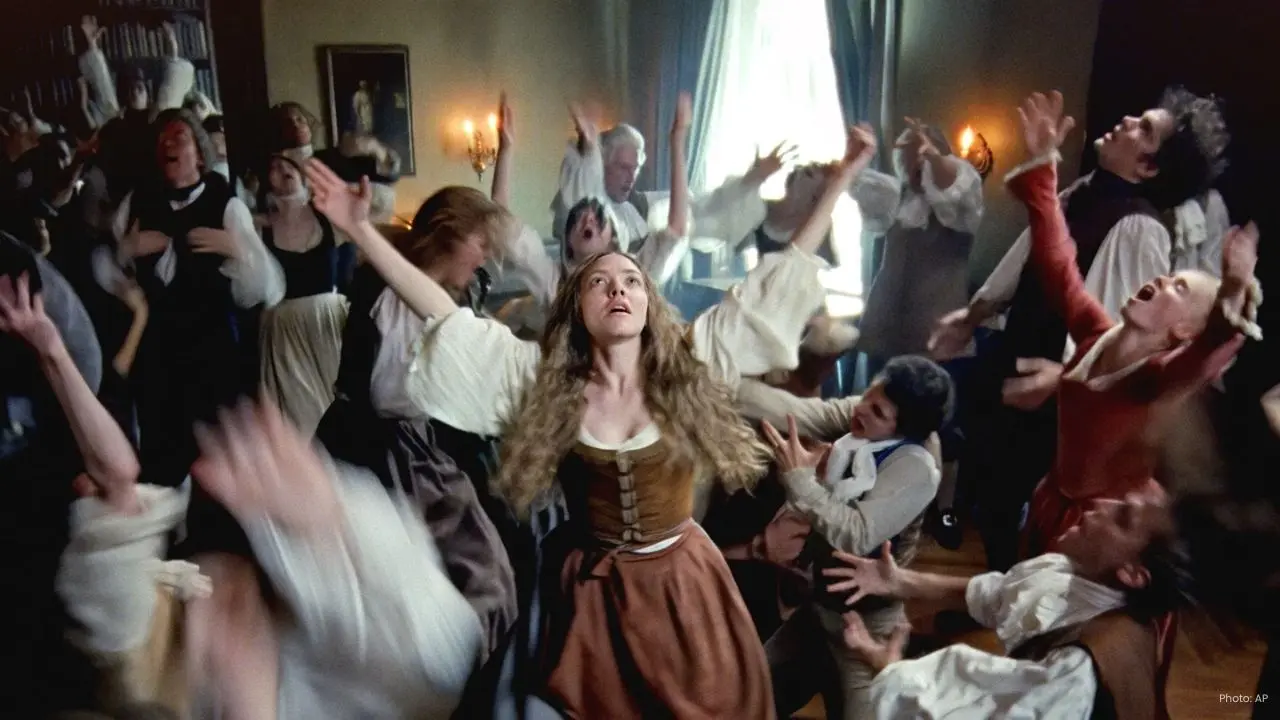
What makes The Testament of Ann Lee truly unique is its format. The film is presented as an 18th-century musical, featuring traditional hymns that convey the joys and sorrows of Lee's existence. The songs and movements seamlessly integrate with her faith and devotion, transforming into profound expressions rather than mere performance.
Filmed in stunning 70mm, the narrative unfolds in distinct segments, beginning in 1736 in Manchester, England, where Ann is born into a life of poverty as a blacksmith's daughter. Illiterate and facing hardship, she encounters spiritual visions early in life, developing a strong aversion to physical desires, which she associates with sin.
In her youth, Ann leaves the factory labor to work as a nurse in search of spiritual fulfillment, eventually joining the radical group known as the Shaking Quakers of Manchester, characterized by their ecstatic worship practices.
Ann's life takes a tragic turn as she marries a locksmith and suffers the loss of all four of her children shortly after birth. These heartbreaking events serve as the emotional nucleus of the film, depicted with profound honesty. Imprisoned for her unconventional beliefs, Ann experiences visions and comes to a painful realization that earthly desires have led to divine punishment, prompting her public commitment to celibacy.
The second part of the film chronicles Ann and her followers as they courageous journey across the Atlantic, arriving in New York just before the American Revolution, resilient yet battered. The culmination of their tale reflects their struggles in seeking a lasting and safe community.
Life within the Shaker society operates under strict principles: celibacy, equality of gender, communal work, and the pursuit of ethical perfection. While these tenets instill purpose, they also provoke danger, as seen in a chilling scene where a violent mob confronts them, revealing the harsh realities they faced.
At their peak, the Shakers numbered in the thousands; today, only three remain. Fastvold's portrayal is neither a warning nor a tribute, but an unwavering depiction of faith pushed to its utmost limits.
With a performance that is both raw and powerful, Seyfried anchors the film. She invested a year to master an 18th-century Manchester accent, fully committing herself to the film’s demanding narrative encompassing themes of childbirth, loss, and spiritual ecstasy.
The Testament of Ann Lee is not crafted for a wide audience. It is complex, intense, and often unsettling. Yet, it stands out as a unique film driven by conviction, artistry, and a performance that resonates long after the credits roll.