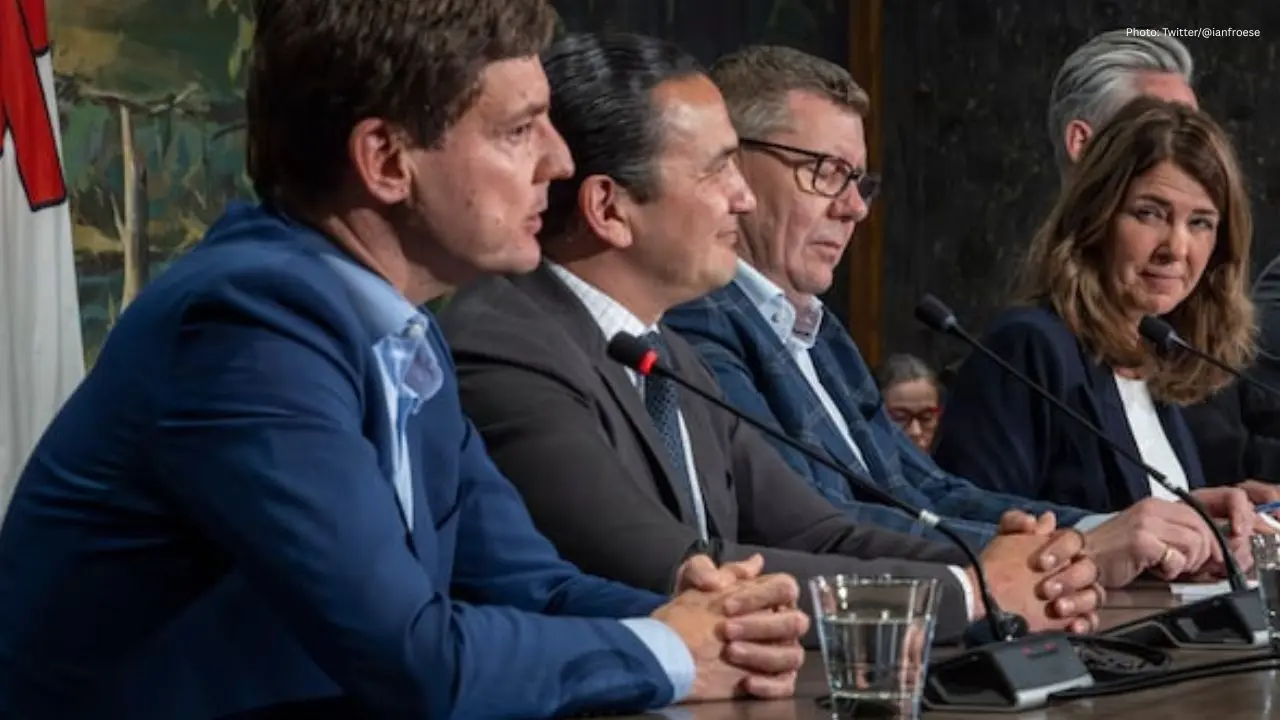
Tensions rose between the premiers of Alberta and Manitoba during the conclusion of a major Canadian provincial conference, as both leaders exchanged strong views over treaty rights, Indigenous concerns, and growing separatist discussions in Alberta. The disagreement highlighted deep political divisions between provincial governments over the future direction of Canada and the role of Indigenous treaties within national unity debates.
The sharp exchange reportedly took place during the final session of the conference, where provincial leaders gathered to discuss economic cooperation, energy policy, and national political issues. Manitoba Premier Wab Kinew strongly criticized growing separatist rhetoric in Alberta and warned that discussions about leaving Canada could create serious constitutional and legal challenges, especially regarding Indigenous treaty agreements protected under Canadian law.
Kinew argued that treaties signed between Indigenous nations and the Crown existed long before Alberta became a province and could not simply be ignored in any separation debate. He emphasized that treaty rights are constitutionally protected and warned that any political movement toward separation would face strong opposition from Indigenous communities across Canada. His comments received support from several observers concerned about the legal and social consequences of separatist discussions.
Alberta Premier Danielle Smith responded by defending her government’s position and accusing critics of misrepresenting Alberta’s concerns. Smith stated that many Albertans feel frustrated with federal policies related to energy, taxation, and provincial authority. While she repeated that she personally supports Alberta remaining within Canada, she also defended the public’s right to debate the province’s future and express dissatisfaction with Ottawa.
The disagreement became one of the most talked-about moments of the conference, reflecting wider national debates over provincial autonomy and federal relations. Political analysts noted that tensions between western provinces and the federal government have increased in recent years, especially over climate regulations, pipeline policies, and economic control. Alberta’s oil and gas industry has often been at the center of these disputes.
Indigenous leaders and advocacy groups have also become increasingly vocal about the issue. Many Indigenous communities argue that treaty agreements are nation-to-nation commitments that cannot be separated from discussions about Canadian sovereignty. Legal experts say any attempt by a province to separate from Canada would likely trigger years of constitutional negotiations involving Indigenous governments, federal authorities, and provincial institutions.
The political dispute comes at a time when discussions around Alberta separatism are gaining more public attention. Recent comments from Alberta officials about possible referendum questions related to provincial sovereignty have sparked debate across Canada. Business leaders and economists have also warned that political uncertainty could negatively affect investor confidence and economic stability in the region.
Despite the heated exchange, both premiers later said cooperation between provinces remains important. However, the disagreement clearly showed how sensitive the issues of separatism, Indigenous treaty rights, and national unity have become in Canadian politics. Analysts believe these debates will continue to play a major role in the country’s political discussions in the months ahead.