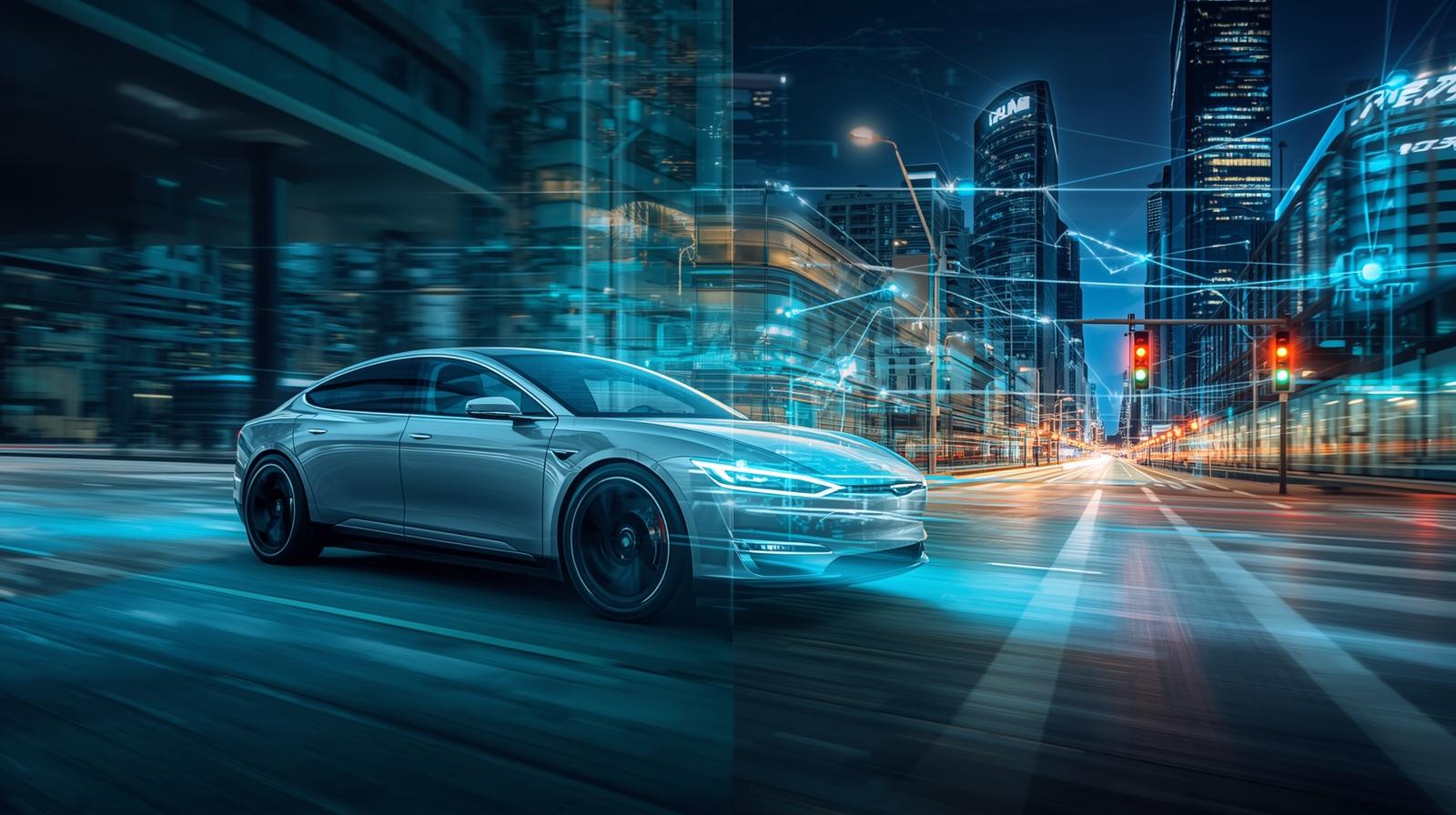
AI and the Rise of Smart Infrastructure: From Streets to Skylines
Artificial intelligence is moving beyond personal devices and enterprise analytics to change how entire cities function. From autonomous vehicles to adaptive traffic networks and intelligent power systems, AI is helping reshape urban life into more responsive, efficient and people-focused environments.
These applications are not distant forecasts — they are being trialled and adopted now in municipalities around the world, shifting how we commute, work and share public spaces. Here’s a closer look at the practical ways AI is remaking infrastructure and what that could mean for communities.
What We Mean by Smart Infrastructure
Smart infrastructure describes physical systems — transport corridors, energy grids, water networks and buildings — that use AI, connected sensors and data analytics to operate more intelligently.
Rather than waiting to react, these setups anticipate faults, curb waste and strengthen public safety.
Examples include:
-
AI-driven traffic systems that alter signal timings on the fly to ease jams.
-
Smart electricity networks that match supply to demand automatically.
-
Connected water systems that spot and flag leaks immediately, conserving vast quantities of water.
Put simply: AI helps cities evolve from static machines into adaptable, living systems.
Transport Transformed: Towards Autonomous Mobility
Transport is among the most visible fronts where AI is making a difference. Self-driving vehicles, once speculative, are now being piloted and rolled out in many regions.
1. Autonomous Cars and Onboard AI
Industry players such as Tesla, Waymo and Baidu are advancing autonomous driving with machine learning combined with cameras and a range of sensors. These systems continuously interpret the environment, forecast movement and take rapid driving actions.
They rely on streams of information from:
The goal is to cut down human-error crashes — which account for the majority of collisions — while improving fuel use and smoothing traffic flow.
2. Smart Traffic Control
Cities such as Dubai, Singapore and Los Angeles use AI platforms to interpret live traffic feeds, tweak signal schedules and reroute vehicles in real time.
These systems have been linked with lower congestion — sometimes by a quarter — quicker emergency responses and reduced emissions, benefiting commuters and the environment alike.
Energy and Utilities: Smarter Grids
AI-enabled smart grids are central to a cleaner, more reliable energy future. They forecast demand, detect faults early and distribute power more intelligently.
For instance:
-
Predictive algorithms estimate when electricity usage will surge.
-
Smart meters modulate supply to reduce outages.
-
Renewables such as wind and solar are integrated smoothly into the network.
Cities like Amsterdam and Tokyo are already coordinating renewables and demand in near real time, preventing blackouts and lowering costs.
Rethinking Urban Planning
AI-driven modelling gives planners tools to test the impact of new roads, housing or transit before a single foundation is laid. Simulations can reveal effects on congestion, air quality and access to services.
Key datasets include:
-
Population growth trajectories
-
Commuting and travel patterns
-
Pollution and emissions data
-
Available utilities and resources
Those insights help craft greener, more efficient neighbourhoods with stronger public transit and lower carbon footprints — Singapore’s Smart Nation work is a leading example.
Smart Buildings: Spaces That Respond
Buildings today increasingly behave like systems that learn and adapt to people inside them.
AI-powered building management can:
-
Automatically tune light and temperature settings.
-
Track air quality and energy consumption.
-
Spot maintenance needs before equipment fails.
In workplaces, these tools also reveal underused spaces and help optimise occupancy, trimming running costs by as much as 30% in some cases.
Public Safety and City Services
AI enhances government capacity to keep residents safe and services responsive.
-
Video analytics can flag abnormal events in real time.
-
Virtual assistants offer instant citizen support.
-
Disaster modelling forecasts floods, fires and seismic threats to guide preparation.
Dubai’s Smart Police Stations (SPS) — operating continuously through kiosks and AI tools — illustrate how services can be offered around the clock with minimal staff on site.
Environment and Sustainability
AI’s role extends to environmental stewardship: sensors and models monitor air, waste and water so authorities can act before problems escalate.
Examples include:
-
Predictive waste collection that plans efficient pickup routes.
-
Smart irrigation that conserves water by using soil and weather data.
-
Climate modelling guiding low-impact urban design.
Places such as Copenhagen and Helsinki are using these insights to speed progress toward net-zero emissions.
Headwinds: Privacy, Cost and Security
AI’s promise comes with serious challenges:
-
Protecting personal data collected across city systems.
-
Funding and scale — smaller towns may struggle to invest.
-
Cyber risk targeting interlinked infrastructure.
-
Workforce change as automation alters some jobs.
Policymakers must pair deployment with robust ethics, clear data governance and retraining programmes to make the transition inclusive.
Where Cities Are Leading
Several cities and nations have emerged as practical laboratories for smart infrastructure:
-
Dubai, UAE: Trials of autonomous taxis and AI-managed intersections.
-
Singapore: Advanced urban analytics and digital public services.
-
South Korea: AI for smarter energy and faster disaster response.
-
Estonia: A digitally native government model augmented by AI.
These efforts illustrate how strategic AI use can deliver safer, greener and more convenient urban living.
Looking Forward
Ultimately, a fully connected urban future would see vehicles, buildings, power networks and citizens interacting smoothly.
Imagine scenarios where:
-
Electric cars recharge automatically when clean energy peaks.
-
Roadways communicate with vehicles to help prevent collisions.
-
Buildings produce and share renewable energy.
-
AI oversees city functions with minimal manual intervention.
With wider 5G and IoT coverage, this vision of connected, learning cities is closer than many expect.
Conclusion
AI-driven infrastructure is changing how we experience cities, making them more efficient, sustainable and attuned to people’s needs. From smarter transport to predictive utilities and greener design, these technologies offer tangible gains — provided policy, privacy and skills are managed responsibly.
As the technologies mature, cities will not only become smarter — they will become more humane, adaptive places where systems work quietly in the background to improve everyday life.