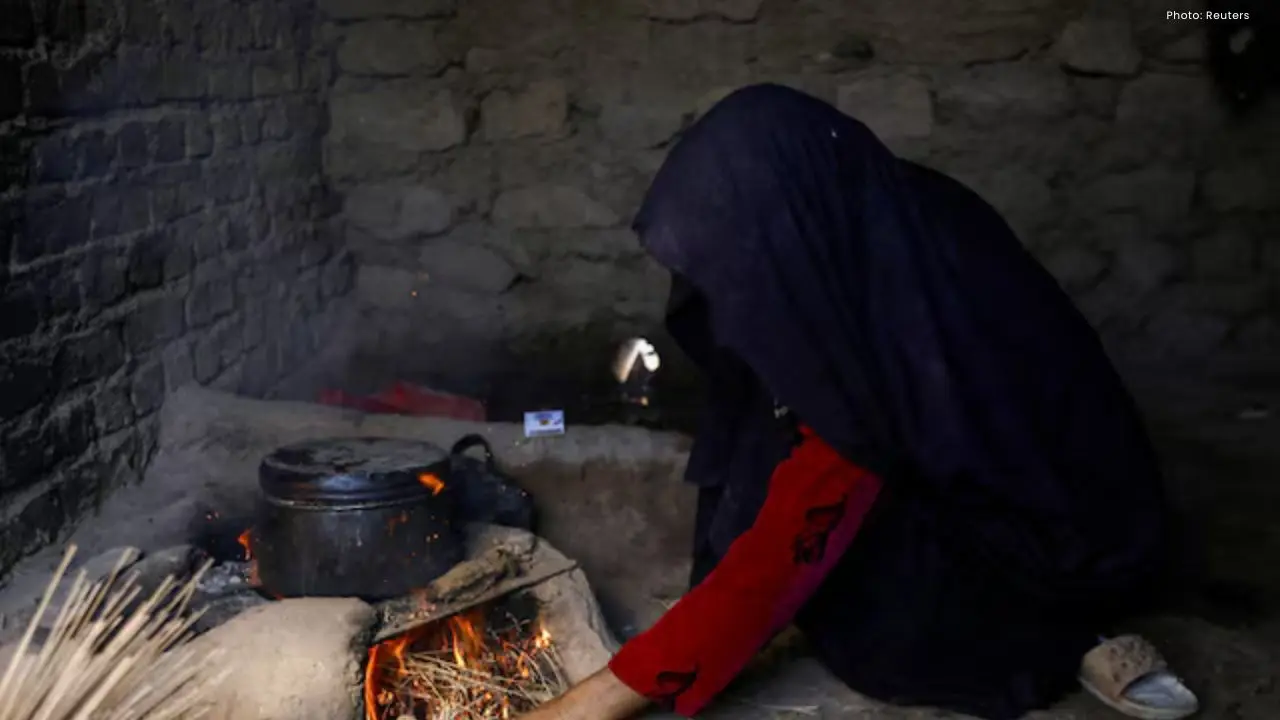
Afghanistan is grappling with one of its most severe hunger crises in recent memory. With the arrival of winter and a decrease in international assistance, millions are struggling to survive. Families that have faced years of unrest now find themselves lacking food, income, and even hope.
Samiullah, 55, resides in a makeshift tent close to Kabul with his wife, five children, and a three-month-old grandchild. Their only sustenance consists of dry bread and tea. “We have reached a point where we are content with death,” he lamented. Samiullah’s family, along with millions of other Afghans, recently returned home after being expelled from neighboring nations such as Iran and Pakistan, where they had previously worked and lived.
The United Nations’ World Food Programme (WFP) reports that 17 million individuals in Afghanistan are experiencing acute hunger. Recent reductions in aid and the substantial influx of migrants have further complicated the scenario. In the last year alone, over 2.5 million Afghans were deported from Iran and Pakistan, adding a new wave of vulnerability that demands immediate assistance.
These families had previously supported their communities through remittances. With those funds now completely dried up, they are plunged into extreme poverty. Job opportunities are few, winter conditions complicate labor, and food prices have surged. John Aylieff, WFP’s country director, noted that an additional 3 million people now confront acute hunger due to the loss of remittances.
Aid initiatives are struggling to keep pace with escalating demand. Diminished global funding has hampered organizations like WFP, leaving countless families without adequate food and medical care. The situation poses a grave risk to children, with experts estimating that 200,000 more will face severe malnutrition by 2026.
Aid centers are overwhelmed; supplies such as rice and palm oil often fall short of meeting the long lines of people waiting for assistance. Zahra Ahmadi, a 50-year-old widow caring for eight children, expressed, “Sometimes we eat, sometimes we don’t. I am forced to manage the winter with these supplies.” Clinics are inundated as more families seek medical care and nutritional support for their young. Dr. Rabia Rahimi Yadgari at the Qasaba Clinic in Kabul reported that patient numbers have doubled following the influx of returnees.
This crisis is closely linked to the downfall of Afghanistan’s economy after the Taliban took over in 2021, which led to the elimination of many government jobs and a lack of consistent income for households. Laila, 30, shared her family’s struggles: “Life never remains the same. My husband lost his job, and gradually our economic situation collapsed.”
For families like Samiullah’s, winter presents particular hardships. Firewood is rare, and tents offer minimal protection against the biting cold. “My children say, ‘Father, I’m cold, I’m freezing.’ I hold them in my arms and say, ‘It’s OK.’ What choice do we have?” Samiullah voiced.
This humanitarian crisis underscores that Afghanistan’s issues extend beyond mere political challenges. Regardless of shifting international focus, families remain entrenched in dire poverty and hunger. Lacking increased aid and sustainable economic solutions, millions will continue to suffer, leading to heightened risks for children.
The world must respond swiftly to avert further loss of life. There is an urgent need for food, medical assistance, and economic support. In Afghanistan, winter is not merely a season—it is a profound challenge to humanity, survival, and global responsibility.