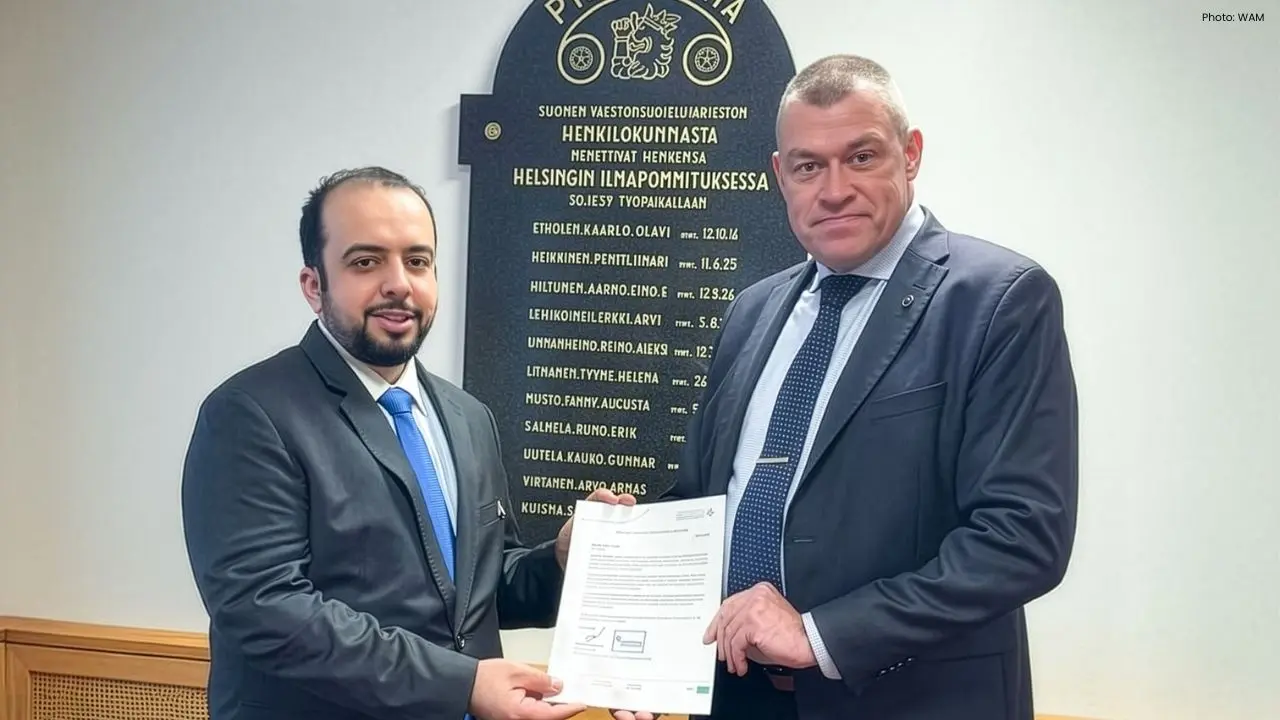
The Abu Dhabi Centre for Emergencies, Crises and Disasters Management (ADCMC) recently organized a visit to the Finnish National Rescue Association (SPEK) to explore Finland's cutting-edge emergency techniques. This initiative was aimed at fostering collaboration, sharing expertise, and examining global best practices to bolster Abu Dhabi's emergency response capabilities.
Heading the delegation was Dr. Abdulla Hamarain Al Dhaheri, Executive Director of the Response and Recovery Sector at ADCMC. During their stay, the Abu Dhabi representatives elaborated on the centre’s comprehensive strategy for managing crises and disasters, detailing how various agencies coordinate during significant incidents.
SPEK provided insights into Finland’s methods of community readiness, institutional preparedness, specialized training frameworks, and hands-on exercises that enhance the efficacy of responders. The Finnish organization also discussed its planning protocols, emergency instruments, and technologies that ensure nationwide preparedness. Vital aspects such as volunteer initiatives, civic readiness, and the notable 72-hour preparedness guideline were emphasized, which encourages households to be self-reliant for three days in emergencies.
Dr. Al Dhaheri remarked that this visit signifies the commitment of the Abu Dhabi Government to cultivate robust international partnerships with leading nations in crisis and emergency management. Learning from global examples paves the way for Abu Dhabi to elevate its preparedness for contemporary challenges in an efficient and coordinated manner.
He further noted that ADCMC is dedicated to enhancing its operational methodologies by evaluating international frameworks, assimilating successful worldwide practices, and employing state-of-the-art techniques within the local emergency framework. This continuous improvement includes adopting innovative community engagement strategies, refining training schemes, and fortifying institutional capabilities.
According to Dr. Al Dhaheri, the exchange with SPEK presented a remarkable opportunity to understand a distinctive approach that merges technological advancement, excellent institutional collaboration, and thorough preparedness. He highlighted how Finland’s model offers crucial lessons on how an interconnected emergency infrastructure can drastically enhance overall response efficacy.
He underscored Abu Dhabi’s goal of aligning its emergency protocols with global benchmarks through enhanced resilience, the deployment of smart response technologies, and collaborative programs that foster teamwork across various emergency services. One of ADCMC’s key pursuits is to cultivate qualified national talent to bolster community safety and support sustainable development.
The Finnish emergency framework made a substantial impression on the Abu Dhabi team due to its emphasis on inclusivity, public engagement, and effective inter-agency communication. SPEK showcased the pivotal role played by emergency volunteers in aiding professional teams, especially during major crises.
The visit culminated in dialogue regarding further collaborative efforts, including potential shared training initiatives, technology sharing, and joint research projects aimed at enhancing preparedness. The participating parties concurred that ongoing cooperation is essential in building robust, safe, and resilient communities.
Through initiatives like this, ADCMC persistently fortifies its global connections and embraces the most effective emergency solutions worldwide. The collaborative experiences between Abu Dhabi and Finland are projected to significantly improve crisis response, optimize operational efficiency, and advocate for the establishment of a secure and prepared society.