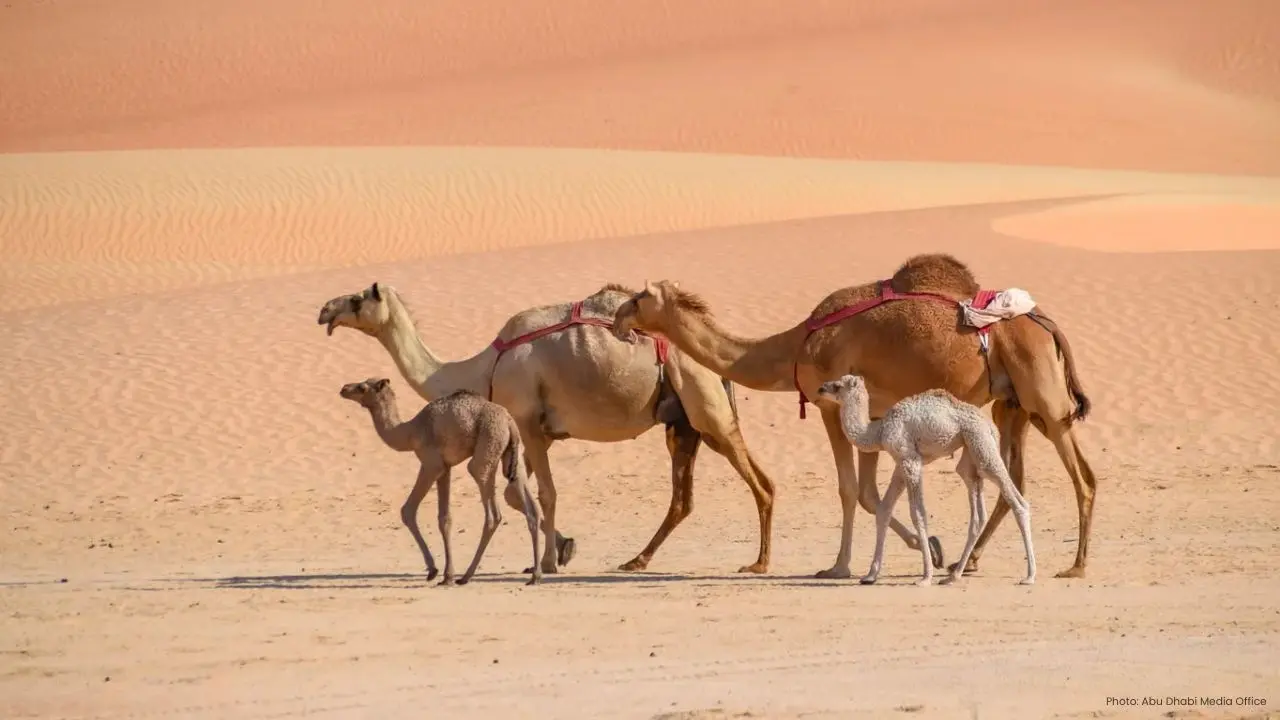
The Abu Dhabi Agriculture and Food Safety Authority (ADAFSA) has convened a pivotal regional workshop aimed at smoothing the temporary movement of camels across Gulf borders, ensuring compliance with stringent animal health, biosecurity, and welfare standards.
Jointly organised by the Camel Middle East Network (CAMENET), the UAE Camel Racing Federation, and the World Organisation for Animal Health (WOAH), this workshop is part of a broader initiative to modernise and harmonise the processes surrounding camel participation in various competitions, festivals, and cultural celebrations throughout the Gulf region.
The gathering brought together leading officials and specialists from the Ministry of Climate Change and Environment (MOCCAE), ADAFSA, the CAMENET Steering Committee, the Food and Agriculture Organization (FAO), and WOAH, along with representatives from camel racing federations and clubs across the national and international landscape.
The workshop highlighted innovative initiatives aimed at facilitating camel movement while prioritising animal health. A standout proposal was the Smart Gateway initiative presented by M42 Environmental Sciences, which suggests a digital platform and tracking system designed to reduce processing times, minimize resource consumption, and enable accurate, sustainable data sharing among regulatory bodies.
In addition, MOCCAE introduced the Green Route initiative, aiming to create a dedicated pathway for camels in regional events, thereby expediting procedures and fostering collaboration among relevant stakeholders to ensure efficient travel. Concurrently, WOAH proposed unified regional health certificates to facilitate cross-border transit while upholding rigorous veterinary and biosecurity standards.
Delegates responded positively to these proposals, emphasizing their essential role in boosting camel sports, cultural events, and strengthening health safeguards throughout the region.
Coinciding with the workshop, the 8th Technical and Steering Committee Meeting of CAMENET was held during Global Food Week 2025. This meeting evaluated the network’s Five-Year Work Plan (2026–2030), with a focus on five core areas: animal welfare, camel diseases and diagnostics, risk assessment, research and studies, and the One Health methodology.
Member nations provided comprehensive updates on their camel industries, detailing herd demographics, key challenges, and opportunities for enhanced cooperation in veterinary health, knowledge sharing, and capacity development.
At the conclusion of the meetings, attendees reaffirmed the critical role of CAMENET in furthering the camel sector’s advancements across the Middle East, addressing knowledge gaps in camel health, husbandry practices, and solidifying regional biosecurity systems.
Asma Abdi Mohamed, Director of Biosecurity Affairs at ADAFSA, highlighted that Abu Dhabi’s hosting of these discussions underscores its status as a regional hub for animal health and biosecurity. She reinforced ADAFSA’s commitment to transforming conversations into actionable programmes that fortify veterinary systems, enhance readiness against transboundary animal diseases, and promote sustainable development in the camel sector—integral to the region’s cultural and economic identity.