The United States is gearing up to establish an international stabilization force in the Gaza Strip, potentially as early as next month, according to American officials. The initiative will operate under United Nations auspices and is part of a comprehensive peace proposal for Gaza, although several critical questions persist, including the disarmament of Hamas.
According to two U.S. officials, the anticipated International Stabilization Force will primarily operate in regions under Israeli control. Its mandate does not include direct engagement with Hamas; rather, it aims to stabilize Gaza while collaborating with newly trained Palestinian police.
Interest in participating in this force has been expressed by numerous nations. Ongoing discussions focus on the mission's scale, troop contributions, training and housing logistics, and operational guidelines for the force's activities in Gaza. Although no final decision has been made, an American two-star general is being considered for leadership.
The U.S. Central Command plans to convene a meeting on December 16 in Doha with coalition partner countries to strategize on the force's framework. Representatives from over 25 nations are anticipated, with talks set to cover command hierarchy, coordination, and operational specifics.
This deployment is viewed as a pivotal aspect of U.S. President Donald Trump's second phase of the Gaza peace initiative. The first phase commenced on October 10, featuring a ceasefire following two years of hostilities between Israel and Hamas. Subsequent to this, Hamas released hostages while Israel allowed the release of Palestinian detainees.
White House spokesperson Karoline Leavitt stated that discreet planning efforts are underway to ensure that the second phase promotes long-term peace. The overarching goal is to transition from a temporary ceasefire to enduring stability.
Indonesia has already signaled its readiness to contribute up to 20,000 troops, focusing on healthcare, reconstruction, and infrastructural projects rather than combat. The country's Defence Ministry mentioned that preparatory steps are still in the initial phases, which include determining the organizational framework for these units.
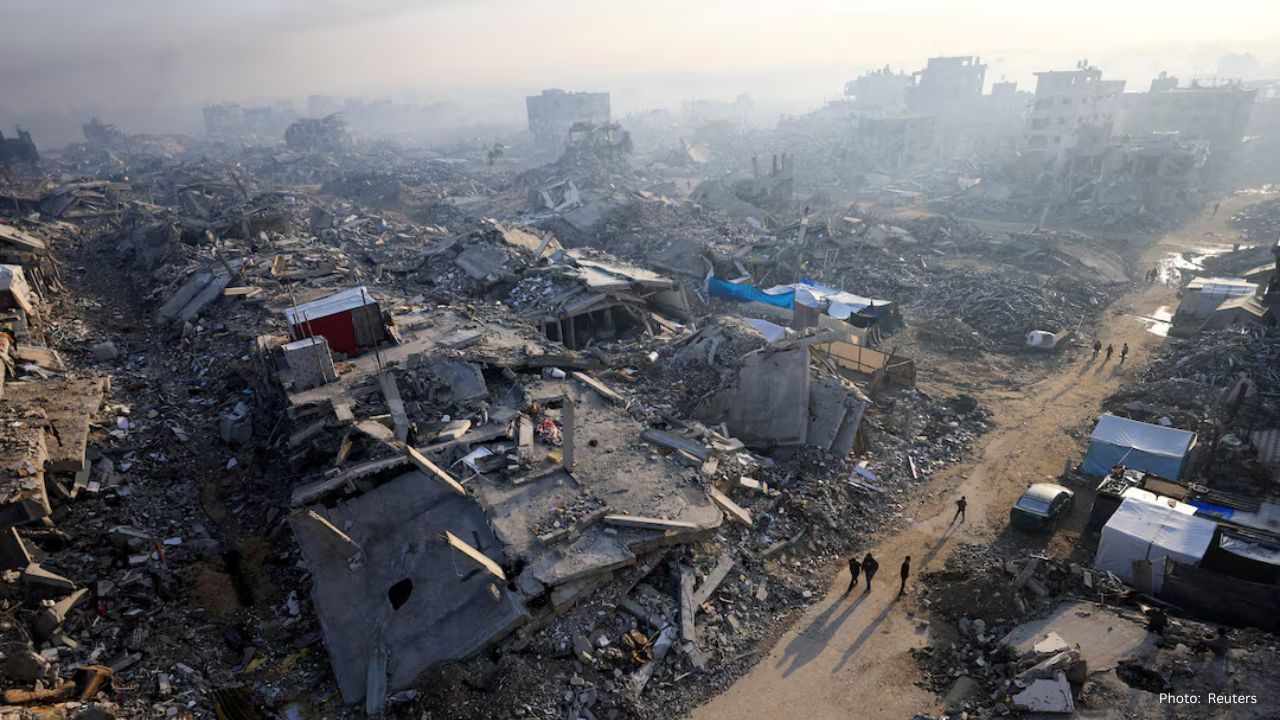
Israel currently governs approximately 53% of Gaza, with most of the nearly two million residents residing in areas controlled by Hamas. The international force is poised to initially deploy in Israeli-dominated zones, with the intention of enabling a gradual Israeli troop withdrawal once stability is established, contingent on specific benchmarks relating to demilitarization.
In November, a resolution was passed by the U.N. Security Council authorizing the formation of a Peace Board to supervise this process. This resolution empowers the international force to assist in Gaza's demilitarization, which includes dismantling military capabilities and preventing militant groups from re-arming.
Nevertheless, U.S. officials conceded that the method for disarming Hamas has yet to be clarified. While the U.N. mandate allows for force if deemed necessary, engagement rules will vary according to the policies of each participating nation.
Hamas maintains that discussions on disarmament have not been formally initiated with mediators and asserts it will retain its weapons unless a Palestinian state is recognized. Israeli Prime Minister Benjamin Netanyahu has shown support for a multinational force but expressed skepticism regarding its capacity to confront all security challenges.
The proposed deployment signifies international ambitions to bring stability to Gaza after prolonged conflict, but its efficacy hinges on cooperation from all parties and a well-defined consensus on security duties.