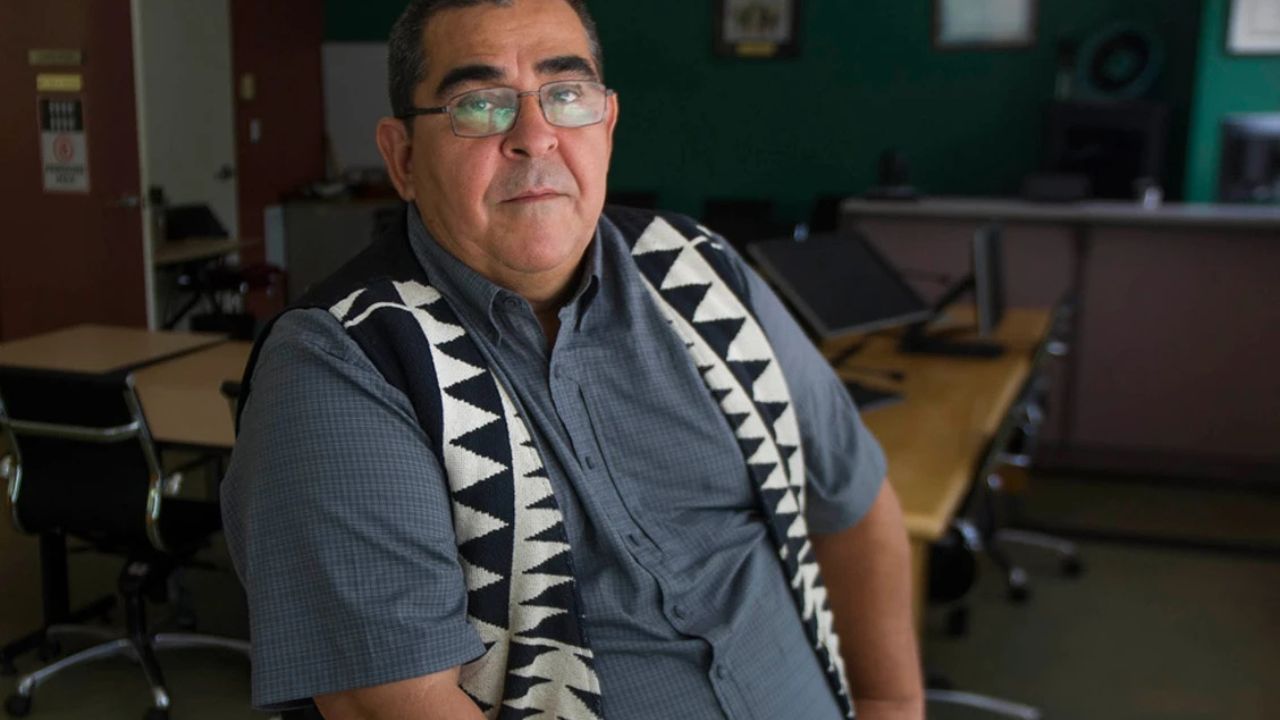
Former President of Guinea-Bissau, Umaro Sissoco Embaló, has been flown safely to Senegal after being released by military forces that seized power earlier this week, as confirmed by Senegalese officials. His transfer was facilitated by the West African regional bloc, Ecowas, in an effort to mitigate the ongoing political crisis.
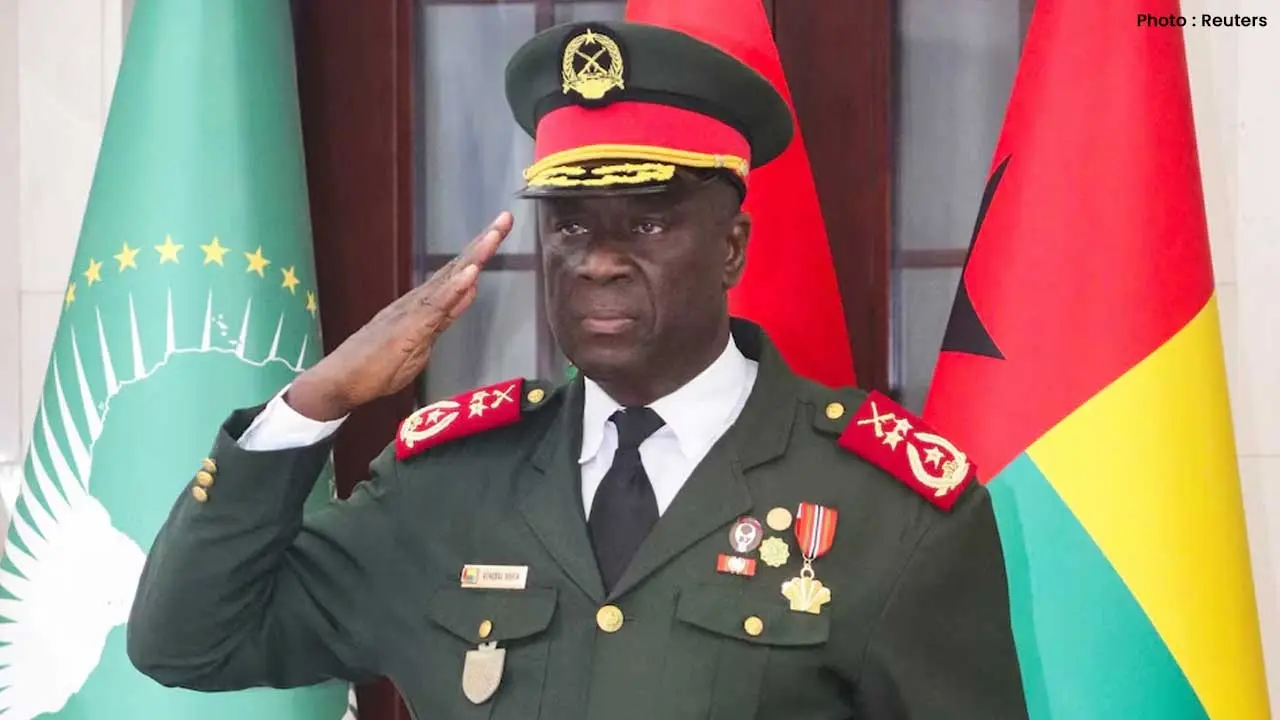
According to the Senegalese foreign ministry, Embaló arrived on a chartered military aircraft late Thursday and is reported to be in good health. Meanwhile, the military regime in Guinea-Bissau has appointed General Horta N’Tam as the transitional leader, expected to hold power for a year. This decision comes just a day after the military coup, which saw the suspension of electoral processes and the halting of the announcement of results from the recent presidential and parliamentary elections.
The coup was triggered by escalating political tensions, with both Embaló and his chief challenger, Fernando Dias, declaring electoral victory in the recent elections. The military's justification for the power grab included claims of a destabilization plot involving unnamed politicians backed by a prominent drug lord. A nighttime curfew and a ban on public protests were quickly enforced as soldiers took to the capital, Bissau, with most businesses shutting down as citizens observed the unfolding situation with unease.
Notably, Guinea-Bissau, positioned between Senegal and Guinea, has a troubled history marked by political instability and a reputation as a drug trafficking hub. The military has historically been influential in governance since the country gained independence from Portugal in 1974. During the coup, several political figures, including Dias and former Prime Minister Domingos Pereira, were reportedly detained.
General N’Tam asserted that the military intervened to safeguard the nation’s democracy. Shortly thereafter, the military reopened all borders—land, air, and sea—that had been restricted post-coup. Some civil groups posited that Embaló may have staged a “simulated coup” to delay announcing election results, a theory supported by Dias, who claims to have received about 52% of the votes. Embaló has yet to respond to these allegations.
During his time in office, the 53-year-old leader faced several coup attempts, although critics accuse him of exploiting crises to quash dissent. The military coup has drawn sharp criticism from regional and global entities. Ecowas has suspended Guinea-Bissau from all decision-making processes until constitutional order is reinstated, labeling the military's actions a significant constitutional infringement. Similarly, the African Union denounced the coup and reiterated calls for adherence to constitutional governance. UN Secretary-General Antonio Guterres expressed serious concerns and urged for the “immediate and unconditional restoration of constitutional order.”
With a history of political volatility marked by at least nine coups or attempts over the last fifty years, the international community is actively advocating for a peaceful solution and the re-establishment of democratic governance in Guinea-Bissau.