Photo:AP
UK Court Rejects Challenge to Ban on Palestine Action
In a pivotal ruling, the UK High Court has refused to temporarily block the government’s move to classify Palestine Action—a pro-Palestinian activist group—as a terrorist organisation. The court decision means the ban comes into immediate effect, with membership or support now criminalised under anti‑terrorism laws. The group has fired off plans to continue its fight through a formal judicial review scheduled for mid-July.
What Triggered the Government Action
The proscription follows a high-profile protest in late June, when Palestine Action activists forced entry into RAF Brize Norton airbase and caused significant damage to military aircraft. The government asserted that such actions justified designating the group under the Terrorism Act. The Home Secretary emphasized that the seriousness of property destruction and the potential national security threat necessitated proscription.
Where the Legal Bid Faltered
Palestine Action’s lead co-founder, along with legal counsel, had sought immediate relief—arguing that the ban was a disproportionate abuse of anti-terror laws and set a dangerous precedent for civil society. Justice Martin Chamberlain, after hearing arguments, declined to delay the ban, stating that the court was not the proper venue for intervention—a judicial review panel would ultimately assess the merits of the case.
Public Protest and Civil Liberties Concerns
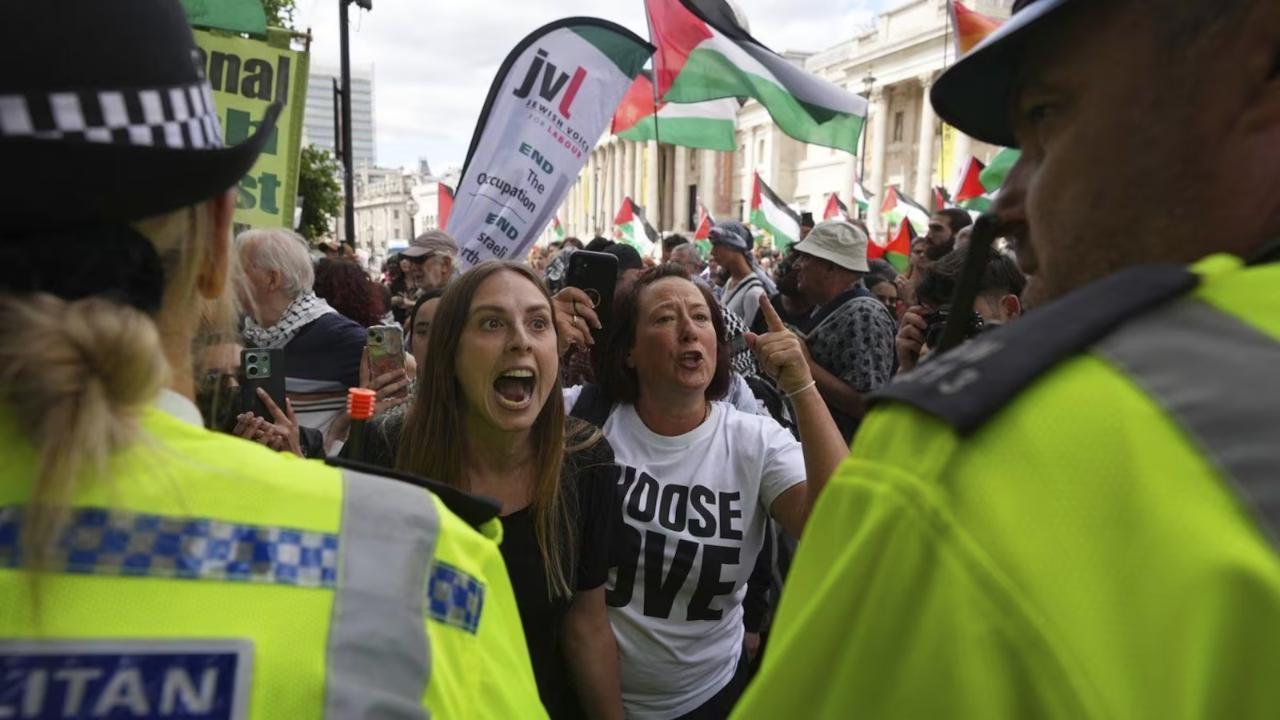
Outside the High Court, numerous supporters demonstrated, chanting slogans and warning of threats to democratic rights. Legal experts and rights groups, including Amnesty International and CAGE, have decried the ban as a draconian misapplication of counter‑terror powers, specifically targeting a group engaged in nonviolent direct action. They warn that the move equates acts like property damage—such as paint used in protests—with terrorism, thereby chilling public dissent.
What the Proscription Means Practically
From now on, membership, financial support, or public praise of Palestine Action—whether via social media presence or statement—can carry a prison sentence of up to 14 years. Even when protest materials openly support the group, individuals may face prosecution. The ban places the organisation in the same legal category as Hamas and ISIS, overseen under the Terrorism Act’s strict enforcement framework.
Upcoming Legal Review Next Month
Despite this setback, Palestine Action remains committed to its legal strategy. A full judicial review is anticipated by July 21, during which the group will argue that the ban violates rights to free speech, assembly, and political expression. If successful, the proscription could be overturned; if denied, the designation stands, and enforcement continues indefinitely.
Why This Case Matters
This landmark decision raises urgent questions about the boundary between militant violence and civil disobedience. For decades, the UK has tolerated property-based protest within democratic checks. Critics see this ban as crossing a line—labeling dissident voices as terrorist threats. Privacy and human rights advocates fear that future protest movements could face similar restrictions.
Conversely, supporters of the ban cite the targeted destruction of military assets as evidence of security risks that require new legal tools. They note that Parliament overwhelmingly passed the proscription (by a vote of 385–26), signaling public concern over national security measures.
What to Expect Next
-
Judicial Review (July 21): A full legal hearing will determine whether the ban was lawful and proportionate.
-
Legal Enforcement Begins: Police readiness to prosecute supporters will be tested in coming weeks.
-
Public Mobilisation: Rights organisations, student unions, and civil society groups may escalate campaigns in solidarity.
-
Policy Precedent: Future protest movements now face uncertainty in how democracy and security laws intersect.
Final Thoughts
The UK High Court’s decision to allow the ban to take effect without delay marks a contentious moment in the nation's legal and democratic evolution. As judicial scrutiny proceeds, the outcome will weigh heavily on how far the state can go to control activist activity under terrorism legislation. For now, the proscription stands—but its future remains undecided in the courts and the court of public opinion.